How Often Should You Bathe Your Dog? (Vet-Approved Guide)
Every dog owner has heard both extremes: “bathe them weekly or they’ll stink” and “never bathe a dog, it ruins their coat.” The truth lives in the middle and depends on your dog’s breed, coat, lifestyle, and skin health. Bathe too often with harsh shampoo and you’ll strip the natural oils that keep skin supple — causing the exact dryness, flaking, and itching you were trying to prevent. Bathe too rarely and oils, allergens, and bacteria build up into odor and skin infections. Here’s how to find your dog’s personal sweet spot.
The Real Answer: It Depends on the Dog
General veterinary guidance: most healthy dogs do well with a bath every 4–8 weeks. But the range is wide. Oily-coated breeds (Basset Hounds, Cocker Spaniels) may need baths every 2–4 weeks. Double-coated breeds (Huskies, Golden Retrievers) typically need them every 6–8 weeks — over-bathing damages their insulating undercoat. Hairless breeds (Chinese Crested, Xoloitzcuintli) need weekly baths because without fur to absorb oils, their skin gets greasy and acne-prone. Short-coated low-odor breeds (Beagles excepted — they’re famously fragrant) can go 8–12 weeks.
Lifestyle overrides the calendar: the farm dog who swims in ponds needs more baths than the apartment Chihuahua. Dogs with allergies often benefit from more frequent bathing (every 1–2 weeks with vet-recommended medicated shampoo) because washing physically removes pollen and allergens from the coat — it’s one of the most effective allergy interventions available. Conversely, dogs with diagnosed dry skin or seborrhea need fewer baths with ultra-gentle products. When in doubt, your vet’s recommendation for your specific dog beats any general schedule — the American Kennel Club publishes breed-specific grooming guides that are an excellent starting reference.
Why Over-Bathing Dries Skin (The Science)
Canine skin maintains a protective lipid barrier — natural oils (sebum) that lock in moisture and block irritants. Harsh shampoos, especially human shampoos (formulated for pH 5.5 human skin versus pH 7.0–7.5 canine skin), strip this barrier aggressively. The result: transepidermal water loss increases, skin dries and flakes, itching starts, scratching damages the barrier further, and you’ve created a cycle where the “dirty dog” smell you bathed to fix returns faster because compromised skin overproduces oil to compensate.
Hot water makes it worse — it strips oils faster than lukewarm water. So does failing to rinse thoroughly: shampoo residue left in the coat is a top cause of post-bath itching, and owners routinely under-rinse by half. If your dog scratches for a day after every bath, the culprit is usually residue or water temperature, not the bath itself. The fix is technique, not fewer baths.
The Skin-Safe Bathing Method
Before the bath: brush thoroughly — brushing removes loose fur and mats that trap shampoo, and it distributes oils. Place a non-slip mat in the tub; slipping panic makes every future bath harder. Trim nails beforehand if needed so wet nails don’t scratch you.
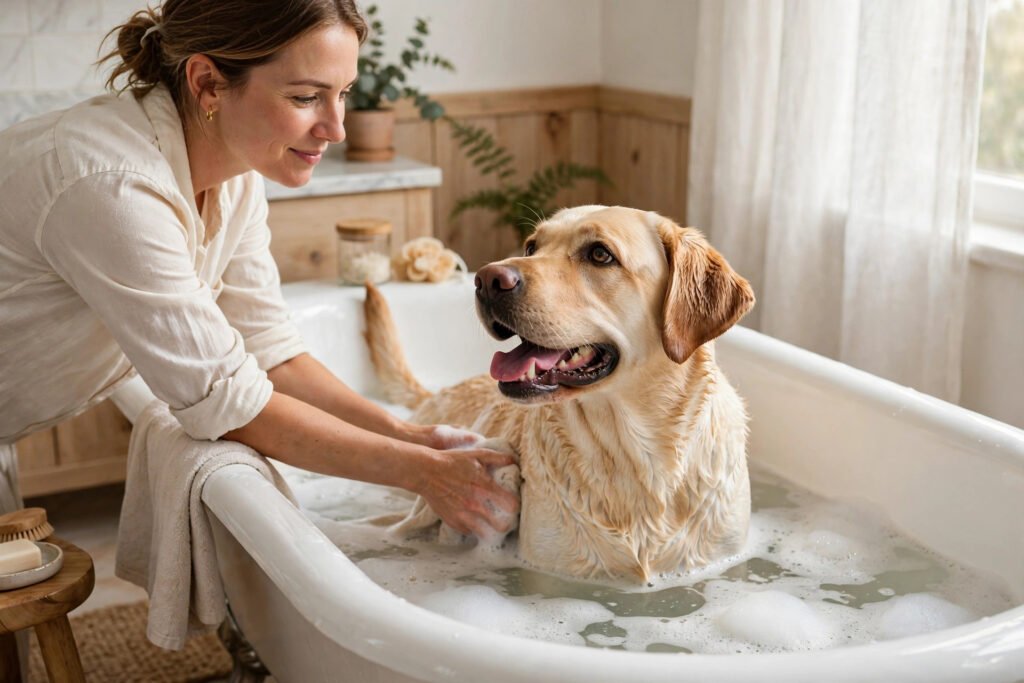
Water and shampoo: use lukewarm water — comfortable on your inner wrist. Wet the coat completely (dense coats need several minutes of soaking). Use a dog-specific shampoo — look for oatmeal-based, soap-free, or vet-recommended formulas; avoid anything with heavy fragrance, which irritates sensitive skin. Dilute the shampoo per label directions — concentrated product is harder to rinse. Lather from neck to tail, avoiding eyes and inner ears.
The rinse (most important step): rinse for at least twice as long as you lathered. Run your fingers deep into the coat against the grain while rinsing; when you think you’re done, rinse another full minute. Squeaky-clean isn’t the goal — residue-free is. For dry-prone dogs, follow with a dog-specific conditioner or a leave-in oatmeal spray, which restores the moisture barrier bathing disturbed.
Drying: towel-dry first (microfiber absorbs best), then let them air-dry in a warm room or use a dryer on low/cool — never hot, which dries skin. Brush again once dry to prevent tangles. Between baths, waterless foam shampoos and grooming wipes handle touch-ups without a full wash — perfect for muddy paws after walks. Keeping a clean house with pets gets much easier when baths are regular enough to control the doggy-smell cycle at its source.
Between-Bath Maintenance That Reduces Bathing Needs
The secret to bathing less often without a smelly dog is maintenance between baths. Brush 2–3 times weekly (daily for long coats) — brushing distributes oils, removes dirt, and prevents the matting that traps odor. Wipe paws after walks with a damp cloth or pet wipes; paws track in most of what makes dogs smell. Wash bedding every 1–2 weeks — a shocking amount of “dog smell” is actually bed smell transferred back onto a clean dog.
Diet matters more than owners realize: omega-3 fatty acid supplements (fish oil, vet-dosed) measurably improve coat and skin health within 6–8 weeks, reducing both odor and flaking. And check your home environment — pet-friendly flooring choices make the inevitable post-bath shake-off and wet-paw traffic dramatically easier to manage than carpet does.
When Bathing Frequency Signals a Vet Visit
Needing baths more often than your breed’s normal range can indicate underlying issues: persistent odor despite bathing (skin infection, ear infection, or dental disease), constant itching or hot spots (allergies or parasites), excessive oiliness or flaking (seborrhea or hormonal issues like hypothyroidism). If you’ve increased bathing to manage a symptom and the symptom keeps winning, stop bathing more and start diagnosing — the American Veterinary Medical Association advises that skin changes warrant veterinary evaluation rather than ever-more-frequent washing, which can mask and worsen the underlying condition.
Conclusion
Most dogs thrive on a bath every 4–8 weeks with a gentle dog-specific shampoo, lukewarm water, and a thorough rinse — adjusted for breed, lifestyle, and skin conditions. The dryness owners fear comes not from bathing itself but from harsh products, hot water, and poor rinsing. Nail the technique, maintain the coat between baths, and let your dog’s skin (not the calendar, not the smell-panic) set the schedule. A well-bathed dog isn’t the most-frequently-bathed dog — it’s the correctly-bathed one.
Frequently Asked Questions
Can I use human shampoo on my dog in an emergency?
Once won’t cause harm, but don’t make it a habit — human shampoo’s pH (~5.5) is too acidic for canine skin (~7.0–7.5) and strips protective oils aggressively. For emergencies, diluted baby shampoo or just water is gentler. Keep a proper dog shampoo on hand so emergencies don’t recur.
Why does my dog smell bad even right after a bath?
Common causes: shampoo residue left in the coat (under-rinsing), wet ears developing infection, anal gland issues, dental disease, or skin infection — none of which bathing fixes. If the smell returns within a day or two of a proper bath, see your vet rather than bathing again.
How do I bathe a dog that’s afraid of water?
Desensitize gradually: treats for approaching the tub, then for standing in it dry, then with a little lukewarm water — over multiple sessions, not one. Keep the first real baths short, calm, and treat-heavy. Never force or punish; fear makes every future bath exponentially harder.
Do I need conditioner for my dog?
For dry-prone, long-coated, or frequently bathed dogs, yes — a dog-specific conditioner or leave-in moisturizing spray meaningfully reduces post-bath dryness. For most short-coated dogs bathed every 6–8 weeks, a gentle shampoo alone is sufficient.