Preparing Your Toddler for Preschool: A Parent Guide
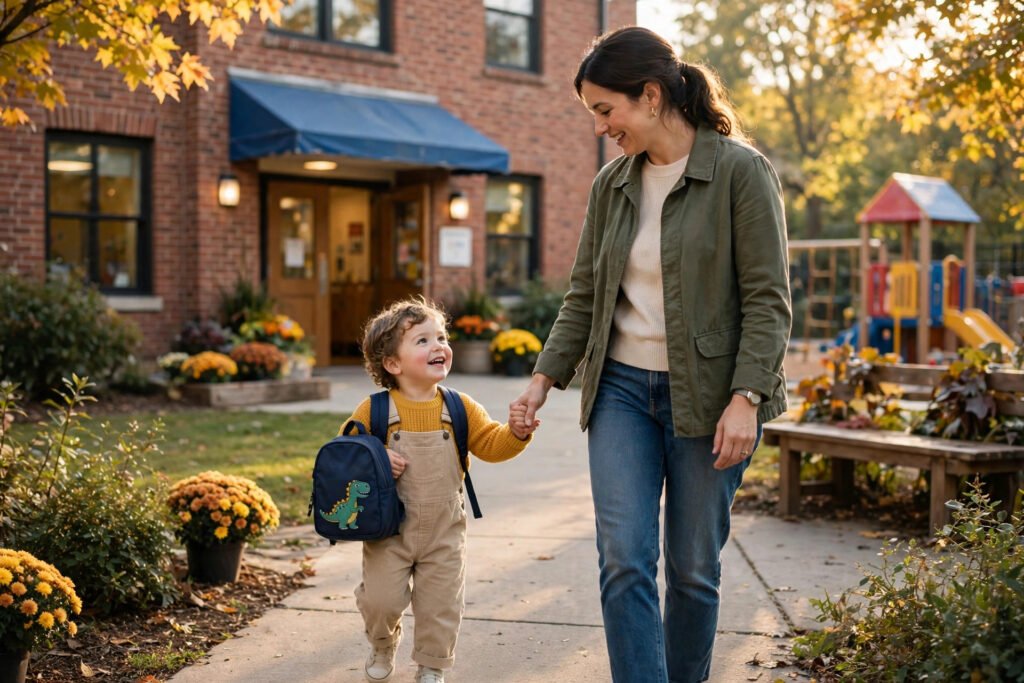
The preschool tour is scheduled. Your toddler — your baby — is about to start school, and you’re oscillating between excitement and low-grade panic. Is she ready? Are you ready? What if he cries? What if she won’t nap? What if the other kids are ahead? Take a breath: preschool readiness is far less about academics than American parents fear, and far more about a handful of practical skills you can absolutely build in the coming weeks.
This guide covers what “ready for preschool” actually means, the skills to practice now, how to handle separation anxiety (yours and theirs), and what to look for — and avoid — in a program.
What “ready” actually means (it’s not ABCs)
Preschool teachers are remarkably consistent about what matters: separation resilience (can your child tolerate being apart from you for a few hours?), basic self-care (independent toileting or well on the way, hand-washing, feeding themselves), following simple directions (one- and two-step instructions), emerging social skills (parallel play is fine — true sharing develops later — but some comfort around other children), and communication basics (expressing needs verbally, even simply).
Notice what’s not on the list: reading, writing, counting to 100, knowing colors. Academic precocity is neither expected nor particularly predictive — social-emotional readiness predicts preschool success far better than letter recognition. If your child can separate, communicate needs, and manage basic self-care, they’re ready. Everything else, preschool teaches. Parents who drill flashcards for weeks are optimizing the wrong variable — invest that energy in playdates and routines instead, where the real readiness is built.
Skills to practice in the coming weeks
- Separation practice: start with short separations — 30 minutes with a grandparent or trusted sitter, building to a few hours. Always say goodbye (never sneak out — it destroys trust); keep goodbyes brief, warm, and confident. Your calm is contagious.
- Self-care independence: practice toileting routines, hand-washing (sing a song for duration), opening lunch containers, and putting on shoes. Preschool runs on self-sufficiency; every independent skill reduces your child’s stress.
- Following routines: establish predictable home routines — visual schedules (pictures of morning steps) work beautifully for toddlers. Children who understand “first this, then that” adapt to classroom routines faster.
- Social exposure: playground visits, library story hours, playdates — low-stakes practice being around other children. Don’t force sharing (developmentally, it’s still emerging); just build comfort with proximity.
- Language building: narrate your day, read together daily, and encourage your child to name feelings (“I’m frustrated,” “I’m excited”). Emotional vocabulary is a superpower in group settings. Daily reading is the single highest-ROI habit here — see how to build a daily reading habit for making it stick.
Handling separation anxiety (theirs and yours)
Most toddlers cry at drop-off. Most stop within 5–15 minutes. The teachers know this; the veteran parents know this; only first-time parents are surprised. What works: a consistent goodbye ritual (same words, same hug, same wave at the window — ritual is security); brief and confident (lingering prolongs distress — your hesitation signals that there’s something to fear); a transition object (a lovey or family photo, if the school allows); and trust the teachers (call 20 minutes later if you need reassurance — they’ll tell you the truth).
Your anxiety matters too — children read parental stress with unnerving accuracy. If you’re tearful at drop-off, your child learns drop-off is scary. Process your feelings with your partner or friends, not at the classroom door. And give it time: most children adjust within 2–4 weeks; a rough first week predicts nothing about the year.
Choosing the program: what to look for
Look for: warm, responsive teachers (watch how they talk to children — at eye level, with genuine interest); low ratios (ideally 1:8 or better for 3-year-olds); play-based curriculum (decades of research favor play-based over academic-drill preschools for this age); clean, safe, stimulating environments; clear communication with parents; and children who look happy and engaged during your tour.
Red flags: heavy worksheet/academic focus for 3-year-olds, high teacher turnover (ask directly), chaotic or silent classrooms (you want purposeful buzz), reluctance to let you observe, and pressure tactics on enrollment. Trust your gut — if something feels off on the tour, it is. Also note how staff speak about children when they think you’re not listening — warmth in unguarded moments is the truest quality signal a tour can offer.
Logistics that matter more than you think: location (a brutal commute ruins mornings for years), schedule fit, illness policies, and cost transparency. The “best” preschool you can’t consistently get to on time isn’t the best for your family.
Social skills smooth every transition — teaching kids good manners gives toddlers the interaction tools (please, thank you, taking turns) that make group settings dramatically easier.
Conclusion
Preparing your toddler for preschool in America comes down to: building separation resilience through graduated practice, establishing self-care independence, creating predictable routines, providing social exposure, reading daily, and choosing a warm play-based program — while managing your own goodbye anxiety with brief, confident rituals. Your toddler doesn’t need to be advanced; they need to be ready to be apart, to try, and to play. The rest, preschool will teach them.
The first month: what to expect
Week one is often rocky — tears at drop-off, exhausted naps, maybe some regression at home (thumb-sucking, clinginess). This is normal adjustment, not a sign of unreadiness. Weeks two and three usually bring turning points: a favorite teacher, a first friend, a proudly recounted day. By week four, most toddlers walk in willingly — some run. Support the transition by keeping home routines stable (no big changes like moving bedrooms simultaneously), talking positively about school at dinner (“What was the silliest thing today?”), and resisting the urge to interrogate (“Did you have fun? Did you eat? Who did you play with?” can overwhelm — one open question is plenty). If distress persists beyond a month or worsens instead of improving, talk to the teachers — occasionally the fit genuinely isn’t right, and that’s useful information, not failure. For authoritative guidance, see the National Association for the Education of Young Children and the U.S. Department of Education early learning.
Frequently Asked Questions
How do I know if my toddler is ready for preschool?
Key signs: tolerates separation for a few hours, working toward independent toileting, follows simple directions, communicates needs verbally, and shows some comfort around other children. Academic skills (letters, numbers) are not required — social-emotional readiness matters far more.
What should my child know before preschool?
Self-care basics (toileting, hand-washing, feeding, dressing), following one- and two-step directions, and expressing needs with words. Preschool teaches academics; home should build independence and routines.
How long does preschool separation anxiety last?
Most children stop crying within 5–15 minutes of drop-off, and most adjust fully within 2–4 weeks. A rough first week is normal and predicts nothing. Consistent, brief, confident goodbyes work best — lingering prolongs distress.
What should I look for in a preschool?
Warm responsive teachers, low child-to-teacher ratios, play-based curriculum, clean stimulating environment, clear parent communication, and happy engaged children on your tour. Avoid heavy academic drilling for 3-year-olds and high staff turnover.
Should I sneak out at preschool drop-off?
Never — sneaking out destroys trust and makes future separations worse. Always say a brief, warm, confident goodbye with a consistent ritual. Your calm confidence teaches your child that separations are safe.