Best Study Techniques Backed by Science (US Guide)
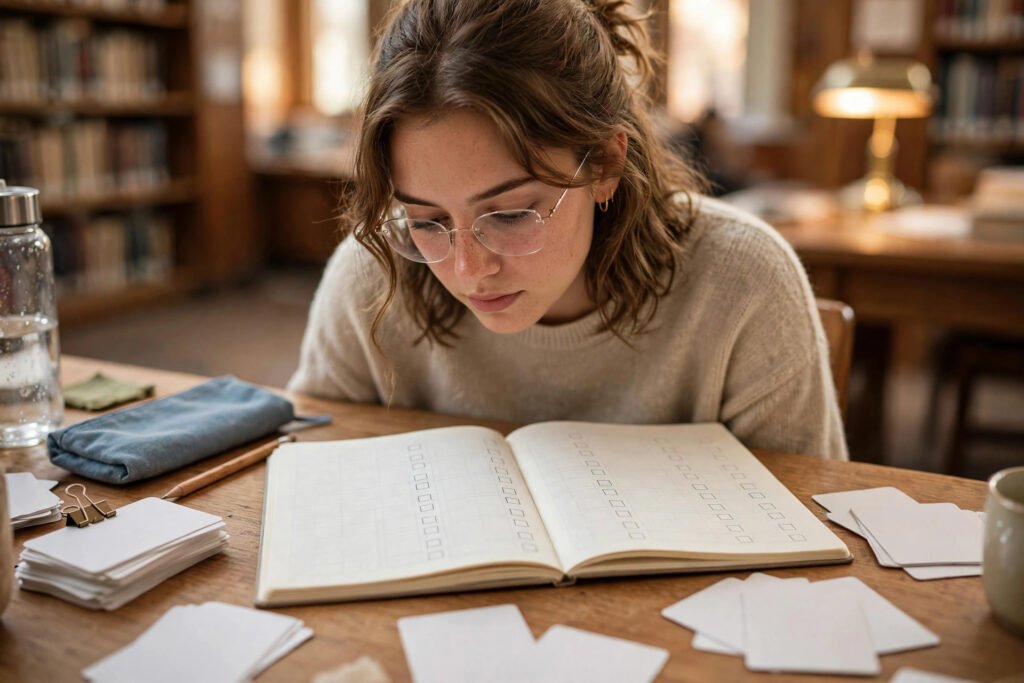
You’ve been “studying” for three hours. Highlighter dried out, notes rewritten in prettier handwriting, textbook chapters re-read twice. Then the exam arrives and your mind goes blank. If this feels familiar, you’ve discovered the central tragedy of American studying: the techniques that feel most productive are often the least effective, and the ones that work feel uncomfortably hard. Cognitive scientists call this the “illusion of competence” — and they’ve spent decades identifying what actually builds durable learning.
This guide covers the study techniques with the strongest scientific backing, ranked by evidence — plus the popular methods you should stop using, and how to build a study system for the semester.
Tier 1: the heavy hitters (strong evidence)
1. Retrieval practice (the testing effect)
The single most powerful study technique known: actively recalling information from memory, rather than re-exposing yourself to it. Closing the book and writing down everything you remember, doing practice problems without looking at solutions, using flashcards — all retrieval practice. Hundreds of studies confirm it beats re-reading by wide margins, and the effect is largest for long-term retention (exactly what finals demand). The mechanism: retrieval strengthens the memory trace and reveals gaps — you discover what you don’t know while there’s still time to fix it.
2. Spaced repetition
Distributing study sessions across days and weeks, rather than massing them into cram sessions. The forgetting curve research (Ebbinghaus onward) shows that each review at the point of fading strengthens memory far more than immediate repetition. Practical version: study a topic, review it in 2 days, then a week, then two weeks. Spaced-repetition software (Anki is the gold standard, free) automates the scheduling — medical students, who must retain staggering volumes, swear by it.
3. Interleaving
Mixing different topics or problem types within a session, rather than blocking (doing all of topic A, then all of topic B). Interleaving feels harder — performance during practice drops — but test performance rises substantially, because it trains discrimination: knowing which approach fits which problem, the actual skill exams test. For math and sciences, interleaved problem sets are among the highest-ROI changes a student can make.
4. Elaborative interrogation & self-explanation
Asking “why” and “how” as you study — why does this work this way? How does this connect to what I already know? Explaining concepts aloud (to a study partner, a rubber duck, or yourself) forces the deep processing that builds understanding rather than surface familiarity. The Feynman Technique — explain it simply enough for a child — is this principle packaged memorably.
Tier 2: useful with caveats (moderate evidence)
Summarization helps — but only when done from memory after learning, not while reading (which becomes copying). Highlighting and underlining are nearly useless alone, but marginally useful when followed by active use of the highlighted material. Mnemonics (acronyms, memory palaces, vivid imagery) work brilliantly for arbitrary facts (anatomy, vocabulary, formulas) but don’t build conceptual understanding. Re-reading is the most popular and least effective technique — it builds fluency with the text, which masquerades as knowledge of the material. If you re-read, do it only as a first pass before switching to retrieval.
Building your semester study system
Techniques only work inside a system. The evidence-based weekly rhythm:
- Daily (per class, 20–30 min): retrieval practice on recent material — close the notes, write what you remember, check gaps. This replaces re-reading entirely.
- Weekly (Sunday, 1–2 hours total): spaced review of older material using flashcards or self-quizzing; interleave subjects rather than blocking.
- Before exams (not the night before): full practice exams under timed conditions — the highest-fidelity retrieval practice available. Start 5–7 days out, not the night before.
- Study environment: consistent, distraction-minimized location; phone in another room (studies show mere phone presence reduces cognitive capacity); 25–50 minute focused blocks with real breaks.
Technology can amplify these techniques when used deliberately — AI tools for students doing homework work best as retrieval-practice partners (generating quiz questions, testing explanations) rather than answer machines. And the reading that underpins all of it compounds over years — building a daily reading habit is the long-game version of everything here.
The meta-skills: sleep, exercise, and stress
No technique overcomes a depleted brain. Sleep consolidates memory — the all-nighter is neurologically self-sabotage, trading long-term retention for short-term familiarity that evaporates by morning. Exercise (even 20-minute walks) measurably improves memory formation and focus. And chronic stress impairs the prefrontal cortex functions studying depends on. The students with the best grades aren’t just better technicians — they’re better stewards of the hardware. Protect sleep during exam weeks like your GPA depends on it, because it does.
What to stop doing (the hall of shame)
Let’s be blunt about the popular techniques the research buries. Re-reading chapters — the most common study method in America and among the least effective; it builds recognition of the text, not recall of the ideas. Highlighting everything — without subsequent active use, it’s decorating, not learning. Copying notes neatly — transcription without processing is calligraphy practice. Studying with the TV on — divided attention devastates encoding; the “background noise” habit costs more than students imagine. Cramming all night — destroys the sleep-dependent memory consolidation that would have saved the material. Every hour spent on these is an hour stolen from retrieval practice, spacing, and sleep — the trio that actually moves grades.
Conclusion
The science-backed study toolkit is short: retrieval practice, spaced repetition, interleaving, and elaboration — organized into a daily/weekly system, executed in a distraction-free environment, on a foundation of sleep and exercise. Stop re-reading and highlighting; start testing yourself early and often. It feels harder because it is harder — and that’s precisely why it works.
Starting this week: the 7-day switch
Don’t overhaul everything at once — run a one-week experiment. Pick your hardest class and replace re-reading with 20 minutes of daily retrieval practice (close the book, write what you remember, check). Add one spaced-review session on Sunday for older material. That’s it — two small changes, seven days. Most students notice the difference within the week: the material feels more available, less like something you “sort of saw once.” Once you’ve felt retrieval work, going back to highlighting feels like going back to a flip phone — technically functional, obviously obsolete. For authoritative guidance, see the APA learning science resources and the National Center for Education Statistics.
Frequently Asked Questions
What is the most effective study technique according to science?
Retrieval practice (actively recalling information — self-testing, flashcards, practice problems from memory) has the strongest evidence base, followed closely by spaced repetition. Both dramatically outperform re-reading and highlighting.
How does spaced repetition work?
Review material at expanding intervals (2 days, 1 week, 2 weeks) rather than cramming. Each review just as forgetting begins strengthens the memory far more than immediate repetition. Apps like Anki automate the scheduling.
Is cramming ever effective?
Cramming can produce short-term familiarity that survives a next-day test, but retention collapses within days — and it fails completely for cumulative finals. Spaced study takes the same total time with vastly better long-term results.
What is interleaving in studying?
Mixing different topics or problem types within a study session instead of blocking one topic at a time. It feels harder during practice but produces better test performance by training you to choose the right approach per problem.
How many hours should I study per day in college?
The 2–3 hours per credit hour per week guideline is a starting point, but how you study matters more than hours. Two hours of retrieval practice beats six hours of re-reading. Focus on technique quality first, then scale time as needed.