Improve Your Child’s Reading Skills at Home
Your 7-year-old “hates reading.” Your 10-year-old will read a graphic novel but nothing else. You read the statistics — American children’s reading scores stagnating, screen time devouring book time — and you feel the parental guilt. Here’s the liberating truth from literacy research: you don’t need a perfect phonics program or expensive tutoring. Children who read for fun at home, with engaged parents, outperform their peers on every literacy measure that matters. And building that habit is simpler (and more joyful) than the parenting internet makes it seem.
This guide covers the science of how reading habits form, the home practices that work at each age, what to do about reluctant readers, and the mistakes that kill the love of reading.
How reading habits actually form
Reading habit formation follows the same psychology as any habit: cue, routine, reward, repeated until automatic. For children, the research points to three drivers that matter more than anything else: access (books physically present and available — the number of books in the home is one of the strongest predictors of reading achievement, across all income levels), modeling (children who see parents reading for pleasure read more themselves — your Kindle counts, but visible physical books work better), and positive association (reading linked to warmth, autonomy, and pleasure — never to punishment or forced drudgery).
The critical window: reading attitudes largely solidify by around age 10–12. The habits built (or not built) in elementary school echo for decades. But it’s never too late — reluctant teen readers can still be converted with the right approach.
The daily practices that work (by age)
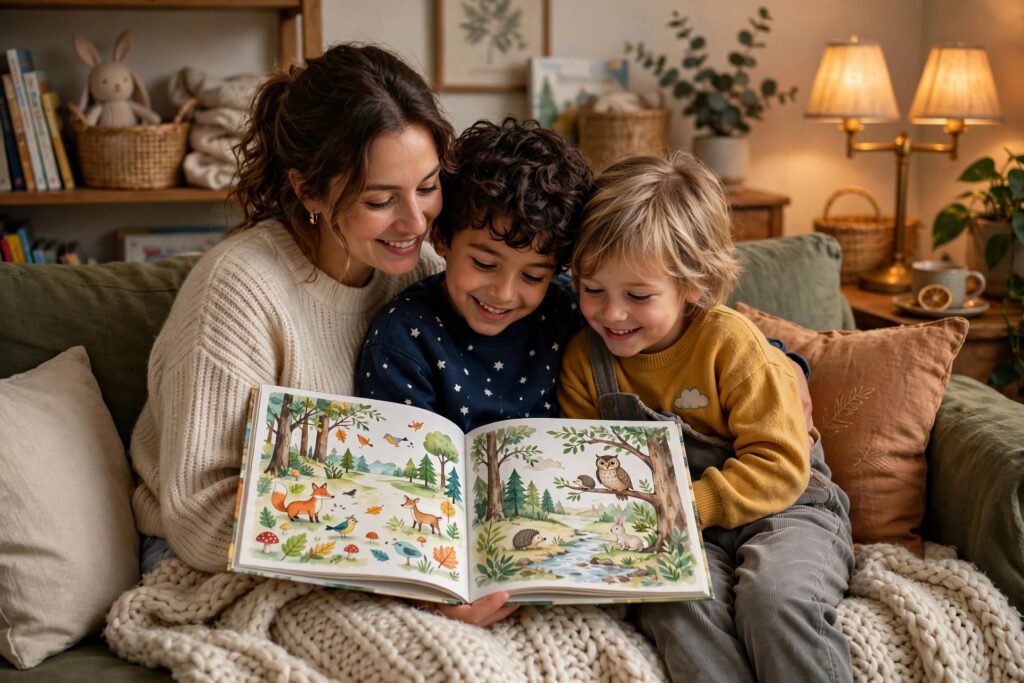
Ages 0–5: read aloud, daily, no exceptions. 15–20 minutes of reading aloud is the highest-ROI parenting activity in existence for literacy — it builds vocabulary (children’s books contain richer language than everyday speech), print awareness, and the read-aloud bond itself. Let them choose the same book 40 times; repetition is how toddlers learn.
Ages 6–8: shared reading + independence. Take turns reading pages, let them read to you (patience required — halting reading is learning happening), and keep reading aloud above their level — hearing complex stories builds comprehension beyond their decoding ability. Series books are gold at this age: the familiarity pulls them through.
Ages 9–12: autonomy + access. This is where habits cement or die. Provide abundant choice (library trips where they choose, including graphic novels — they count, fully), protect daily reading time (20–30 minutes, ideally replacing a screen slot), and talk about books (not quiz — converse: “what’s happening in your book?” asked with genuine curiosity).
Teens: respect + relevance. Don’t police their choices — YA novels, manga, nonfiction rabbit holes, even fanfiction all build the reading habit. The goal is volume and pleasure; taste refines itself. Modeling matters enormously here: the teen who sees parents reading has a live template — and shared reading experiences (the same novel discussed at dinner) can bridge the connection gap that widens in adolescence. For building your own consistent habit alongside theirs, see how to build a daily reading habit — family reading culture starts with the adults.
Converting the reluctant reader
For the child who “hates reading,” diagnose before prescribing: is it a skill problem? (struggling decoders avoid reading because it’s painful — get a reading assessment; dyslexia and other difficulties need targeted intervention, not more “just read” pressure). Is it a material problem? (the most common cause — they’ve never found the right book; the librarian’s question “what do you love?” followed by matching books to interests works wonders). Is it a competition problem? (screens win on stimulation — don’t ban screens, but create sacred reading times and make books ridiculously accessible).
Tactics that convert: let them quit books freely (forcing finishes teaches that reading is a chore — the “50-page rule” preserves autonomy); try audiobooks (they build vocabulary, comprehension, and story-love — they absolutely count); read the same book and discuss it (shared experience beats assigned reading); and leverage interests ruthlessly (Minecraft handbooks, sports biographies, joke books — the gateway drug principle applies to reading too).
Mistakes that kill the love of reading
Forced reading logs with punitive tracking — turns pleasure into homework. Restricting choice (“no graphic novels, read real books”) — snobbery that shrinks reading. Reading as punishment or reward-removal (“no books until homework’s done” teaches books are the consolation prize). Correcting every mistake during read-alouds — interrupts flow and teaches that reading is performance, not pleasure. Stopping read-alouds too early — parents often quit when kids can read independently, exactly when hearing richer stories matters most.
The social environment around reading matters as much as the books — teaching kids good manners and social grace pairs naturally with the empathy that deep reading builds.
Conclusion
Improving your child’s reading skills at home comes down to: abundant book access, visible parental modeling, daily read-alouds (kept up well past independence), genuine choice in what they read, protected reading time, and never turning reading into punishment or performance. The research is unambiguous — home reading culture predicts literacy more powerfully than programs or products. You don’t need the perfect method. You need books, time, and warmth, repeated daily.
The library: your secret weapon
The single most underused resource in American family literacy is free and in every town: the public library. Weekly library visits solve the access problem permanently — unlimited fresh books at zero cost, chosen by the child, with librarians who are professional matchmakers between kids and stories. Make it a ritual: same day each week, no rush, hot chocolate after. Library summer reading programs measurably prevent the “summer slide” in reading achievement, and they’re free. Families who treat the library as a weekly destination raise readers the way families who treat the park as a destination raise active kids — through joyful, repeated exposure that makes the habit feel like family identity rather than obligation. For authoritative guidance, see the Reading Rockets and the U.S. Department of Education literacy resources.
Frequently Asked Questions
How can I get my child to read more at home?
Maximize access (books everywhere, regular library trips), model reading yourself, protect 20–30 minutes of daily reading time, let them choose freely (graphic novels count), and keep reading aloud above their level. Never make reading punitive.
Do graphic novels count as real reading?
Yes, fully. Research shows graphic novels build vocabulary, comprehension, visual literacy, and — crucially — reading habit. For reluctant readers, they’re often the gateway to broader reading. Never restrict them out of snobbery.
At what age should I stop reading aloud to my child?
Much later than most parents think — keep reading aloud through elementary school and beyond. Hearing complex stories builds vocabulary and comprehension far above a child’s independent reading level, and the shared experience sustains the reading bond.
What if my child hates reading?
First check for skill problems (struggling decoders need assessment, possibly for dyslexia). If it’s motivation, the fix is almost always material — help them find the right books via librarians, allow free quitting, try audiobooks, and leverage their existing interests ruthlessly.
How much should my child read each day?
Aim for 20–30 minutes of pleasure reading daily for school-age children, plus read-aloud time for younger ones. Consistency matters more than duration — 20 daily minutes compounds into millions of words per year.