
How to Learn Guitar as a Complete Beginner
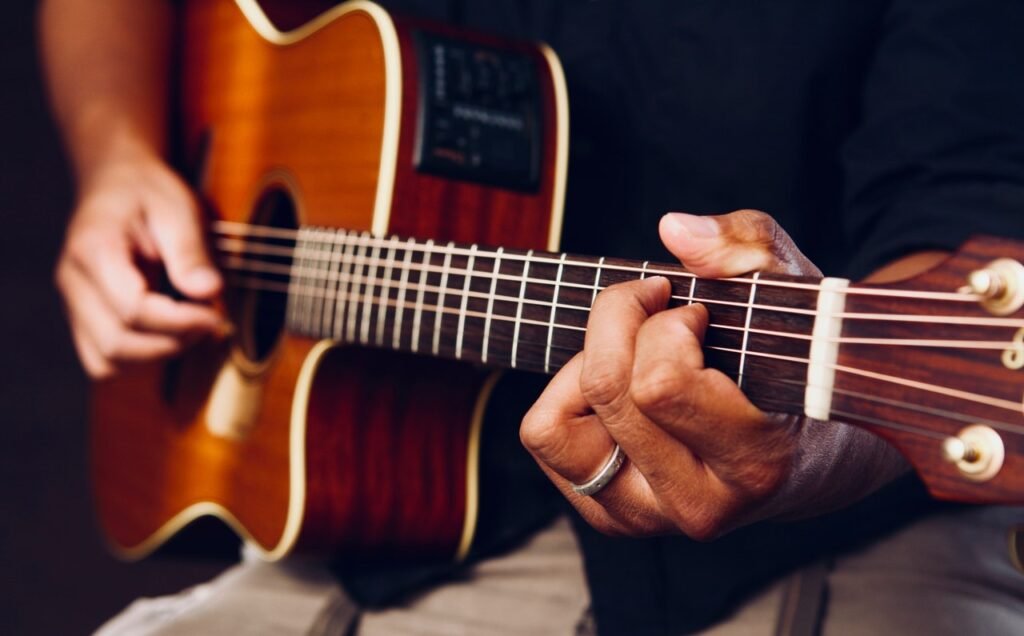
Learning guitar as a complete beginner is equal parts exciting and humbling. Your fingers hurt, the chords buzz, and the songs in your head sound nothing like what comes out of the instrument. Everyone goes through this. The difference between people who learn guitar and people who quit is not talent; it is surviving the first month with a practice approach that produces audible progress.
I started guitar twice. The first time I quit after three weeks. The second time I stuck with it, and the difference was entirely in how I practiced, not how much.
How Can I Learn to Play Guitar as a Complete Beginner?
1. Get a Playable Guitar
You do not need an expensive guitar, but you need one that is set up properly. A cheap guitar with high action, where the strings sit far from the fretboard, will hurt your fingers and make you quit. Budget around $150 to $250 for a decent beginner acoustic, or consider starting on electric, which has lighter strings and lower action and is physically easier to learn on. Have the guitar set up by a shop: adjusting the action costs little and transforms playability. Borrow or rent before buying if you are unsure about committing.
2. Learn the Essential First Chords
Start with G, C, D, Em, and Am. These five chords open up thousands of songs, and they share finger positions that make transitions easier. Practice changing between two chords slowly, then add a third. Do not rush to learn twenty chords; master transitions between five and you can play real music. Use a metronome or a simple strumming pattern and change chords on the beat, even if it is messy at first.
3. Build a Practice Routine That Sticks
Twenty focused minutes daily beats two hours on Saturday. Structure it: five minutes of chord transitions, five minutes of strumming patterns, five minutes of a song you are learning, five minutes of something fun. Consistency builds the calluses and muscle memory that make everything easier. Put the guitar on a stand in your living space, not in a case in the closet; you will practice ten times more if picking it up takes three seconds.
4. Use Structured Learning Resources
Free video lessons can take you surprisingly far if you follow a structured beginner course rather than bouncing between random videos. Pick one course and work through it in order. The structure matters more than the specific teacher. Once you have the basics, learning songs you love is the best practice there is; motivation beats methodology every time.
5. Learn to Read the Right Things
You do not need standard notation to start. Chord charts and tablature will carry you through your first year. Learn to read a chord diagram, learn what the numbers in tab mean, and you can learn almost any song. Theory can come later, and it will make more sense once your fingers know what they are doing.
Surviving the Beginner Pains
- Sore fingers: normal for two to three weeks. Calluses form with consistent short sessions. Press just behind the fret, not on top of it, using the minimum pressure needed.
- Buzzing strings: usually fingers touching adjacent strings or pressing too lightly. Slow down and check each finger’s placement.
- Slow chord changes: practice the change, not the chords. Loop two chords back and forth until the fingers move as a unit.
- Rhythm struggles: strum muted strings while counting out loud. Get the right hand steady before worrying about the left.
- Plateaus: every guitarist hits them. Learn a song slightly above your level; the stretch breaks the plateau.
Playing With Others
Music is social, and playing with others accelerates learning dramatically. Once you can hold a few chords in rhythm, find a casual jam, take a group class, or play along with friends. It is terrifying and wonderful, and it will improve your timing faster than any solo practice. Supporting local musicians by attending small shows also connects you with a community and reminds you why you started. And when practice gets lonely, karaoke for shy singers is a low-stakes way to perform.
For gear reviews and lesson resources, WIRED covers music tech, and Billboard tracks the artists you will be learning to play.
Essential Accessories (and What to Skip)
The accessory list is short. A tuner: clip-on tuners are cheap, accurate, and essential; playing out of tune trains your ear badly. Extra strings: strings break and dull; learn to change them early, it is a fifteen-minute skill. A capo: this clamp changes the key instantly and opens up thousands of songs; buy one once you know a few chords. Picks in various thicknesses: try several; pick feel is personal. A strap: even if you sit to play, a strap stabilizes the guitar. Skip for now: expensive cables, pedals, humidifiers for most climates, and any “beginner bundle” gadget that is not on this list. Upgrade when a specific limitation frustrates you, not before.
Your First Ten Songs
Learn songs early and often; they are the reward that sustains practice. Great first songs using G, C, D, Em, and Am: “Knockin’ on Heaven’s Door,” “Horse with No Name” (two chords!), “Riptide,” “Good Riddance (Time of Your Life),” “Wonderwall,” “Love Me Do,” “Three Little Birds,” “Brown Eyed Girl,” “Free Fallin’,” and “Zombie.” Each teaches something: strumming patterns, chord transitions, dynamics. Play along with the recordings; it develops timing faster than any metronome. And learn one song that impresses non-players early; having a party piece motivates practice like nothing else.
Guitar FAQs
Acoustic or electric to start? Electric is physically easier: lighter strings, lower action. Acoustic is simpler logistically: no amp needed. Either works; playability matters more than type.
How long until I am decent? Basic chord songs within a month of daily practice. Comfortable playing within six months. “Decent” keeps moving; that is the fun of it.
Do I need lessons? Not necessarily at first. Structured online courses work well for beginners. Consider a few in-person lessons later to fix bad habits.
Why do my fingers hurt? Normal for two to three weeks. Short, consistent sessions build calluses fastest. Press just behind the fret with minimum pressure.
What is the most important practice habit? Consistency over duration. Twenty focused minutes daily beats occasional marathons, every time.
The takeaway: get a playable guitar, master five chords, practice twenty focused minutes daily, and learn songs you love. Survive the first month and the instrument starts giving back more than it demands.




1 thought on “How to Learn Guitar as a Complete Beginner”