How to Stay Hydrated During Summer Sports in the US
Summer in America means youth soccer tournaments in Texas heat, weekend 10Ks in Florida humidity, and high school football two-a-days in August. It also means heat exhaustion, cramping sidelines, and every year, preventable heat illness. The American College of Sports Medicine is blunt about it: dehydration and heat illness are among the most common — and most preventable — reasons athletes end up in medical tents.
Staying hydrated during summer sports isn’t about chugging a gallon of water at halftime. It’s a system: what you drink before, how much during, what you replace after, and how you read your body’s signals in real heat. Here’s the complete playbook, built on sports medicine guidance and adapted to the reality of American summers.
Start hydrated: the 24-hour rule
The biggest hydration mistake athletes make happens the day before the game. You cannot “catch up” on hydration in the hour before kickoff — your body needs time to absorb and distribute fluids. The practical standard from sports dietitians: in the 24 hours before competition or a hard summer training session, drink steadily through the day so your urine runs pale yellow, and drink 16–20 ounces of water 2–3 hours before the event.
Avoid the trap of over-drinking plain water right before exercise. Flooding your system dilutes blood sodium without improving hydration status, and in extreme cases contributes to hyponatremia — dangerously low sodium — which has hospitalized marathoners and endurance athletes. Steady beats sudden, every time.
How much to drink during summer sports
Sweat rates vary enormously: a 150-pound soccer player might lose 1 liter per hour in moderate heat, while a 220-pound football lineman in pads can lose over 2.5 liters per hour in August humidity. Generic “drink 8 ounces every 20 minutes” advice is a starting point, not a prescription.
The gold-standard approach is a sweat-rate test, and it’s simpler than it sounds: weigh yourself (minimal clothing) before and after a typical summer workout, accounting for fluids consumed. Every pound lost equals roughly 16 ounces of sweat. Do this two or three times in similar conditions and you’ll know your personal rate. Then aim to replace most — not all — of it during activity; replacing 100 percent isn’t necessary and can cause GI distress. Our guide to how much water you should really drink each day covers your baseline needs off the field.
Water versus sports drinks: the one-hour rule
For activity under an hour in the heat, plain water is all you need. Beyond an hour — or in extreme heat regardless of duration — switch to a sports drink containing sodium and carbohydrate. Sodium drives thirst, helps retain the fluid you drink, and replaces what’s lost in sweat (the average athlete loses 500–1,000 mg of sodium per liter of sweat). Carbohydrate at 6–8 percent concentration fuels working muscles and speeds fluid absorption.
Skip the energy drinks. Their high caffeine and sugar loads are counterproductive for hydration, and several medical organizations have flagged them as inappropriate for youth athletes. Chocolate milk, surprisingly, has decent evidence as a post-exercise recovery drink — but during activity, stick to purpose-built sports drinks.
Reading your body: the early warning signs
Thirst is a lagging indicator — by the time you feel thirsty during summer sports, you’re already 1–2 percent dehydrated, and performance is already declining. Studies show even 2 percent dehydration impairs endurance, decision-making, and skill execution. Learn the earlier signals: darker urine at halftime, headache creeping in, unusually heavy legs, or a heart rate that’s high for the effort.
Know the escalation ladder. Heat cramps (painful muscle spasms) mean stop, stretch, and replace sodium. Heat exhaustion — heavy sweating, weakness, nausea, dizziness — means stop activity immediately, move to shade, and cool down. Heat stroke — confusion, hot dry skin or profuse sweating that stops, body temperature above 104°F — is a 911 emergency where every minute of delayed cooling increases the risk of organ damage. Learn to spot these in teammates too; the signs of dehydration are worth every athlete and parent knowing by heart.
Hydration strategies for specific summer sports
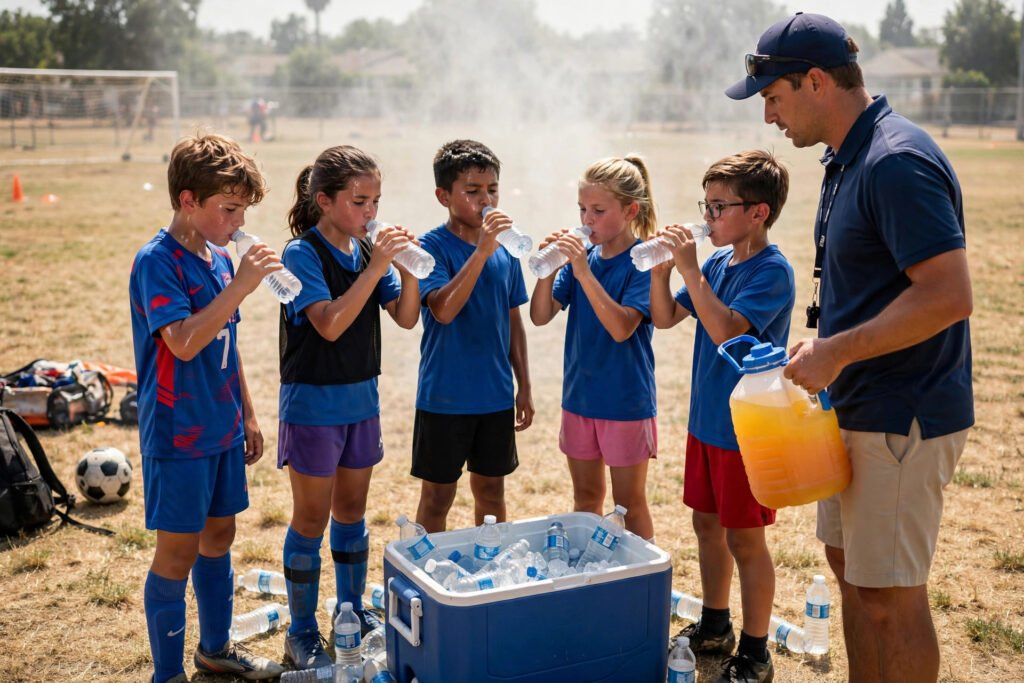
Youth soccer and lacrosse tournaments. Multi-game days are the danger zone — kids don’t drink enough voluntarily and often play 3–4 games. Set team water breaks every 15–20 minutes regardless of the score, keep flavored sports drinks available (kids drink more when it tastes good), and weigh tournament players morning and evening to catch cumulative dehydration across days.
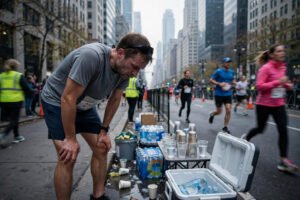
Running and cycling. Plan routes with water stops or carry fluids; in heat above 85°F, reduce pace expectations by 30–60 seconds per mile and pour water over your head and neck at aid stations — external cooling meaningfully lowers core temperature.
Football two-a-days. Linemen in full pads face the highest heat-illness risk in American sports. The NCAA and most state high school associations now mandate acclimatization periods — typically 10–14 days of gradually increasing intensity and equipment — because the first week of August practice produces a disproportionate share of heat emergencies. No practice is worth skipping acclimatization.
Tennis and golf. Long exposures with intermittent intensity fool athletes into under-drinking. Keep a bottle in sight at all times, drink at every changeover or between holes, and use shade and cooling towels during breaks.
Post-game recovery hydration
After summer competition, replace 150 percent of your fluid deficit over the next few hours — the extra accounts for ongoing urine losses. Include sodium: salty foods, broth, or a sports drink, because plain water alone after heavy sweating just increases urination without restoring balance. Your urine should return to pale yellow within a few hours; if it’s still dark by evening, you haven’t caught up.
One overlooked factor: alcohol. The post-tournament beer is an American tradition, but alcohol is a diuretic that actively works against rehydration. If you drink after summer competition, match every alcoholic drink with a full glass of water and eat salty food alongside.
Special considerations: kids, masters athletes, and medications
Children overheat faster than adults — higher surface-area-to-mass ratio, lower sweating capacity — and they need adult-enforced drink breaks because they won’t self-regulate. Masters athletes (40+) have blunted thirst sensation and reduced kidney concentrating ability, so they need more deliberate hydration schedules, not less. And several common medications — diuretics, some blood pressure drugs, ADHD stimulants — impair heat tolerance or increase fluid loss; athletes on these should talk to their doctor about summer training adjustments before the season starts.
Conclusion
Hydration during summer sports in the US is a 24-hour discipline, not a halftime scramble. Start the day before, know your personal sweat rate, switch to electrolyte drinks past the one-hour mark, read the early warning signs in yourself and your teammates, and recover with fluids plus sodium afterward. Do those five things and heat becomes a manageable variable — not the thing that ends your season. For authoritative guidance, see the National Athletic Trainers’ Association heat guidance and the National Weather Service heat safety.
Frequently Asked Questions
How much water should I drink during a summer soccer game?
Aim for roughly 6–8 ounces every 15–20 minutes as a starting point, then personalize with a sweat-rate test (weigh before and after training). For games lasting over an hour in heat, switch to a sports drink with sodium and carbohydrate.
Are sports drinks better than water for summer sports?
For activity under an hour, water is sufficient. Beyond an hour — or in extreme heat — sports drinks are better because sodium improves fluid retention and replaces sweat losses, while carbohydrate fuels muscles and speeds absorption. Avoid energy drinks, which are counterproductive for hydration.
What are the signs of heat exhaustion in athletes?
Heavy sweating, weakness, nausea, dizziness, headache, and pale or flushed skin. Stop activity immediately, move to shade, and cool down. If confusion develops or sweating stops with very hot skin, treat it as heat stroke and call 911.
Can you drink too much water during sports?
Yes — over-drinking plain water during long events can dilute blood sodium (hyponatremia), which is dangerous. Drink to replace most of your sweat losses rather than maximally, and include sodium via sports drinks or salty foods during and after long efforts.
How do I keep youth athletes hydrated at tournaments?
Mandate drink breaks every 15–20 minutes, offer flavored sports drinks (kids drink more), weigh players morning and evening across multi-day tournaments to catch cumulative deficits, and ensure shade and cooling options between games.