How to Build Cycling Endurance for Longer Rides in America
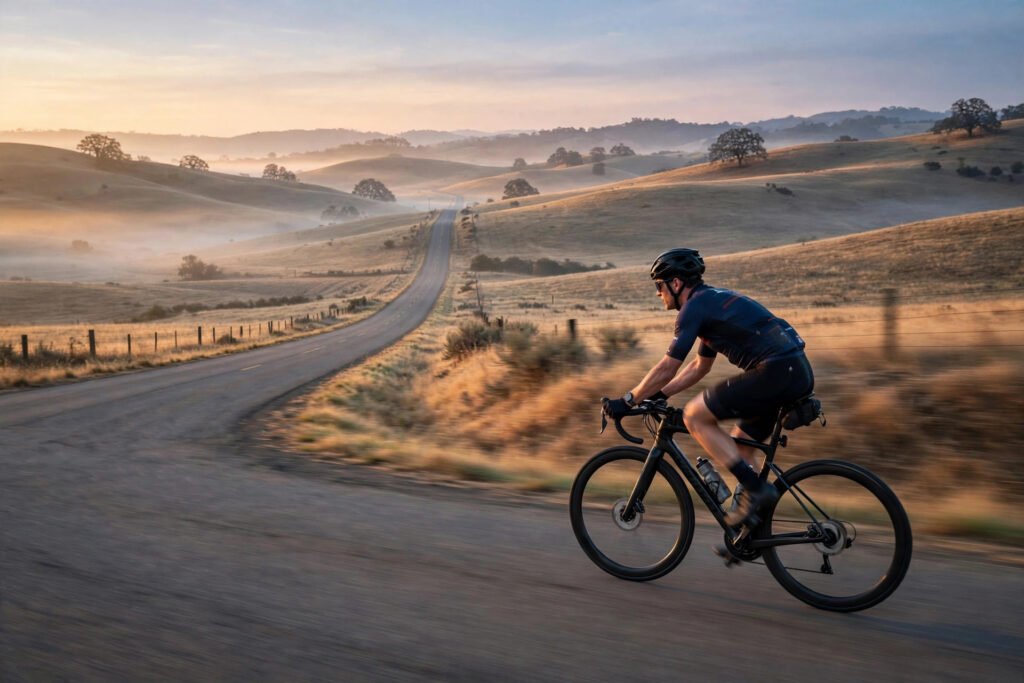
There’s a specific kind of suffering known to every cyclist: mile 40 of a ride you planned for 60, legs hollow, lungs fine, willpower evaporating. That’s not a fitness problem in the way most riders think — it’s an endurance problem, and endurance is the most trainable quality in cycling. Whether you’re eyeing your first century ride, a gran fondo, or just want the local group ride to stop dropping you, building cycling endurance follows principles that sports science has refined for decades.
This guide lays out the complete system American recreational cyclists use to go from 25-mile rides to 75-plus: the aerobic base, the long ride, the fueling, and the weekly structure that ties it together. No power meter required — though we’ll note where one helps.
Endurance is built at low intensity (yes, really)
The counterintuitive foundation of cycling endurance: most of your riding should feel easy. Professional cyclists spend roughly 80 percent of their training time at low intensity — conversational pace, what coaches call Zone 2. This easy riding drives the adaptations that matter for long distances: more mitochondria in muscle cells, denser capillary networks, better fat-burning efficiency, and a stronger aerobic engine overall.
For a recreational rider, “Zone 2” means a pace where you can speak in full sentences — typically 60–70 percent of max heart rate. Most American club riders go wrong by riding every outing at “spirited group ride” intensity: too hard to build the aerobic base, too easy to build top-end fitness. The result is the classic plateau — decent for 30 miles, dying at 50. Flip the ratio: make your easy rides truly easy, and save the hard efforts for one or two focused sessions per week. The same aerobic logic underlies the benefits of walking 30 minutes a day — low-intensity volume is a universal endurance builder.
The weekly long ride: your endurance cornerstone
One ride per week should be substantially longer than the others — this is the session that teaches your body to keep going. The progression rule: increase your long ride by 10–15 percent per week, with an easier week every third or fourth week. If your current long ride is 30 miles, the path to 75 looks like 33, 36, 40, 30 (recovery), 44, 48, 52, 40, and so on.
Long-ride execution matters as much as distance. Ride the first two-thirds at genuinely easy pace — this is where riders sabotage themselves by starting at group-ride intensity and limping home. Practice your nutrition strategy on every long ride (more below). And ride long on terrain similar to your goal event: training for a hilly century on flat rail-trails leaves you unprepared for the muscular demands of climbing.
How long before you’re “endurance fit”?
Aerobic adaptations begin within 2–3 weeks of consistent Zone 2 volume, but meaningful endurance — the kind that carries you through a century — typically takes 8–12 weeks of structured buildup. The good news: aerobic fitness is remarkably persistent. A base built over one season carries substantially into the next, which is why experienced riders seem to “get fit” faster each spring.
Fueling: the limiter nobody trains
Most recreational cyclists don’t lack fitness for longer rides — they lack fuel. Your body stores roughly 90 minutes’ worth of glycogen at moderate intensity; beyond that, you’re running on fumes unless you eat. The bonk — cyclists’ term for glycogen depletion — feels like sudden, total system failure, and it’s almost always a fueling error, not a fitness gap.
The protocol: start eating within the first 45 minutes of any ride over 90 minutes, targeting 60–90 grams of carbohydrate per hour (up to 90–120 for very long or intense rides, using mixed glucose-fructose sources). That’s roughly one energy bar plus one gel per hour, or real food equivalents — bananas, rice cakes, fig bars, and peanut butter sandwiches all work. Drink 500–750 ml of fluid per hour in moderate conditions, more in heat, with electrolytes on rides over two hours. And practice all of it in training: your gut is trainable, and race-day nutrition experiments are how centuries become sag-wagon rides.
Structure your week: the endurance template
Here’s a proven weekly structure for a rider with 6–8 hours available, targeting longer distances:
- Monday: rest or 30-minute easy spin
- Tuesday: 60–75 min with intervals (e.g., 4×8 min at threshold effort) — your one hard weekday session
- Wednesday: 60–90 min easy Zone 2
- Thursday: 60 min with shorter intervals or hill repeats (second quality session)
- Friday: rest
- Saturday: long ride, easy pace, practicing nutrition (2.5–5 hours, building over weeks)
- Sunday: 60–90 min easy recovery spin
Two quality sessions plus long aerobic volume plus real rest: that’s the entire formula. Riders with less time should protect the long ride and one interval session above all else — those two sessions deliver the majority of endurance gains. Timing your sessions well matters too; the best time of day to exercise depends on your schedule and chronotype, but consistency beats optimization.
Strength, bike fit, and the unglamorous multipliers
Strength training twice weekly — squats, deadlifts, lunges, core — improves cycling economy and delays fatigue on long rides. Cyclists fear “bulky legs,” but endurance riders doing moderate strength work get stronger without meaningful mass gain, and the late-ride payoff is enormous.
Bike fit becomes critical as distance grows. A position that’s fine for 25 miles can produce knee pain, numb hands, or neck agony at mile 60. A professional fit ($150–300 at most US bike shops) is the highest-ROI purchase for any rider targeting longer distances — cheaper than a wheel upgrade and worth ten times more.
Pacing skill is the final multiplier. Learn to ride by perceived effort and heart rate rather than chasing wheels. On event day, the riders who finish strong are the ones who rode the first third easier than their ego wanted.
Conclusion
Building cycling endurance in America — from club rides in the suburbs to centuries through wine country — comes down to an unglamorous formula: lots of genuinely easy riding, one progressively longer ride per week, disciplined fueling starting early, two strength sessions, and a bike that fits. Follow it for 8–12 weeks and the distances that currently break you will start feeling like the warm-up. For authoritative guidance, see the USA Cycling and the PeopleForBikes riding resources.
Frequently Asked Questions
How long does it take to build cycling endurance?
Expect noticeable improvement in 3–4 weeks and meaningful long-distance capability in 8–12 weeks of consistent training. The key drivers are weekly Zone 2 volume and a progressively longer weekend ride, increased 10–15 percent per week.
What is Zone 2 training for cycling?
Zone 2 is low-intensity aerobic riding — roughly 60–70 percent of max heart rate, a pace where you can hold a conversation. It builds mitochondrial density, capillary networks, and fat-burning efficiency. About 80 percent of endurance training time should be at this intensity.
How should I fuel a long bike ride?
Eat 60–90 grams of carbohydrate per hour starting within the first 45 minutes, drink 500–750 ml of fluid per hour (more in heat), and include electrolytes on rides over two hours. Practice your exact nutrition strategy on training rides before event day.
Do I need a power meter to build endurance?
No. Heart rate and perceived exertion are sufficient for recreational endurance building. A power meter adds precision for interval training, but the aerobic base that drives long-distance cycling responds perfectly well to well-executed Zone 2 riding by feel.
How many miles a week do I need to ride a century?
Most recreational riders complete centuries comfortably on 100–150 miles per week, built around one long ride that peaks at 70–80 miles in training. Consistency and the long-ride progression matter more than any specific weekly total.