New Construction Homes: Are They Worth the Premium Price?
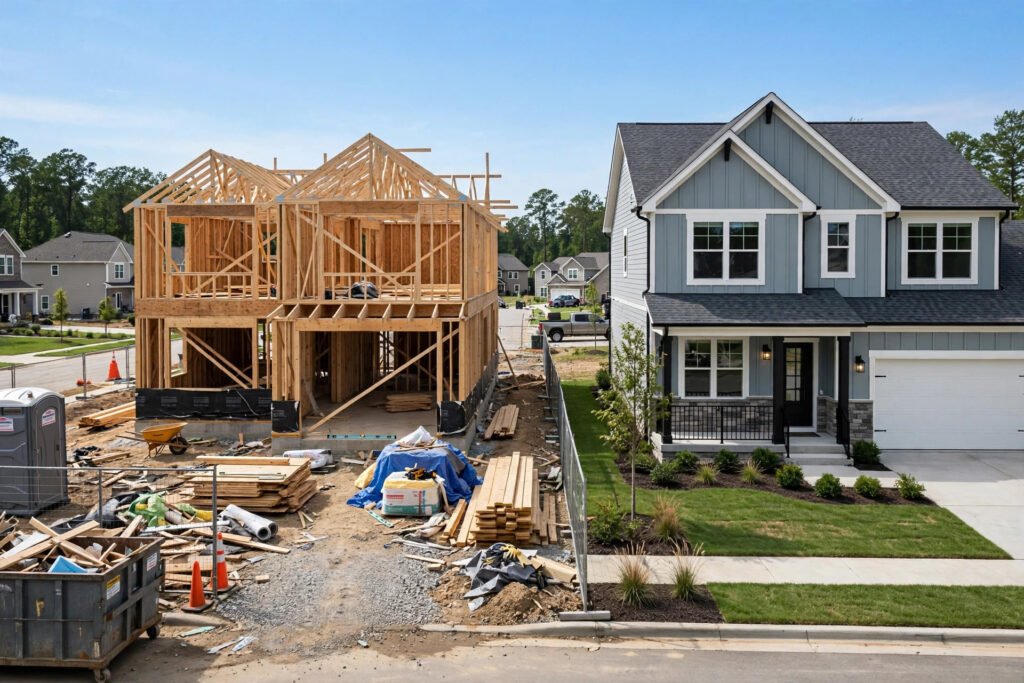
The model home smells like fresh paint and possibility. Everything is new — the roof, the appliances, the HVAC, the warranty paperwork in a neat folder. The price, however, is 10–20% above comparable resale homes, and your agent is raising an eyebrow. New construction homes in America command a real premium, and builders know exactly what they’re selling: certainty, customization, and energy efficiency, wrapped in granite countertops. But is the premium worth it, or are you paying extra for the smell of new paint? Here’s the honest breakdown of what new construction really costs, what it really delivers, and how to decide.
What the Premium Actually Buys You
The new-construction premium — typically 10–20% over comparable resale — purchases several genuine advantages. Everything is new and under warranty: builder warranties commonly cover 1 year on workmanship, 2 years on mechanical systems, and 10 years on structural elements, which means your first decade’s major-repair risk is largely transferred to the builder. Energy efficiency is meaningfully better: modern building codes require insulation, windows, HVAC, and air sealing far beyond older homes, cutting utility bills 20–40% versus a comparable 1990s resale. Over a decade, those savings partially offset the premium on their own.
Customization is the emotional draw: choosing your lot, floor plan, finishes, and fixtures means the home fits your life from day one — no renovation compromises, no living through someone else’s taste. Modern floor plans reflect how people actually live now (open kitchens, home offices, main-floor primary suites) rather than 1970s assumptions. And there’s the maintenance holiday: for the first 5–10 years, your maintenance budget is a fraction of a resale’s — no roof anxiety, no 20-year-old furnace, no mystery plumbing. For busy professionals, that peace of mind has real economic value. The National Association of Home Builders’ buyer resources detail current construction standards and warranty norms worth understanding before you tour.
The Hidden Costs Behind the Sticker Price
The base price is never the final price — and the gap is where new-construction budgets die. The model home you’re touring includes $50,000–$150,000 in upgrades: premium flooring, upgraded cabinets, luxury fixtures, extended patios, and designer lighting that are all extra. Builder design centers are profit centers, with upgrade markups of 40–100% over retail. That “$450,000” base price becomes $540,000 with the finishes that made you fall in love, and financing covers it all — meaning you pay interest on the upgrades for 30 years.
Beyond upgrades, budget the costs resale buyers never face. Landscaping: builders deliver a graded dirt lot with minimal sod — a real yard (sod, irrigation, fencing, plantings) costs $10,000–$30,000. Window coverings for an entire new house: $5,000–$15,000. Appliances if not included, gutters, mailbox, and all the small things existing homes simply have. Then the community costs: new developments often carry higher property taxes (assessed on your purchase price, not the pre-development land value), HOA fees from day one, and Mello-Roos or special tax district assessments in some states that add hundreds monthly for decades. Price the total, not the base — the premium is always larger than advertised. And protect your interests with independent guidance; the Consumer Financial Protection Bureau’s new-construction buying guidance explains your rights when the seller is also the builder.
New Construction Risks Nobody Mentions at the Model Home
New doesn’t mean perfect. Construction defect issues — poor grading causing drainage problems, improperly installed windows, HVAC systems sized wrong for the floor plan — are common enough that every state has construction-defect legal frameworks. The builder’s warranty is your protection, but warranty claims require persistence: document everything, report promptly, and understand that builders prioritize speed over perfection. Hire an independent inspector for pre-drywall and final inspections ($300–$600 each) — the highest-ROI spending in new construction, catching issues while walls are still open.
Timeline risk is real: build times of 6–12 months (longer for custom) mean rate-lock expirations, rental overlap costs, and life changes during the wait. Your contract’s completion date is an estimate, not a promise — understand the delay provisions. Community risk matters too: you’re buying into a neighborhood that doesn’t exist yet. The promised amenities, retail, and schools may arrive years late or never; early buyers live in a construction zone; and if the builder struggles, unfinished common areas become everyone’s problem. Research the builder’s reputation ruthlessly: talk to owners in their completed communities, check complaint records, and verify financial stability. A builder’s warranty is only as good as the builder backing it.
When New Construction Is Worth It — and When It Isn’t
The premium is most justified when: you value customization highly and would renovate a resale anyway (the “renovation premium” on resales often exceeds the new-construction premium); energy efficiency matters for your budget or values; you lack the time or temperament for maintenance surprises; the local resale inventory is old, overpriced, or poorly maintained; or builder incentives (rate buydowns, closing cost credits, free upgrades) effectively discount the premium — negotiate these aggressively, especially at quarter-end when builders chase sales targets.
It’s least justified when: comparable resales in established neighborhoods cost 20%+ less and need only cosmetic updates (see which improvements actually add resale value — the math often favors updating a solid older home); you value mature neighborhoods with grown trees, established schools, and proven appreciation over new-development uncertainty; or the HOA and tax burden of the new community erases the maintenance savings. Also consider resale dynamics: new homes depreciate slightly once “used” (the new-construction premium doesn’t fully transfer to the second buyer), while well-located resales in established areas often appreciate more steadily. Even simple resale advantages like established landscaping and curb appeal — free with a resale, $20,000 with new construction — tilt the math.
Negotiating New Construction (Yes, You Can)
The myth that builders don’t negotiate costs buyers thousands. Builders negotiate constantly — just differently than resale sellers. They protect base prices (to preserve comparable values for future sales) but concede on everything else: free or discounted upgrades, closing cost credits, rate buydowns (often worth $10,000–$20,000 in real money), extended warranties, and included appliances or landscaping. The leverage peaks at quarter-end and year-end, on inventory homes (completed but unsold — builders pay carrying costs daily), and on the last lots in a phase.
Bring your own agent — the builder’s sales representative works for the builder, and many buyers don’t realize the on-site agent isn’t neutral. Your agent costs you nothing extra (the builder pays the commission from their marketing budget) and negotiates incentives you’d never know to ask for. Get everything in writing: upgrade allowances, completion timelines, warranty terms, and what happens if the builder misses deadlines. And have a real estate attorney review the builder’s contract — it’s drafted by the builder’s lawyers, heavily favoring the builder, with arbitration clauses and warranty limitations you should understand before signing.
The Bottom Line
New construction’s 10–20% premium buys real advantages — warranties, efficiency, customization, and a maintenance holiday — but the true premium is larger once upgrades, landscaping, and community costs are included. It’s worth it when you’d renovate a resale anyway, when builder incentives discount the gap, and when certainty outweighs the premium for your life stage. It’s not worth it when solid resales cost far less, when you value established neighborhoods, or when the total cost (not the base price) breaks your budget. Price the all-in number, inspect independently, negotiate the incentives, and buy the certainty with eyes open.
Frequently Asked Questions
How much more does new construction cost than resale?
Typically 10–20% above comparable resale, but the all-in gap is larger once upgrades ($50,000–$150,000), landscaping ($10,000–$30,000), and window coverings are included. Always compare total costs, not base prices.
Do I need a real estate agent for new construction?
Yes — the builder’s on-site representative works for the builder. Your own agent costs you nothing extra (builders pay the commission) and negotiates incentives, reviews contracts, and protects your interests.
Should I get an inspection on a new construction home?
Absolutely — hire an independent inspector for pre-drywall and final inspections. New doesn’t mean defect-free, and catching issues while walls are open saves enormous hassle later.
Can you negotiate with home builders?
Yes, especially on upgrades, closing credits, rate buydowns, and inventory homes. Builders protect base prices but concede generously elsewhere — leverage peaks at quarter-end and on completed unsold inventory.