Is Idling Your Car in Winter Bad? What Mechanics Say
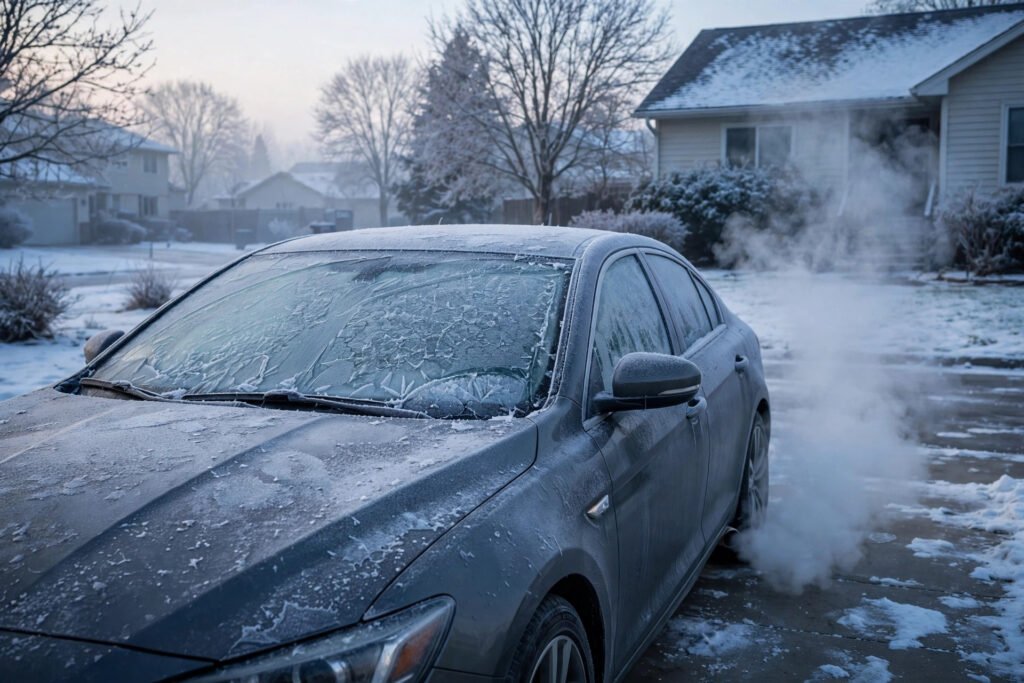
It’s 15 degrees in Chicago, and your neighbor’s SUV has been running in the driveway for 20 minutes — “warming up,” as cars have supposedly needed since the dawn of winter. You’ve probably done it too: remote start from the kitchen, coffee in hand, letting the engine idle until the cabin is toasty. It feels responsible. Here’s the uncomfortable truth from mechanics, engineers, and the Department of Energy: idling your car for a long time in winter is bad for your engine, your wallet, and the air — and modern cars don’t need it. Here’s what actually happens during those warm-up minutes and what to do instead.
Why the Warm-Up Myth Exists (and Why It’s Obsolete)
The warm-up ritual made sense in the carburetor era. Old engines needed time for the carburetor to deliver the right fuel mixture and for thick, cold conventional oil to circulate — driving off immediately could cause stalling and wear. But carburetors disappeared from American cars decades ago. Modern fuel-injected engines with electronic sensors adjust the fuel mixture instantly, and modern synthetic oils flow at temperatures that would have turned 1980s conventional oil to molasses. Your 2020 crossover is ready to drive within 30 seconds of starting, even well below freezing.
In fact, idling warms the engine slower than driving gently. An idling engine produces minimal heat; driving under light load warms the oil, transmission, wheel bearings, and tires — the whole drivetrain — far faster. The Department of Energy’s fuel economy guidance is explicit: today’s engines need no more than 30 seconds of idling before driving, and the best warm-up is 30 seconds of idling followed by gentle driving. Everything beyond that is habit, not engineering.
What Extended Idling Actually Does to Your Car
First, fuel waste: idling burns roughly a quarter to half a gallon per hour depending on engine size, and the DOE estimates personal-vehicle idling wastes billions of gallons of fuel annually in America. Twenty minutes of daily winter idling over four months burns 25–40 gallons — $75–$140 literally vanishing into cold air, plus the emissions. Second, engine wear: idling is among the least efficient operating states — fuel washes past cold piston rings into the oil, diluting it and reducing its protective ability, while incomplete combustion builds carbon deposits on valves and injectors. Fleet studies consistently show excessive idling shortens engine life.
Third, it doesn’t even warm the cabin efficiently. The heater core needs hot coolant, and coolant heats slowly at idle — you’ll wait 10–15 minutes for real warmth idling, versus 3–5 minutes driving gently. Heated seats and steering wheels (now common even on mainstream trims) warm you directly in under two minutes, making them far more effective than idling for comfort. Fourth, the environmental and legal angles: many American cities and states have anti-idling ordinances (typically limiting idling to 3–5 minutes), with fines that make the habit expensive beyond fuel. And an idling, unattended car is a theft invitation — “puffing” thefts spike every winter. AAA’s winter driving guidance covers these risks alongside broader cold-weather car care.
What to Do Instead: The 30-Second Rule and Real Winter Prep
The correct procedure: start the car, wait 30 seconds (enough for oil to circulate), then drive gently — moderate speeds, no hard acceleration — until the temperature gauge reaches normal, usually 5–10 minutes. This warms every component, not just the engine, and gets you actual cabin heat fastest. If comfort is the concern, invest in the solutions that work: a remote starter used for 2–3 minutes max (not 20), heated seats, a windshield cover that eliminates scraping, and parking in a garage when possible.
Real winter preparation beats idling rituals every time. Switch to the winter-grade oil your manual specifies (usually a lower winter viscosity like 0W-20), ensure your battery is healthy (cold cranking is batteries’ hardest job — test it in fall), check antifreeze strength, and run winter tires if your climate warrants them — the single biggest winter safety upgrade, dwarfing any warm-up debate. Keep the gas tank above half full (prevents fuel-line freeze and keeps you safe if stranded), and pack a winter emergency kit: blanket, flashlight, water, snacks, and a phone charger. These preparations protect you in ways idling never could. For comprehensive cold-weather readiness, pair this with weatherproofing your home for winter — the same “prepare, don’t react” philosophy applies to your house, where making your home more energy-efficient this winter saves far more fuel than any driveway ritual wastes.
The Exceptions: When Idling Makes Sense
Honesty requires the exceptions. Diesel engines — especially older ones and in extreme cold — genuinely benefit from longer warm-ups; diesel fuel gels in severe cold and the massive iron blocks warm slowly (though modern diesels with block heaters and winter fuel blends need far less idling than their reputation suggests). If your windshield is iced over and you have no scraper, a few minutes of idling with the defroster running is reasonable — though a $10 ice scraper and 90 seconds of elbow grease beats 10 minutes of idling. Emergency situations (waiting for roadside assistance in extreme cold) obviously justify idling for safety.
Turbocharged engines deserve a related note: after hard driving (towing, mountain passes), 30–60 seconds of idling before shutdown lets the turbo cool and preserves bearing life — the reverse of the warm-up question, and actually supported by engineering. But for the daily winter commute in a modern gasoline car, the verdict is settled: 30 seconds, then drive gently. Your engine, your fuel budget, and your neighbors’ air will all be better for it.
The Bottom Line
Idling your car for a long time in winter is bad: it wastes fuel, increases engine wear, warms the car slower than driving, and in many places breaks the law. Modern fuel-injected engines need just 30 seconds of idling before gentle driving — the full drivetrain warms faster under light load than sitting in the driveway. Prepare properly instead (right oil, healthy battery, winter tires, emergency kit), use heated seats for instant comfort, and save the 20-minute warm-ups for the history books. Your grandfather’s carburetor needed it. Your car doesn’t. The most comfortable winter drivers aren’t the ones who idle longest — they’re the ones who prepared best.
Frequently Asked Questions
How long should I warm up my car in winter?
About 30 seconds — just long enough for oil to circulate. Then drive gently until the engine reaches normal temperature. Extended idling warms the engine slower than driving and wastes fuel.
Does idling damage your engine?
Excessive idling causes fuel dilution of the oil, carbon buildup, and increased wear — it’s one of the least efficient operating states. Occasional brief idling is harmless; 20-minute daily warm-ups measurably shorten engine life.
Is it illegal to idle your car in winter?
In many U.S. cities and states, yes — anti-idling laws typically limit idling to 3–5 minutes, with fines varying by jurisdiction. Check your local ordinances; “warming up” is rarely an exemption.
Do diesel cars need longer warm-ups?
Generally yes — diesels warm slower and their fuel can gel in extreme cold. But modern diesels with block heaters and winter-blend fuel need far less idling than older ones. Follow your manufacturer’s cold-weather guidance.