Check Engine Light On? What It Really Means and What to Do
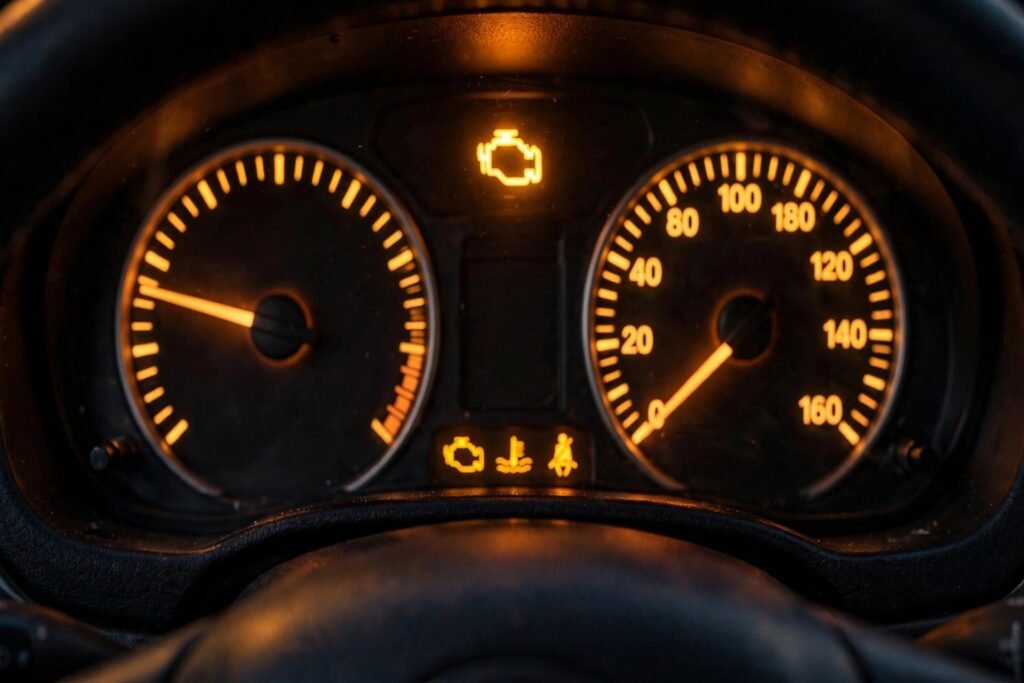
You’re cruising down the highway when it happens: a little amber engine icon illuminates on your dashboard, and your stomach drops. Is the car about to explode? Can you make it home? Is this a $50 gas cap or a $5,000 catastrophe? The check engine light is the most misunderstood warning in American cars — simultaneously over-feared (most causes are minor) and under-respected (ignoring it can destroy expensive components). Here’s what the check engine light actually means, how to decode its urgency in 60 seconds, and exactly what to do next.
What the Light Actually Is: Your Car’s Diagnostic System
The check engine light (formally the Malfunction Indicator Lamp) is your car’s way of saying its onboard computer — the OBD-II system, mandatory on all American cars since 1996 — detected something outside normal parameters. The system continuously monitors hundreds of sensors: emissions equipment, fuel mixture, ignition timing, transmission behavior, and evaporative emissions. When readings drift out of spec, the computer stores a diagnostic trouble code (DTC) and illuminates the light. That code is the actual message; the light is just the envelope.
Critical distinction: steady versus flashing. A steady check engine light means a fault has been detected that needs attention soon — drive normally but schedule diagnosis within days. A flashing check engine light means active engine misfire severe enough to damage the catalytic converter — reduce speed, avoid hard acceleration, and get to a shop immediately; continuing to drive can turn a $200 ignition coil into a $2,000 catalytic converter replacement. This single distinction is the most important thing in this article: steady means “soon,” flashing means “now.” The National Highway Traffic Safety Administration’s vehicle maintenance resources emphasize that warning lights are safety systems — learning their language is basic car ownership.
The Most Common Causes (Ranked by Likelihood)
The number one cause of check engine lights in America is almost comically mundane: a loose, damaged, or missing gas cap. The evaporative emissions system is sealed, and a bad cap triggers an evap leak code — a $15–$25 fix that sends millions of drivers into panic annually. If your light just came on, check the gas cap first: tighten it until it clicks, drive for a day or two, and the light often clears itself. Second most common: oxygen sensor failures. O2 sensors measure exhaust gases to optimize the fuel mixture; they wear out every 60,000–100,000 miles, and replacement runs $200–$400. A bad O2 sensor wastes fuel and can damage the catalytic converter if ignored.
Next tier: catalytic converter problems ($1,000–$2,500 — the expensive one, often downstream of ignored O2 sensors or misfires), mass airflow sensor issues ($150–$400, causing rough running and poor economy), spark plugs and ignition coils ($100–$400, causing misfires — and the flashing light scenario), and evaporative emissions leaks beyond the gas cap (cracked hoses, faulty purge valves, $150–$500). Notice the pattern: most causes are wear items with known costs, not mysteries. The terror of the check engine light comes from not knowing which one it is — which is exactly what the diagnostic code resolves. Getting codes read is free at most American auto parts stores, a service that instantly converts panic into a parts list.
Your 60-Second Triage: What to Do When It Lights Up
Step one: note whether it’s steady or flashing (flashing = immediate shop visit, gentle driving). Step two: check for symptoms — is the car running normally, or is it shaking, lacking power, overheating, or making new noises? No symptoms plus steady light usually means an emissions or sensor issue: driveable, diagnose within days. Symptoms plus any light means prompt professional attention. Step three: check the gas cap — tighten it, and see if the light clears after a few drive cycles. Step four: check your gauges — if temperature is normal and oil pressure is fine, the situation is less urgent than if gauges show problems too.
Step five: get the codes read. Auto parts stores (AutoZone, O’Reilly, Advance) read OBD-II codes free — a five-minute process that gives you the specific DTC (like P0420 for catalytic converter efficiency or P0301 for cylinder 1 misfire). Better yet, buy a $20–$50 Bluetooth OBD-II scanner that pairs with your phone: you’ll read and clear codes yourself forever, look up code definitions instantly, and walk into shops with knowledge instead of anxiety. This is the same diagnostic empowerment philosophy behind learning your car’s other warning systems — just as knowing the warning signs of a hacked phone turns vague anxiety into specific action, reading your car’s codes turns dashboard dread into a to-do list.
At the Shop: Getting Diagnosed Without Getting Fleeced
Walk in with your code already read — it changes the dynamic from “something’s wrong, help” to “I have a P0420, what’s your diagnosis and estimate?” A proper diagnosis (not just a code read) involves the technician verifying the fault with live data and testing — expect a diagnostic fee of $75–$150, which reputable shops apply toward the repair if you proceed. Be wary of shops that quote major repairs from the code alone without testing; codes indicate symptoms, and good technicians confirm root causes.
Ask the right questions: What’s the exact code and what does it mean? What testing confirmed the diagnosis? What happens if I don’t fix it — safety issue, or will it damage other components? (This prioritization question separates honest shops from upsellers.) Can I see the failed part afterward? Get a second quote on repairs over $500 — diagnostic conclusions and parts pricing vary enormously. And address check engine issues promptly even when the car “runs fine”: that $250 O2 sensor ignored for a year becomes a $2,000 catalytic converter, the most expensive lesson in deferred maintenance. AAA’s repair guidance offers benchmarks for fair diagnostic and repair pricing.
Prevention: Keeping the Light Off
Most check engine lights are preventable with boring consistency. Follow your maintenance schedule — spark plugs, air filters, and fluid services at the specified intervals prevent the wear failures that trigger most codes. Always tighten the gas cap until it clicks (and replace it when the seal cracks — a $20 part). Use the fuel grade your manual specifies. Address small issues promptly: the rough idle you ignore becomes the misfire code; the slight hesitation becomes the sensor failure. And when buying used, a pre-purchase inspection plus an OBD-II scan (any $20 scanner) reveals stored codes and recently cleared ones — sellers who cleared codes to hide problems leave telltale “readiness monitors not ready” traces that a scan exposes. And budgeting for the unexpected, as our guide to saving for a big purchase covers, keeps a surprise repair from becoming a crisis.
The Bottom Line
The check engine light means your car’s computer detected a fault and stored a code — steady means diagnose soon, flashing means get to a shop now. Check the gas cap first, get codes read free at any parts store (or with a $20 scanner you own), and walk into shops informed. Most causes are common wear items costing $150–$500; ignoring them is what creates the $2,000 disasters. The light isn’t a mystery or a catastrophe — it’s your car filing a report. Read it.
Frequently Asked Questions
Can I drive with the check engine light on?
With a steady light and no symptoms, yes — drive normally and schedule diagnosis within days. With a flashing light, minimize driving and get to a shop immediately; it signals converter-damaging misfire.
How do I check what the check engine light means for free?
Auto parts stores (AutoZone, O’Reilly, Advance Auto) read OBD-II codes free in minutes. Or buy a $20–$50 Bluetooth scanner that pairs with your phone for unlimited personal use.
Will the check engine light reset itself?
Sometimes — if the fault was transient (like a loose gas cap you then tightened), the light may clear after several drive cycles. Persistent faults keep it lit until repaired. Don’t just clear codes to hide problems; fix the cause.
Can a check engine light cause a failed inspection?
Yes — in states with emissions testing, an illuminated check engine light is an automatic failure. Additionally, recently cleared codes show as “monitors not ready,” which also fails in most states. Repair properly and drive normally before testing.