Signs Your Car Needs New Brakes (Don’t Ignore These)
Brakes don’t fail all at once in a dramatic movie moment — they whisper first. A faint squeal when you stop. A pedal that feels slightly softer than last month. A vibration you almost convince yourself you imagined. These early warnings are your car giving you time to act, and smart drivers listen: brake work caught early costs $150–$300 per axle, while ignored brakes destroy rotors, calipers, and safety margins, turning a routine job into a $1,000+ repair. Here’s how to know when your car needs new brakes, what each symptom means, and how to handle brake service without getting overcharged.
The Sounds: What Your Brakes Are Telling You
Learn the vocabulary of brake sounds — they’re the earliest and clearest indicators. Squealing or squeaking when braking (a high-pitched metallic sound) usually means the wear indicators are doing their job: most brake pads include a small metal tab designed to contact the rotor when pads wear thin, producing an intentional warning squeal. This is your “schedule service soon” alert — you typically have hundreds or a few thousand miles of safe driving left, but the clock is ticking.
Grinding — a harsh, metallic growl when braking — means the pads are gone and metal is contacting metal. This is urgent: every stop now scores the rotors, converting a $200 pad replacement into a $500+ pad-and-rotor job, and braking performance is compromised. Clicking or rattling when braking (that stops when you press the pedal) often indicates loose brake hardware or a sticking caliper. A rhythmic thumping or pulsation felt through the pedal usually signals warped rotors — the rotor surface has developed uneven thickness, often from heat. Any new brake noise deserves prompt attention, but grinding means stop driving gently to the nearest shop, not next week. The National Highway Traffic Safety Administration’s vehicle safety resources underscore that brake maintenance is among the most safety-critical items on any vehicle.
The Feels: Pedal, Steering, and Stopping Behavior
Your hands and feet detect brake problems your ears miss. A soft or spongy pedal — one that sinks closer to the floor than usual — suggests air in the brake lines, a fluid leak, or worn master cylinder; this is a safety issue requiring immediate inspection. A pedal that vibrates or pulses under braking points to warped rotors or ABS activation on slick surfaces (normal in the latter case). A car that pulls to one side when braking indicates uneven pad wear, a sticking caliper, or a collapsed brake hose — the vehicle is literally braking harder on one side.
Longer stopping distances are the subtlest and most dangerous symptom: if you notice you’re pressing harder or stopping longer than you used to, your brakes have degraded gradually enough that you’ve adapted without realizing it. Test this awareness deliberately — in a safe empty area, note how the pedal feels during a firm stop from 30 mph. Any change from your car’s normal behavior warrants inspection. Also watch for the brake warning light: it can indicate low fluid, worn pads (on cars with electronic wear sensors), or parking brake engagement. Never ignore a brake warning light — unlike a maintenance reminder, it’s reporting a real-time safety system status. AAA’s brake service guidance provides additional detail on symptom diagnosis.
The Visuals: What You Can Check Yourself
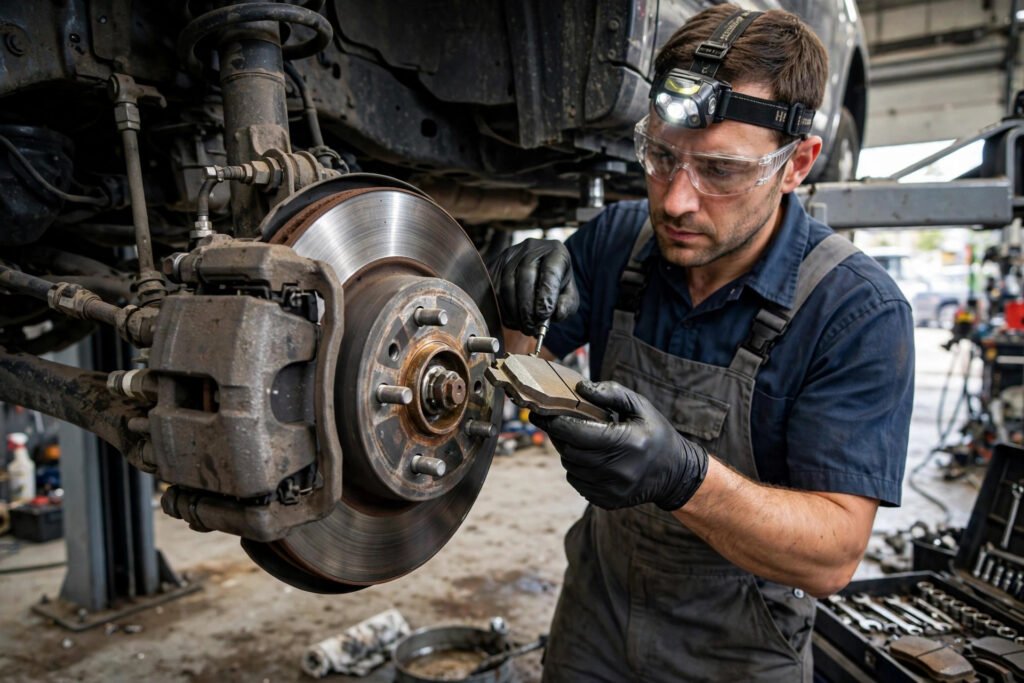
You can inspect a surprising amount without lifting the car. Through most alloy wheels, you can see the brake pad’s thickness against the rotor — if the pad material looks thinner than a quarter-inch (about 3mm), replacement time is near. Many wheels allow this check with a flashlight in 30 seconds per wheel; make it part of your seasonal routine. Look at the rotors too: deep grooves, heavy rust ridges on the edges, or visible scoring all indicate wear beyond pads alone.
Check the brake fluid reservoir under the hood (consult your manual for location): the fluid should be near the MAX line and relatively clear. Dark, murky fluid or a dropping level suggests it’s time for service — brake fluid absorbs moisture over time, lowering its boiling point and corroding internal components, which is why most manufacturers recommend fluid replacement every 2–3 years regardless of mileage. Puddles under the wheels or along brake lines (clear to brownish oily fluid) indicate leaks requiring immediate attention. These checks take five minutes and catch problems weeks before symptoms appear — the same preventive mindset applies when evaluating any vehicle, including rentals, where our guide to what to know before renting a car abroad walks through the pre-drive inspection.
What Brake Service Costs (and How to Avoid Overpaying)
Standard brake pad replacement runs $150–$300 per axle at independent shops ($250–$450 at dealerships), including parts and labor. If rotors need replacement (scored, warped, or below minimum thickness), add $200–$400 per axle. A complete four-wheel brake job with pads and rotors typically totals $500–$1,000 at independents. Brake fluid flush: $80–$150. Caliper replacement (when sticking or seized): $200–$400 per caliper plus labor. These are among the most price-shopped repairs in America, so quotes vary wildly — always get two.
Avoid the classic upsells: “your rotors need replacing” when they could be resurfaced (resurfacing costs half of replacement and is perfectly safe when rotors remain above minimum thickness — ask for the measurement); premium ceramic pads on a commuter car that does fine with quality standard pads; and the full “brake system overhaul” when only pads are worn. Ask to see the old parts and the measurements — reputable shops show you pad thickness and rotor specs without hesitation. Time brake work strategically: addressing squealing pads promptly ($200) versus waiting until grinding destroys rotors ($600) is the entire economics of brake maintenance. Before long highway drives, fold a brake check into your preparation with our road trip planning guide — brake failure 500 miles from home is the nightmare scenario this article exists to prevent.
The Bottom Line
Your car needs new brakes when you hear squealing (wear indicators) or grinding (metal on metal — urgent), feel a soft pedal, vibration, pulling, or longer stopping distances, see thin pads or scored rotors, or notice the brake warning light. Caught at the squeal stage, brake service costs $150–$300 per axle; ignored until grinding, it doubles or triples. Check pads visually through your wheels seasonally, get two quotes, ask for measurements before approving rotor replacement, and never defer brake work — it’s the one maintenance item where procrastination risks more than money.
Frequently Asked Questions
How long do brake pads typically last?
Usually 30,000–70,000 miles depending on driving style, vehicle weight, and pad material. City drivers who brake constantly wear pads far faster than highway commuters. Aggressive braking can halve pad life.
Can I drive with squeaking brakes?
Briefly — squealing wear indicators mean you have hundreds to a few thousand miles of safe driving left. But schedule service promptly; waiting until grinding begins destroys rotors and multiplies the repair cost.
How do I know if I need new rotors or just pads?
Rotors need replacement when they’re scored, warped (causing pedal pulsation), or worn below minimum thickness. Ask the shop for actual measurements — rotors above minimum thickness can often be resurfaced for half the replacement cost.
Why do my brakes grind when I first drive in the morning?
Light surface rust on rotors overnight (especially in humid climates) causes brief grinding that clears after a few stops — this is normal. Persistent grinding during normal driving indicates worn-out pads requiring immediate service.