Is It Safe to Leave Your Dog Alone 8 Hours a Day? Truth
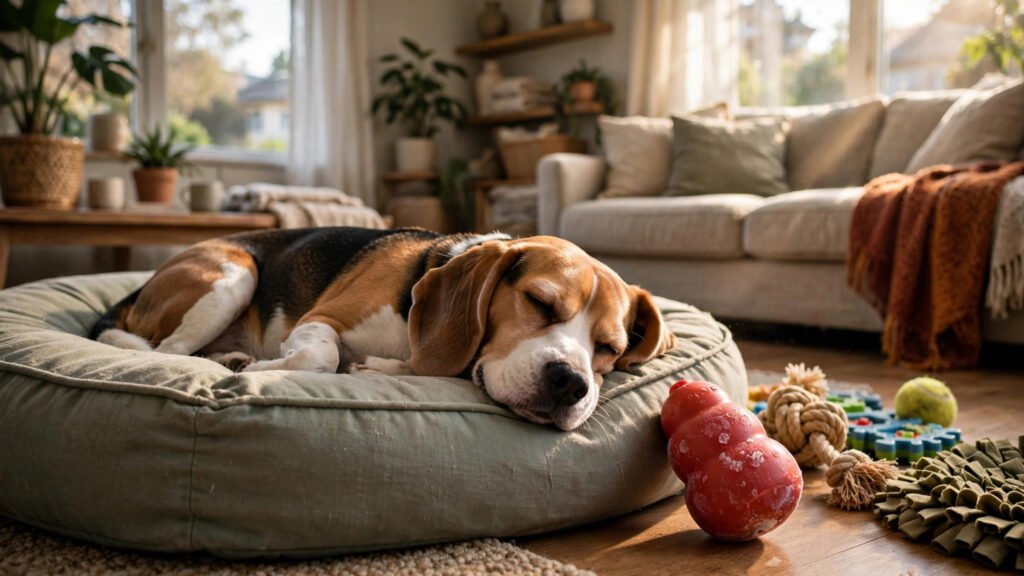
The alarm goes off at 6:30, you’re out the door by 8, and you’re not home until 6. Sound familiar? It’s the standard American workday — and it means your dog is alone for 8 to 10 hours. Every working dog owner has felt the guilt: is this fair to the dog? Is it even safe? The honest answer is nuanced. Millions of dogs handle the workday alone just fine, but “alone for 8 hours” isn’t automatically okay for every dog — it depends on age, bladder capacity, breed, and what those 8 hours actually look like. Here’s how to assess your situation and make the workday work for your dog.
The Bladder Math: How Long Can Dogs Actually Hold It?
The widely cited guideline: adult dogs can hold their bladder roughly one hour per month of age, up to about 8 hours maximum. A healthy adult dog (over a year old) can physically manage 8 hours — but “can” and “should, every single day” differ. Puppies under 6 months need breaks every 2–4 hours; seniors, dogs with medical conditions, and small breeds with tiny bladders may need midday relief too.
Regularly pushing past 8 hours risks urinary tract infections, bladder stones, and kidney stress — holding urine too long isn’t just uncomfortable, it’s medically inadvisable as a daily pattern. If your commute plus workday stretches past 9–10 hours door to door, your dog needs a midday break, period. This isn’t negotiable for puppies, seniors, or dogs with any urinary history.
Who Handles 8 Hours Fine — and Who Doesn’t
Generally fine: healthy adult dogs (1–8 years) of calm, independent breeds, especially with proper exercise before and after work. Many adult dogs simply sleep through the workday — dogs naturally sleep 12–14 hours daily, and a tired dog is a sleeping dog.
Needs a midday break: puppies under 6–8 months, senior dogs, dogs with separation anxiety, high-energy working breeds left unexercised, dogs with medical conditions (diabetes, kidney disease, UTIs), and any dog new to your home still adjusting.
Red flags it’s not working: accidents in a previously housetrained dog, destructive behavior, excessive vocalization (your neighbors will tell you), escape attempts, or signs of depression and lethargy. These signal the current arrangement is failing — not that the dog is “bad.”
Making the 8-Hour Day Work: The Full Strategy
Exercise before you leave
This is the single highest-impact change. A 20–30 minute morning walk or play session — not a quick backyard pee — burns energy and empties the bladder. The difference between a dog that’s been exercised and one that hasn’t is the difference between peaceful sleeping and 8 hours of restless anxiety. Many owners find working from home productively even one or two days a week transforms the dog’s week — and if your job allows remote days, they’re the cheapest enrichment available.
Enrichment for the alone hours
A bored dog alone for 8 hours invents entertainment. Provide it: frozen stuffed Kongs (prepare a week’s worth on Sunday), puzzle feeders for the morning meal, snuffle mats, safe long-lasting chews. Rotate toys — novelty matters. Leave calming background noise: talk radio or dog-calming music masks outside sounds that trigger alert barking. Avoid leaving the TV on news channels; the unpredictable loud sounds can stress some dogs.
The midday break solution
For dogs that need it, options abound in 2026 America: professional dog walkers ($20–$30 per visit), neighbor arrangements, coming home at lunch if feasible, or doggy daycare 1–2 days a week for the highest-need dogs. A midday 20-minute walk splits the day into two manageable halves and is the gold standard for puppies and seniors. The AKC’s guidance on separation anxiety and the ASPCA’s alone-time enrichment ideas both emphasize breaking up long absences for dogs that struggle.
Set up the space right
A confined, dog-proofed area beats whole-house access for most alone-time dogs — less space to get into trouble, easier to keep safe. Provide water (spill-proof bowl), comfortable bedding, and temperature control. Skip the crate for 8 hours: crating an adult dog all workday, every day, is widely considered excessive by behaviorists — a crate is a bedroom, not a day-long containment unit. For owners exploring schedule flexibility, work-from-home options have expanded dramatically, and even partial remote work changes the equation for dog owners.
Signs Your Dog Is Thriving on the Alone Schedule
How do you know the arrangement is actually working, not just surviving? Positive indicators: your dog greets you calmly (not frantically) at return — frantic greetings can signal day-long distress, while a happy-but-composed welcome suggests a restful day. The house is intact and the dog is relaxed, not wired. Appetite and energy are normal in the evenings. A pet camera shows mostly sleeping, some toy interaction, calm behavior at windows — the boring footage is the good footage.
Also watch the weekends: a dog that “crashes” into deep lethargy every weekend may be running on stress hormones all week. Conversely, a dog that’s playful and engaged on weekends after calm weekdays is likely content. And reassess seasonally — puppies become adolescents, adults become seniors, and the arrangement that worked at age 3 may fail at age 10. The alone schedule isn’t a decision you make once; it’s an ongoing calibration to the dog in front of you. When the signals stay positive month after month, let go of the guilt — you’re doing it right.
Separation Anxiety: When Alone Time Is a Real Problem
Some dogs don’t just dislike alone time — they panic. True separation anxiety shows as drooling, destructive escape attempts (torn doorframes, broken crates), self-injury, and distress vocalization starting within minutes of departure. This isn’t a training nuisance; it’s a panic disorder requiring a systematic desensitization program, sometimes with veterinary-prescribed anti-anxiety medication. If your dog injures herself or destroys barriers trying to reach you, consult a veterinary behaviorist — this goes beyond “needs more exercise.”
Technology That Helps
Pet cameras ($40–$150) let you check in and see what your dog actually does all day — most owners discover their dog sleeps 90% of the time, which eases guilt considerably. Two-way audio lets you soothe (use sparingly — your disembodied voice can confuse some dogs). Treat-dispensing cameras add midday enrichment. Automatic feeders keep meal schedules consistent. None replace human contact, but they close the information gap that fuels owner anxiety.
Conclusion
Eight hours alone is safe and reasonable for a healthy adult dog with morning exercise, enrichment, and a proper setup — it’s the daily reality for millions of American dogs who thrive. It’s not appropriate for puppies, seniors, anxious dogs, or any dog showing distress signals. Assess your individual dog honestly, provide the midday break when needed, and remember: the goal isn’t just a dog that survives your workday, but one that’s genuinely content through it. Most of the time, that takes less than owners fear — a tired dog, a frozen Kong, and a routine she can count on.
Frequently Asked Questions
Can I leave my dog alone for 8 hours while at work?
Yes, if she’s a healthy adult (1+ years) with no separation anxiety, gets morning exercise, and has enrichment. Puppies, seniors, and anxious dogs need a midday break.
Is it cruel to leave a dog alone all day?
Not inherently — most adult dogs sleep through the workday. It becomes problematic when the dog shows distress signals, lacks exercise, or regularly holds urine beyond 8-9 hours.
Should I crate my dog for 8 hours?
No — 8 hours of daily crating is considered excessive. Use a dog-proofed room or area instead, with water, bedding, and enrichment.
How do I know if my dog has separation anxiety?
True separation anxiety involves panic behaviors: destructive escape attempts, self-injury, drooling, and distress vocalization starting soon after departure. A pet camera reveals what’s really happening.
What’s the best midday solution for my dog?
A professional dog walker visit ($20-30) is the gold standard — it breaks up the day, provides exercise and a bathroom break. Doggy daycare 1-2x weekly suits high-energy social dogs.