How to Make Your Perfume Last All Day: 7 Proven Pro Tips
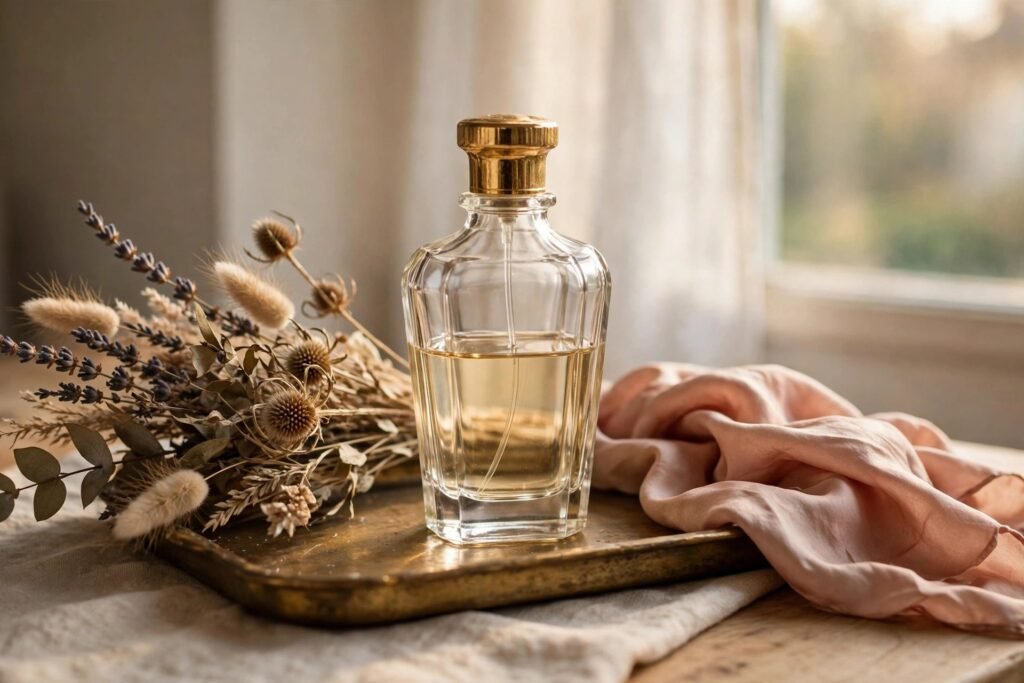
You sprayed your favorite perfume at 7 a.m. By lunch, you cannot smell it at all — and you are left wondering whether everyone else stopped smelling it too, or whether you have just gone nose-blind. Perfume that vanishes by midday is one of the most common fragrance frustrations, and it is rarely the perfume’s fault alone. How you apply it, where you apply it, what you apply it over, and even the concentration you bought all determine whether a scent lasts four hours or fourteen.
This guide covers the real science of fragrance longevity — from parfum versus eau de toilette to pulse points, moisturizing tricks, and the application mistakes that kill a scent before noon.
First: Understand What You Bought (Concentration Matters Most)
The single biggest factor in longevity is fragrance concentration — the percentage of perfume oils in the bottle. From lightest to strongest: eau de cologne (2–4%, lasts ~2 hours), eau de toilette (5–15%, lasts 3–5 hours), eau de parfum (15–20%, lasts 5–8 hours), and parfum/extrait (20–40%, lasts 8–12+ hours).
If your scent disappears by lunch, check the label. Many beloved designer scents are sold primarily as eau de toilette — beautiful but built for lightness. The same fragrance in eau de parfum or parfum concentration can last twice as long. Before blaming your skin, make sure you are not expecting parfum performance from a cologne-strength bottle. When shopping, dressing stylishly on a budget applies to fragrance too — a smaller bottle of parfum often outperforms a big bottle of toilette per wear.
The Moisture Trick: Perfume Lasts Longer on Hydrated Skin
Fragrance molecules evaporate faster from dry skin — there is nothing for them to cling to. This is why the same perfume lasts all day on your friend and two hours on you: skin chemistry and hydration differ. The fix is simple and transformative: apply an unscented moisturizer or body oil to your skin before spraying perfume.
Well-moisturized skin holds fragrance oils at the surface instead of letting them flash off. Petroleum jelly dabbed on pulse points before spraying is the classic makeup-artist trick — it creates an occlusive base that slows evaporation dramatically. Even a basic unscented lotion makes a noticeable difference. Think of dry skin as a sieve and moisturized skin as a sealed jar.
Where to Spray: Pulse Points and the Heat Map
Perfume is activated by body heat, which is why pulse points — where blood vessels run close to the skin — project scent best: the wrists, the sides of the neck, behind the ears, the inner elbows, and behind the knees. Warmth continuously diffuses the fragrance through the day.
But the longest-lasting spots are the ones people forget. Hair holds scent far longer than skin because the strands trap fragrance oils — one mist over the hair (or a dedicated hair mist, since alcohol can dry strands) keeps you smelling wonderful for hours. Clothes are even better: fabric fibers hold perfume for days. A spray on a scarf, the inside of a jacket, or a sweater hem creates a scent trail that outlasts anything on skin. Just test delicate fabrics first, as some oils can stain silk.
The Mistakes That Kill Longevity
Stop rubbing your wrists together after spraying — it crushes the top notes and heats the fragrance, making it evaporate faster. Do not spray into the air and walk through it; most of the product lands everywhere except you. And do not apply right after a hot shower onto steaming skin — wait until you have cooled and moisturized, or the heat will flash off the volatile top notes immediately.
Layering: The Professional’s Secret Weapon
Fragrance layering — using matching or complementary scented products — is how perfume lovers get 12-hour wear. The method: scented body wash, then matching body lotion, then the perfume itself. Each layer reinforces the others, and the lotion base gives the perfume something to grip. Many designer houses sell matching lotions precisely for this purpose.
You can also layer strategically with unscented products: a vanilla body oil under a floral perfume adds warmth and depth; an unscented lotion under anything extends wear. Avoid layering two strong competing fragrances — the result is usually muddy rather than complex. The FDA’s cosmetics information covers fragrance ingredient labeling if you are curious what “parfum” on an ingredient list actually contains. For deeper ingredient research, EWG’s Skin Deep database rates fragrance product safety.
Storage: You Might Be Killing Your Perfume
Perfume is chemistry, and chemistry degrades. Heat, light, and air are the enemies: a bottle stored on a sunny bathroom counter — steamed daily by hot showers — can turn within a year, losing both complexity and longevity. The top notes go first, which is why an old bottle smells “flat” and fades fast.
Store fragrances in a cool, dark place — a bedroom drawer or closet, not the bathroom. The same care extends to your space: making your home smell nice naturally with complementary scents creates a cohesive fragrance environment. Keep the cap on and the box if you have it. Properly stored, most perfumes last three to five years; citrus-heavy scents fade faster (one to two years), while orientals and ouds can last a decade. If your once-long-lasting perfume suddenly dies by noon, check its age and storage before blaming your nose.
Skin Chemistry: Why Scents Differ Person to Person
Diet, medications, hormones, and natural skin pH all alter how a fragrance develops and how long it lasts. Oily skin generally holds scent longer than dry skin (another reason to moisturize). Hormonal shifts — including menstrual cycles — can change how a perfume smells on you week to week. This is why testing on a paper strip tells you almost nothing about longevity: always test on your own skin, wear it for a full day, and judge the dry-down hours later, not the first spritz.
Conclusion
Making perfume last all day is a system, not a single trick: buy the right concentration, moisturize first, spray pulse points plus hair and clothes, layer with matching products, never rub your wrists, and store bottles away from heat and light. Any one of these changes adds hours; together, they can take a fragrance from a 10 a.m. memory to a scent people still notice at dinner. And remember — if you cannot smell your own perfume after a few hours, that is often just olfactory adaptation. Others can almost certainly still smell it.
Frequently Asked Questions
Why can’t I smell my perfume after a few hours but others can?
This is olfactory adaptation — your brain tunes out constant stimuli, including your own scent. It does not mean the fragrance is gone. Ask a trusted friend, or smell your clothes at the end of the day, for the real verdict.
Does rubbing wrists together really ruin perfume?
Yes. Rubbing generates heat and friction that break down the delicate top notes prematurely and accelerate evaporation. Spray and let it dry untouched for the full intended scent arc.
How long should a good perfume last?
Eau de parfum should last 5–8 hours on skin; parfum/extrait 8–12+. If yours consistently dies in under three hours despite proper application and storage, the concentration may be too light for your needs or the bottle may have degraded.
Can I spray perfume on my clothes?
Absolutely — fabric holds fragrance far longer than skin. Spray scarves, jacket linings, and sweater hems. Avoid delicate silks and light-colored fabrics that could stain, and test first.
Does where I store perfume really matter?
Enormously. Heat, light, and humidity break down fragrance compounds, dulling the scent and shortening its lifespan on skin. A cool, dark drawer preserves a bottle for years; a sunny bathroom counter can ruin one in months.