Over-Plucked Eyebrows? How to Fix Them While They Grow Back
We have all been there: a late night with the tweezers, a magnifying mirror, and a sudden horrifying realization that you have gone too far. Over-plucked eyebrows are one of the most common beauty mishaps in America — and one of the most distressing, because brows frame the entire face. The good news that nobody tells you in the panic moment: eyebrows almost always grow back. The bad news: it takes patience, strategy, and resisting the urge to “fix” them daily.
This guide covers exactly how long regrowth takes, what to do (and not do) while you wait, how to fake fuller brows convincingly in the meantime, and when to suspect something beyond over-plucking is going on.
First, Breathe: The Regrowth Timeline
Eyebrow hairs grow in a cycle of about three to four months, slower than scalp hair. After over-plucking, you will typically see fine regrowth (the dreaded “sprouts”) within two to four weeks, noticeable filling in by six to eight weeks, and substantial recovery by three to four months. Full restoration to your natural shape can take up to six months if the plucking was severe or repeated over years.
One important caveat: hairs plucked repeatedly from the same follicle over many years can stop regrowing — the follicle becomes damaged and goes dormant. This is the legacy of the ultra-thin 90s and 2000s brow trend. If an area has been bare for years despite leaving it alone, that follicle may be retired. But for a one-time over-plucking incident, regrowth is the overwhelmingly likely outcome. The American Academy of Dermatology’s hair care guidance notes that traumatized follicles generally recover if given time without repeated injury.
Rule One: Put the Tweezers Down (Really Down)
The hardest and most important step. Every plucked regrowth hair resets that follicle’s clock. Commit to a full hands-off period of at least eight weeks — no “cleaning up,” no “just this one.” If willpower fails, physically remove the tweezers from your bathroom and give them to someone else. Tweezing with a magnifying mirror is banned during recovery; magnified tweezing is how most over-plucking happens in the first place.
This includes threading, waxing, and sugaring appointments for the brow area. Tell your aesthetician you are growing them out — a good one will respect the mission and may even map your target shape so you have a goal to grow toward.
What Actually Helps Brows Grow Back
Let us separate evidence from marketing. What works: time, gentle care, and not interfering. Massaging the brow area gently for a minute daily increases local blood flow, which supports follicle health — the evidence is modest but the practice is harmless. Keeping the area moisturized (a simple fragrance-free moisturizer or a dab of castor or argan oil) keeps the skin supple so emerging hairs are not trapped.
What might help: peptide-based brow serums. Unlike the prostaglandin-based lash serums (which can permanently darken the iris and are not approved for brows), cosmetic brow serums with peptides and biotin condition hairs and may support the growth environment. Results are subtle and take eight to twelve weeks — anyone promising dramatic regrowth in two weeks is selling hope, not science.
What does not help: applying Rogaine (minoxidil) to brows without medical supervision — it can cause unwanted hair growth on surrounding skin and irritation near the eyes. Homemade onion-juice or garlic concoctions — irritating with no brow-specific evidence. And expensive “miracle” oils are just conditioning; they do not wake dormant follicles. Internal support matters too: nutrient-rich foods for healthy skin and hair provide the protein, iron, and biotin that hair growth depends on.
The Regrowth Awkward Phase: Surviving Weeks 2–6
Weeks two through six are the worst — patchy sprouts growing in different directions, some areas filling while others lag. This is normal; follicles were not all in the same growth phase when plucked. Resist shaping until at least week eight. If a hair is growing wildly out of bounds, you may carefully trim (not pluck) with brow scissors — trimming does not disturb the follicle.
Faking It: Makeup That Looks Like Real Brows
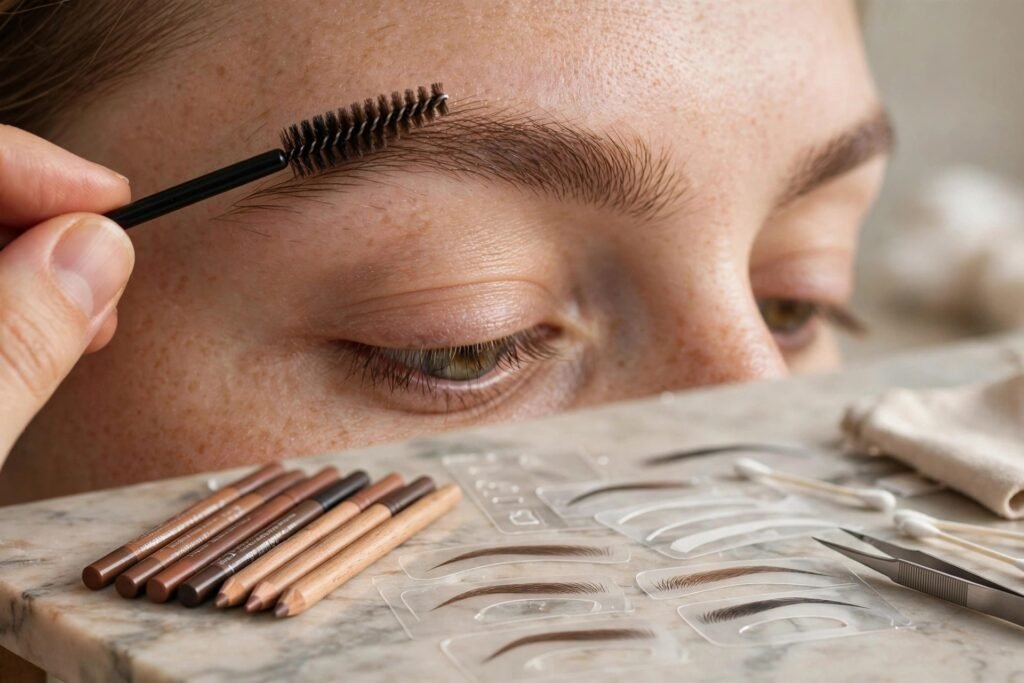
While you wait, good brow makeup is transformative. The key principle: mimic hair, not a shape. Heavy drawn-on blocks look fake; fine hair-like strokes look real.
Brow pencils with ultra-fine tips (the retractable micro kind) let you draw individual strokes in the direction of natural growth, filling sparse areas invisibly. Choose a shade one step lighter than your hair color for the most natural effect — too dark is the classic giveaway. Brow powders applied with an angled brush create soft fullness for larger sparse areas. Tinted brow gels coat existing hairs, making them look thicker and holding unruly regrowth in place.
The technique that fools everyone: outline nothing. Start filling from the middle of the brow outward, using the lightest touch at the front (the inner brow should always be softest — harsh squared-off inner corners scream “drawn on”). Set with a clear or tinted gel. Done well, even significantly over-plucked brows can look completely natural — which also removes the psychological pressure to pluck, since you no longer feel desperate. Getting the shade right matters, and understanding which tones flatter your coloring helps brows harmonize with the rest of your face.
Reshaping Once They Have Grown: The Comeback Plan
After eight to twelve weeks of growth, you will have enough hair to reshape properly. Do not do this yourself with the magnifying mirror that caused the problem. Book a professional brow shaping — threading or waxing by someone who specializes in brows — and bring reference photos of the shape you want. A professional sees your whole face and bone structure; you see individual hairs.
Ask for a conservative shape first. You can always remove more later; you cannot un-remove. Many brow specialists recommend growing brows slightly fuller than you think you want, since fuller brows read as younger and give the tech more to work with. Maintain with professional cleanups every three to four weeks rather than daily DIY tweezing.
When It Might Not Be Just Over-Plucking
If brows are thinning without plucking, falling out in patches, or not regrowing after six months of hands-off patience, see a dermatologist. Eyebrow hair loss can signal thyroid disorders, alopecia areata, nutritional deficiencies (particularly iron), or the effects of certain medications. The AAD’s hair loss resources outline when shedding crosses from cosmetic to medical. Do not assume every sparse brow is a tweezing injury — sometimes the body is sending a message worth hearing.
Conclusion
Over-plucked eyebrows feel catastrophic but are almost always temporary. The recovery formula is simple but demanding: complete hands-off for at least two months, gentle care and realistic expectations about serums, skillful makeup to bridge the gap, and professional reshaping once regrowth arrives. Your follicles want to recover — they just need you to stop interrupting them. Put the tweezers in a drawer, pick up a micro pencil, and let time do what it does best.
Frequently Asked Questions
How long does it take for over-plucked eyebrows to grow back?
Initial regrowth appears in 2–4 weeks, visible filling by 6–8 weeks, and substantial recovery by 3–4 months. Full restoration can take up to 6 months after severe over-plucking.
Do eyebrows grow back after years of over-plucking?
Sometimes not fully. Follicles plucked repeatedly over many years can become permanently dormant. A one-time over-plucking incident almost always regrows; a decade of aggressive tweezing may leave permanently sparse areas.
Does castor oil really help eyebrows grow?
Castor oil conditions brow hairs and keeps the skin supple, which supports healthy regrowth — but there is no strong evidence it stimulates new growth from dormant follicles. It is a reasonable, low-risk part of a care routine, not a miracle cure.
Should I use a brow serum while growing out my brows?
Peptide-based cosmetic brow serums are reasonable to try, with subtle results over 8–12 weeks. Avoid prostaglandin-based lash serums on brows, and be skeptical of any product promising dramatic regrowth in days.
Can I trim my eyebrows while growing them out?
Yes — careful trimming with brow scissors is fine and does not affect the follicle. Only plucking, waxing, or threading resets regrowth, so trim unruly hairs but do not pull them.