De-Extinction: Could Mammoths Really Return? The Honest Science
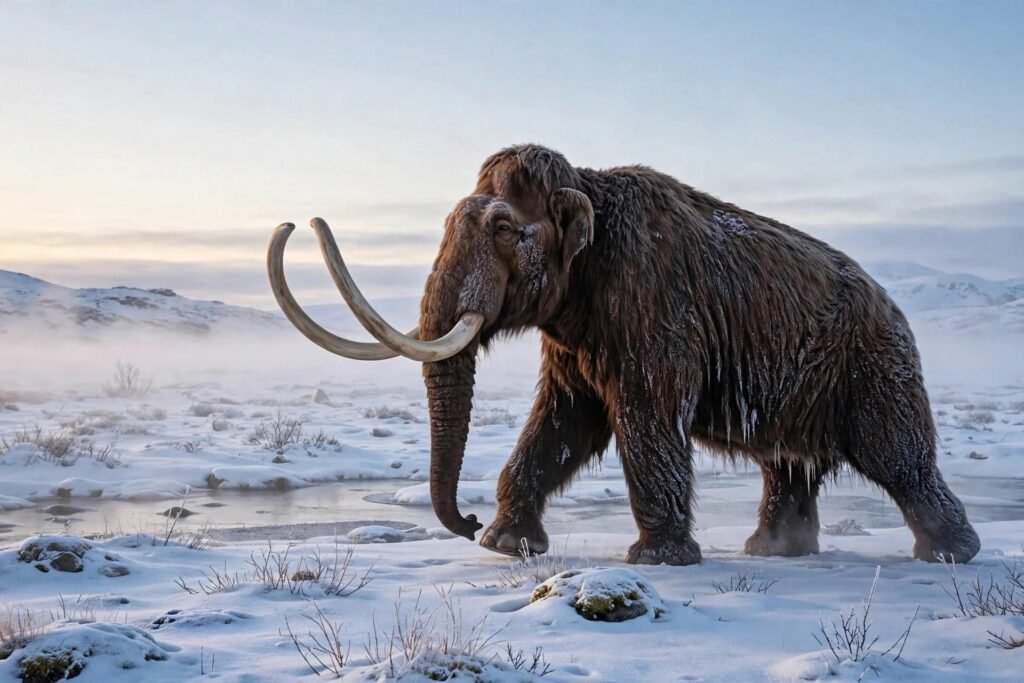
A woolly mammoth lumbers across the Arctic tundra — not in a nature documentary about the Ice Age, but in a news report from this decade. The company Colossal Biosciences has raised hundreds of millions of dollars with exactly this vision: de-extinction, bringing vanished species back to life, starting with the mammoth (or rather, a cold-adapted elephant). Headlines swing between “mammoths by 2028!” and “impossible publicity stunt.” The reality, as usual, is more interesting than either extreme.
This guide explains what de-extinction actually means scientifically, the three competing approaches, how close the mammoth project really is, and the serious ecological and ethical questions nobody should skip.
What De-Extinction Actually Means (It’s Not Jurassic Park)
First, the crucial clarification: true de-extinction — resurrecting an identical copy of an extinct species — is impossible with current or foreseeable technology. DNA degrades; the oldest usable mammoth DNA is fragmented into short pieces, and no intact mammoth genome exists. What scientists actually pursue are proxies: living animals that are ecologically and functionally similar to the extinct species.
For the mammoth, that means a “mammophant” — an Asian elephant (the mammoth’s closest living relative, sharing ~99.6% of DNA) edited with key mammoth genes: cold-adapted hemoglobin, thick hair and fat layers, small ears, curved tusks. The result would be an elephant that functions like a mammoth in the Arctic — not a time-traveling mammoth. This distinction matters enormously for every claim that follows. The same proxy logic applies to other candidates: the thylacine (Tasmanian tiger), the dodo, and the passenger pigeon — all pursued as engineered proxies, not resurrections.
The Three Approaches: Cloning, Editing, and Breeding Back
1. Cloning (SCNT): the Dolly method — inserting preserved DNA into an egg. This works only with intact, living cells, which do not exist for any extinct species (frozen mammoth carcasses contain dead, fragmented DNA — freezing ruptures cells). Cloning is viable only for recently extinct or endangered species with preserved living tissue — which is why it is used for endangered species rescue (like the cloned black-footed ferret, Elizabeth Ann, born 2020), not mammoths.
2. Gene editing (the mammoth path): sequence the extinct species’ fragmented DNA, identify key functional genes, and use CRISPR to edit those genes into a living relative’s genome. Colossal has reportedly edited 40+ mammoth traits into elephant cell lines. The edited cells must then become a living animal — via cloning (SCNT using the edited cells) or, more futuristically, artificial wombs (elephant gestation is 22 months; no surrogate program at scale exists). This is the approach with real momentum — and the same biotechnology wave transforming medicine — see how AI is being used in healthcare — is developing these tools in parallel.
3. Selective breeding (“breeding back”): breeding living relatives to recreate extinct traits — used for the aurochs (extinct wild cattle) via the Tauros Programme. Slow, imprecise, but low-tech and already producing aurochs-like cattle. Not applicable to mammoths (no close-enough living population to breed from selectively).
How Close Is the Mammoth, Really?
An honest progress report: what is done: high-quality mammoth genomes sequenced from multiple specimens; key cold-adaptation genes identified; dozens of edits successfully made in elephant cell lines; the related dire-wolf proxy project produced live pups (2025), demonstrating the pipeline works end-to-end for some species. What remains: producing a viable edited elephant embryo (SCNT in elephants has never succeeded); gestating it (22 months, no proven surrogate protocol, enormous welfare questions); raising a cold-adapted elephant calf in the Arctic; and doing it all at a scale that constitutes an ecological population rather than a zoo curiosity.
Colossal’s “2028” timelines refer to first proxy calves, optimistically. Independent scientists estimate the editing-to-embryo-to-birth pipeline alone faces years of trial and error — elephant reproductive biology is poorly understood compared to lab animals. The dire wolf success is encouraging but involved a much simpler edit set in a well-understood domestic relative (dogs). Mammoth-via-elephant is an order of magnitude harder. Serious, well-funded, genuinely advancing — and still very far from a mammoth herd.
The Ecological Case: Why Bother?
The strongest argument for mammoth proxies is ecological, not nostalgic. The “mammoth steppe” hypothesis: Ice Age grasslands were maintained by megafauna — mammoths knocked down trees, fertilized soil, and compacted snow (which kept permafrost frozen). When mammoths vanished, the steppe became today’s mossy tundra — which insulates permafrost less effectively in some models, accelerating thaw and carbon release. Reintroducing mammoth-like grazers could theoretically slow permafrost thaw, keeping gigatons of carbon locked away — making de-extinction a climate intervention, not just a spectacle.
The counterarguments are formidable: introduced proxies might become invasive, disrupting Arctic ecosystems that adapted over 10,000 mammoth-free years; the climate benefit is unproven at scale and dwarfed by emissions reductions; resources might be better spent on living endangered species — the IUCN coordinates global conservation priorities — (the “moral hazard” critique — de-extinction as an excuse to let species die); and welfare concerns for engineered animals in harsh environments are real. Conservation biologists are genuinely split — this is a live scientific debate, not a settled verdict. For perspective on ecosystem fragility, acclaimed nature documentaries show what is at stake in destabilized systems.
The Ethics: Should We, Even If We Can?
Beyond ecology, deeper questions: Do proxies have moral status issues? A mammophant is a sentient elephant — engineering it for Arctic life raises welfare obligations we barely meet for zoo elephants. Who decides? Private companies are driving de-extinction with minimal public oversight — a governance gap. What does “natural” mean? If proxies thrive, is the resulting ecosystem “restored” or novel? Opportunity cost: hundreds of millions for proxies versus the same money protecting thousands of living species from the extinction crisis happening now — the strongest ethical objection, and the hardest to dismiss.
Defenders counter that the technologies developed (advanced gene editing, reproductive biology, ecosystem modeling) benefit conservation broadly — de-extinction as R&D for saving living species. Both sides have a point; the honest position is that de-extinction’s value depends entirely on whether it complements conservation or replaces it in funding and attention.
Conclusion
Is de-extinction of species like mammoths really possible? As true resurrection: no. As engineered ecological proxies: plausibly yes, within years to decades — the mammoth project has real science, real funding, and real progress, with the dire wolf pups as proof the pipeline can work. But “possible” conceals the remaining chasms: elephant reproductive biology, gestation at scale, Arctic survival, ecological safety, and the profound ethical questions of welfare, governance, and opportunity cost. The mammoth will not tromp across the tundra next year. It might — as a cold-adapted, gene-edited elephant proxy — within a decade or two. Whether it should is the question science alone cannot answer, and the one we need to settle before the technology does it for us.
Frequently Asked Questions
Will scientists really bring back the woolly mammoth?
Not a true mammoth — but a “mammophant” proxy (Asian elephant edited with mammoth cold-adaptation genes) is the genuine goal of Colossal Biosciences, with first calves optimistically targeted within years. Major technical hurdles remain.
Why can’t we just clone a mammoth from frozen DNA?
Cloning requires intact living cells; frozen mammoth remains contain only dead, fragmented DNA — freezing ruptures cells. The genetic information survives in pieces (enough to sequence), but no living mammoth cell exists to clone from.
What other species are de-extinction candidates?
The thylacine (Tasmanian tiger), dodo, and passenger pigeon are active Colossal targets; the aurochs is being “bred back” in Europe; and cloning has already helped endangered species like the black-footed ferret. Each uses the approach suited to its available genetic material.
Would mammoths help fight climate change?
Possibly, in theory: mammoth-like grazers could help maintain grasslands that keep permafrost frozen, locking away carbon. But the effect is unproven at scale, and critics argue the resources would fight climate change more effectively spent on emissions reduction and living-species conservation.
Is de-extinction ethical?
Debated. Concerns include animal welfare, ecological risk of introduced proxies, governance by private companies, and opportunity cost versus saving currently endangered species. Supporters cite ecological restoration and conservation technology spillovers. There is no scientific consensus on the ethics.