
The Most Comfortable Dress Shoes for All-Day Standing
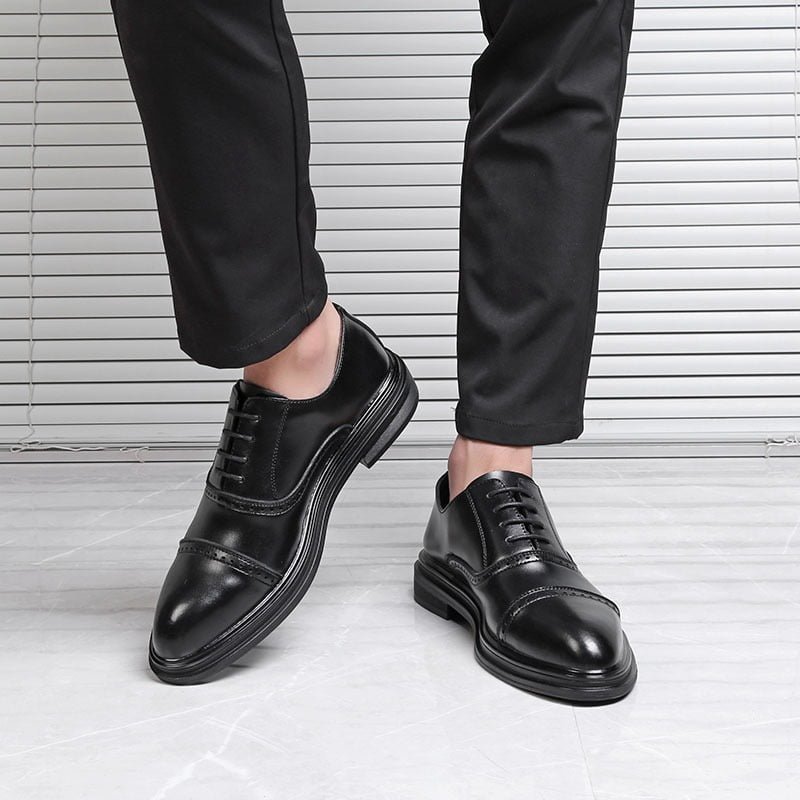
You know the feeling: it’s 3 p.m., you’ve been on your feet since 8, and every step is a negotiation. Dress shoes are supposed to look sharp — but too many of them treat comfort as optional. It doesn’t have to be this way. Modern shoe technology has closed the gap between “looks professional” and “feels like sneakers,” and the right pair genuinely changes your workday. If you’re asking what are the most comfortable dress shoes for standing all day, here’s what to look for and which shoes deliver.
What Makes a Dress Shoe Comfortable for All-Day Standing?
Comfort in dress shoes comes down to specific features, not marketing claims:
- Cushioned insole with arch support. The flat, hard insoles of traditional dress shoes are the main pain source. Look for real cushioning (memory foam, EVA, or proprietary comfort tech) and actual arch contour — not a flat slab.
- Proper width. Most foot pain comes from shoes that are too narrow, not too small. If your usual size pinches, try the wide version before sizing up in length. Feet swell through the day — shop for shoes in the afternoon.
- Low, stable heel. For all-day standing, lower is better: men’s dress shoes should have minimal heel height; women’s should stay under 2 inches for true all-day wear, with block heels vastly more comfortable than stilettos.
- Quality materials that flex. Soft, full-grain leather molds to your foot; stiff corrected-grain leather fights it all day. The break-in period should be days, not months.
- Shock absorption. Standing on hard floors transmits impact all day. Rubber or cushioned outsoles absorb what leather soles transmit.
- Room in the toe box. Toes need wiggle room. Pointed toes look sleek but compress — almond or rounded toes are the comfort compromise.
Top Picks by Category
- Men’s oxfords/derbies: Cole Haan (their Grand series fuses Nike Air tech into dress shoes — the comfort benchmark), Ecco (anatomical lasts, superb cushioning), Johnston & Murphy (classic looks with modern comfort lines), Clarks (unfashionable reputation, undeniable comfort).
- Men’s loafers: the all-day standing hero — no laces digging, easy on/off, professional enough for most offices. Look for cushioned footbeds and flexible soles.
- Women’s flats: Rothy’s (machine-washable, flexible, cushioned), Tieks (foldable but genuinely supportive), Naturalizer (comfort-first engineering in professional styles).
- Women’s low heels: block heels under 2 inches from comfort brands; wedge styles distribute weight better than narrow heels. Cole Haan, Clarks, and Naturalizer all make office-appropriate options.
- Ankle boots: a low block-heel Chelsea boot is arguably the most comfortable “dressed up” option for women — stable, supportive, professional.
The Fit and Break-In Protocol
Even the right shoe fails with the wrong fit process. Shop in the afternoon when feet are at their largest. Wear your work socks (or hosiery) when trying on. Walk on hard surfaces in the store — carpet lies. Break in gradually: wear new shoes for half days the first week, with band-aids or moleskin on known hot spots preemptively. Consider aftermarket insoles — a $30 pair of quality insoles can transform mediocre dress shoes; they’re also replaceable when they compress, extending shoe life. And rotate pairs — alternating shoes lets cushioning rebound and leather dry, dramatically extending both comfort and lifespan.
Beyond the Shoes: Surviving All-Day Standing
Shoes are half the equation. Anti-fatigue mats if you stand in one place (retail, hospitality) — they make a bigger difference than most people expect. Compression socks improve circulation and reduce end-of-day leg fatigue significantly. Shift your weight and move — static standing is harder than walking; small movements, calf raises, and position changes keep blood flowing. Stretch calves and feet on breaks — a tennis ball under the arch for 60 seconds works wonders. And if your job means dressing up for long events, the same comfort principles apply — maintained leather shoes stay comfortable years longer than neglected ones.
Shoe Rotation Strategy for All-Day Workers
If you’re on your feet all day, every day, one pair isn’t enough — even the best one. The two-pair minimum: alternate daily. Cushioning foam needs 24 hours to rebound; leather needs a day to dry from foot moisture. Rotation doesn’t just extend shoe life — the second day’s pair feels noticeably more comfortable than wearing the same pair consecutively. The three-pair ideal: two work pairs in rotation plus one backup for wet days or when a pair needs repair. Track mileage: dress shoes last 500–800 miles of walking; if you’re on your feet 8 hours daily, that’s roughly 6–9 months per pair. When the cushioning stops rebounding or the tread wears smooth, replace — worn-out “comfortable” shoes are worse than new mediocre ones. Budget for it: comfortable feet are a work expense, not a luxury.
Insoles: The Secret Weapon (Deep Dive)
Aftermarket insoles deserve more attention — they’re the highest-ROI comfort upgrade. Types: cushioned (soft foam — immediate comfort), supportive (structured arch — for flat feet or plantar fasciitis), and custom orthotics (prescribed — for diagnosed conditions). What to buy: reputable brands (Superfeet, Powerstep, Spenco) in the $30–50 range — the drugstore $10 foam is better than nothing but compresses in weeks. Fit: remove the shoe’s stock insole first (don’t stack — it crowds the shoe), trim to size following the guidelines, and replace every 6–12 months as they compress. The test: stand on them in the store for 5 minutes — immediate relief means the right match. The economics: $40 insoles that make $100 shoes feel like $300 shoes, replaceable independently — it’s the cheapest comfort upgrade in footwear, and it works in every shoe you own.
Standing Desk and Movement Strategies
Shoes are half the equation; how you stand is the other half. Alternate sitting and standing: if you have the option, switch every 30–60 minutes — static anything (sitting or standing) is the enemy. Anti-fatigue mats: for fixed standing positions, they reduce leg fatigue measurably — the $40 mat outperforms $40 of shoe upgrades. Weight shifting: don’t lock your knees — shift weight, do calf raises, take micro-steps. Footwear rotation at work: keep a second pair under the desk for the afternoon swap — fresh cushioning for the second half. Compression socks: the all-day stander’s secret weapon — they reduce swelling and fatigue dramatically. End-of-day recovery: roll feet on a tennis ball, stretch calves, raise legs for 10 minutes. The people who stand all day comfortably aren’t tougher — they’re just equipped.
The Practical Takeaway
Prioritize cushioned insoles, proper width, low stable heels, and quality flexible materials — then fit them correctly (afternoon shopping, real socks, gradual break-in). Add insoles if needed, rotate pairs, and support your feet with compression socks and movement. Comfortable dress shoes aren’t a myth or a luxury; they’re a solvable equipment problem. Solve it once and every workday gets better. Wirecutter’s shoe reviews test comfort claims rigorously before recommending.






