
What Should Men Wear to a Casual Wedding?
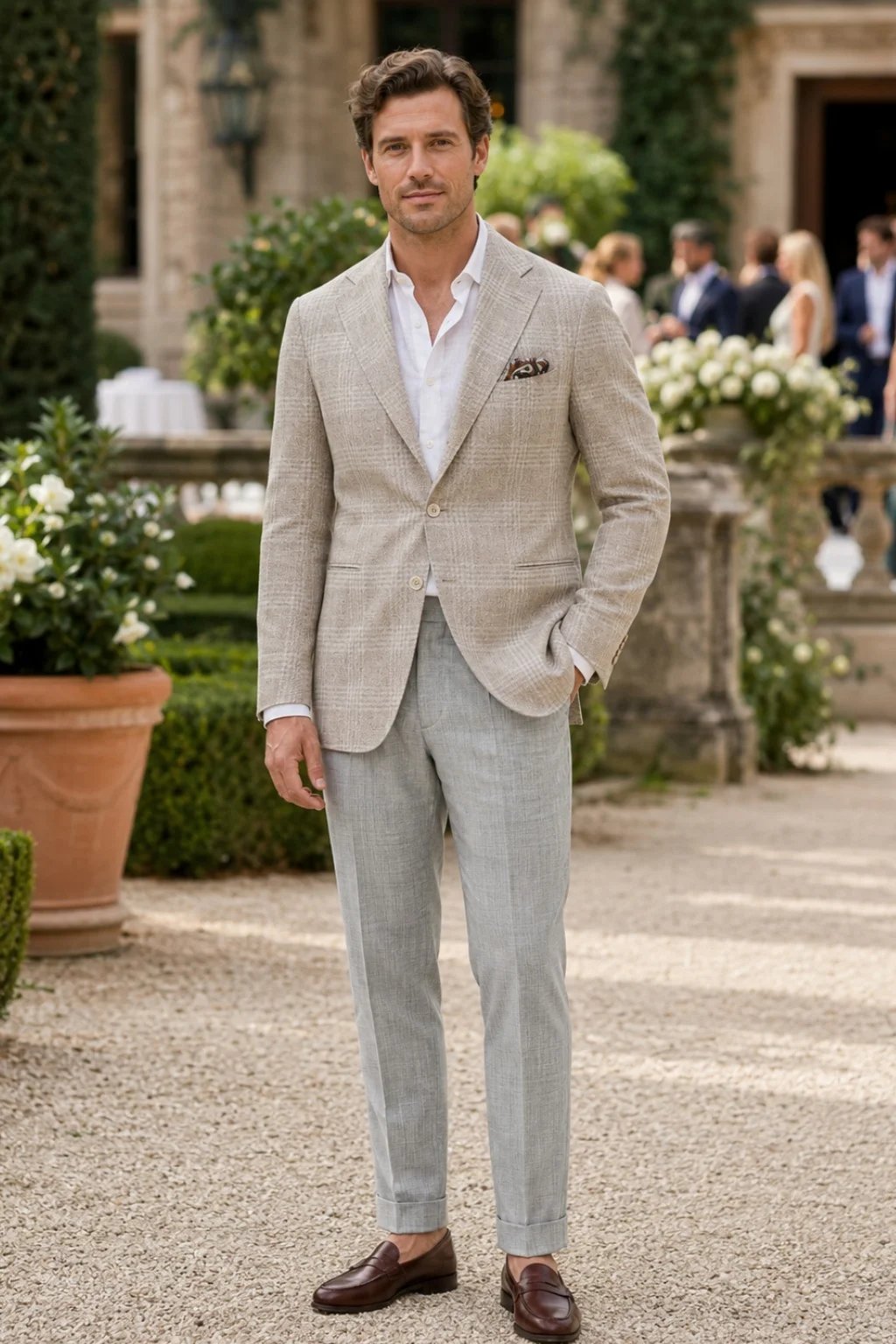
“Casual wedding” is the most stressful dress code in existence for men. A tuxedo has rules. A suit has rules. “Casual” has vibes — and getting the vibe wrong means either looking like you wandered in from the golf course or like you’re trying to upstage the groom. If you’re asking what should men wear to a casual wedding, here’s how to decode it: the goal is polished and celebratory, comfortable enough for a long day, and respectful of the couple’s tone. Let’s get specific.
What Should Men Wear to a Casual Wedding?
First, decode the actual formality. “Casual” on a wedding invitation usually means dressy casual / smart casual — not shorts-and-flip-flops casual. Consider the venue: backyard or beach wedding leans more relaxed; restaurant or garden venue leans dressier. Time of day matters too — evening events skew sharper than afternoon ones. When genuinely unsure, ask someone in the wedding party. It’s not awkward; it’s respectful.
The reliable formula:
- Chinos or dress trousers in navy, khaki, olive, or gray. Well-fitted, hemmed properly (no pooling at the shoe). Jeans are almost always wrong — even dark ones — unless the invitation explicitly says so.
- A button-down shirt or polo. Crisp button-down (tucked in) is the safe default; a quality polo works for genuinely relaxed outdoor weddings. Linen shirts are perfect for summer/beach settings.
- A blazer or sport coat (optional but recommended). This is the piece that says “wedding” rather than “brunch.” You can remove it if you’re overdressed; you can’t add one you didn’t bring. Unstructured cotton or linen blazers keep it casual-appropriate.
- Leather shoes: loafers, derby shoes, or clean minimalist sneakers only for the most casual settings. No athletic sneakers, no flip-flops, ever.
- Thoughtful details: a belt that matches your shoes, a watch, maybe a pocket square. These small signals separate “dressed up” from “dressed.”
GQ’s casual wedding style guide breaks down the formality levels with visual examples.
The Non-Negotiable Don’ts
Some rules survive every level of casual: don’t wear white or off-white (that’s the couple’s territory — and yes, this applies to men too; cream suits photograph white). Don’t wear black to a daytime casual wedding — it reads funereal and overdressed simultaneously. Don’t wear shorts unless it’s explicitly a beach wedding and shorts are clearly expected. Don’t wear a full suit and tie to a truly casual wedding — you’ll look like the accountant who crashed the party, and you’ll make the groom (in chinos) feel underdressed at his own wedding. Don’t wear anything wrinkled, stained, or ill-fitting — casual is about the dress code, not the effort level.
Seasonal Adjustments
Summer/outdoor: linen shirt, chinos, loafers without socks (or no-show socks — visible ankle socks with loafers is a choice; make it intentional). Sunglasses for the ceremony, sunscreen, and breathable fabrics. Fall: add texture — a knit blazer, chinos or flannel trousers, boots instead of loafers. Winter casual wedding: darker palette, a sweater over a collared shirt, a structured coat. The core formula holds; the fabrics and weight shift. The Knot’s casual wedding guest guide covers seasonal variations well.
Look Sharp Without Overspending
You don’t need a new wardrobe for one wedding. A navy blazer, well-fitting chinos, and a crisp white or light-blue shirt cover the vast majority of casual weddings — and all three are wardrobe workhorses you’ll wear for years. Dressing well on a budget applies perfectly here: fit and condition beat price tags. Get the trousers hemmed, iron the shirt, polish the shoes. Comfortable dress shoes matter more than you think — weddings mean hours on your feet, and limping through the reception ruins the look faster than any fashion mistake. A good affordable watch is the finishing detail that pulls it all together.
The Week-Before Checklist
Don’t leave wedding prep to the morning of. One week out: confirm the dress code if uncertain (ask the couple or wedding party — totally normal), try on the full outfit including shoes, and identify anything needing attention. A few days out: get the haircut (not the day before — fresh cuts need 3–4 days to settle), iron or steam everything, polish the shoes, and check the weather forecast for adjustments. Night before: lay out the complete outfit — every piece, including socks, belt, and watch. Morning-of should be execution, not decision-making. Weddings are long days with photos that last forever; the preparation that seems fussy on Tuesday feels essential on Saturday. Show up polished, comfortable, and ready to celebrate — that’s the whole assignment.
Destination Weddings: Extra Considerations
Casual destination weddings add logistics to the dress code. Pack wrinkle-resistant: your outfit has to survive a suitcase — travel-friendly fabrics aren’t optional here. Check the climate: tropical heat demands linen and breathability; mountain evenings need layers. Footwear for terrain: beach sand, garden grass, cobblestones — the venue surface dictates the shoe more than the dress code does. Bring options: one step up and one step down from your planned outfit — destination dress codes are the most misjudged, and having a backup prevents the under/overdressed panic. The rehearsal dinner and brunch: destination weddings are multi-day — pack for the events, not just the ceremony. One versatile blazer and two shirt options cover most of it.
Grooming Timeline for the Big Day
Two weeks out: start any new skincare (not the week of — reactions happen), whiten teeth if that’s your thing (strips need 1–2 weeks). One week out: haircut (needs days to settle), try on the full outfit including shoes for a comfort test. Two days out: trim nails, moisturize, get good sleep — the rested face beats any product. Day of: shower, the full outfit laid out the night before, eat a real meal (weddings run long and hangry is not a look), arrive early enough to settle. The emergency kit: stain stick, band-aids, mints, phone charger, cash for the bar — the small bag that prevents small disasters. Grooming isn’t vanity on wedding days; it’s respect for the occasion and the photos that outlive it.
The Practical Takeaway
Default to: chinos, button-down (tucked), unstructured blazer, loafers. Adjust up or down based on venue and time of day. Avoid white, black, shorts, and full suits. Iron everything, polish the shoes, and bring the blazer even if you might remove it. You’ll look like you belong at a celebration — which is exactly the assignment. Have fun, and don’t outshine the couple.







1 thought on “What Should Men Wear to a Casual Wedding?”