What to Wear on a Long International Flight
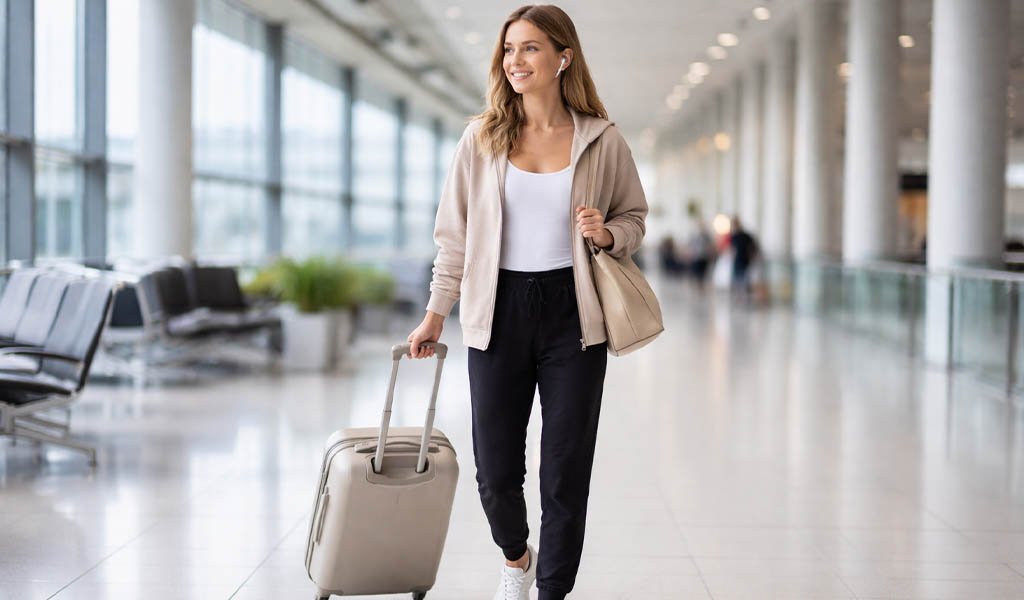
A long international flight is a unique dressing challenge: 8–14 hours in a cramped seat, fluctuating cabin temperatures, security lines, potential delays, and arrival in a different climate — possibly straight into a meeting or a full day. You need comfort for the marathon, polish for the arrival, and practicality for everything in between. If you’re asking what should I wear on a long international flight, here’s the formula frequent flyers swear by: comfortable enough to sleep in, presentable enough to walk into dinner.
The Long-Flight Formula
- Base: stretchy, breathable, non-restrictive. Ponte trousers, quality joggers (the tailored kind, not gym sweats), stretch jeans, or a knit midi dress. The waistband is critical — no tight buttons digging in for 12 hours. Wrinkle-free travel fabrics (ponte, merino, quality knits) arrive looking fresh.
- Top: layered. A breathable base top plus a warm layer — cabins swing between freezing and stuffy. Merino sweater, cashmere wrap, or a zip-up: something you can add and remove easily.
- The polish layer: a blazer or structured jacket. This is the frequent-flyer secret — a blazer over comfortable basics looks instantly put-together on arrival. Unstructured knit blazers travel beautifully. Blazer styling works as hard in transit as anywhere.
- Shoes: slip-on and comfortable. Security lines demand easy on/off; long walks through terminals demand comfort. Supportive loafers, clean sneakers, or cushioned slip-ons. Never new shoes on a travel day — break them in first.
- Scarf or wrap: the multi-tool. Blanket, pillow, shoulder cover for conservative destinations, polish layer — the hardest-working travel accessory in existence.
Comfort Engineering for 10+ Hours
Compression socks — non-negotiable for long flights. They prevent swelling, reduce DVT risk, and your legs will feel dramatically better on arrival. No restrictive waistbands, tight collars, or complicated closures — you’ll be sitting, sleeping, and using tiny bathrooms. Layers over bulk: a packable down vest or light jacket handles cold cabins without the bulk of a heavy coat (gate-check the heavy coat if needed). Pockets matter: a jacket with interior pockets keeps passport and phone accessible. Minimal jewelry: it sets off security, gets uncomfortable under headphones, and risks loss — one simple piece max.
The Arrival Refresh Kit
Pack in your personal item: a fresh top (changing one layer on arrival transforms how you look and feel), basic toiletries (toothbrush, deodorant, face wipes, moisturizer — cabin air is brutally dry), minimal makeup refresh if you wear it, and a brush or comb. Ten minutes in the arrival bathroom with this kit and you’ll walk out looking like the flight was two hours, not twelve. This is also where clean shoes and unwrinkled fabrics pay off — arrival polish is mostly about the details.
What Not to Wear
Anything brand new (untested comfort is a gamble). Complicated outfits (jumpsuits and tiny airplane bathrooms are enemies). Heavy fragrances (recycled cabin air + perfume = everyone’s misery). All-white (airplane food has opinions). Too many layers to manage (you’ll be shedding and re-donning through security and temperature swings — keep it to three functional layers). And heels — even low ones — for the flight itself; pack them, don’t wear them. Your feet swell at altitude; shoes that fit at takeoff may torture by landing.
Beating Jet Lag (the Other Flight Challenge)
What you wear won’t fix jet lag, but your flight behavior can minimize it. Set your watch to destination time when you board and start living on it — sleep and eat accordingly. Hydrate aggressively: cabin air is drier than the Sahara; drink water constantly and skip the alcohol (it fragments sleep and worsens dehydration). Move every 2–3 hours: walk the aisle, do seat stretches, flex your calves — circulation matters on long flights. Light management: seek bright light at destination-morning times, wear an eye mask and use melatonin (0.5–1mg) for destination-nighttime sleep. Eat lightly: heavy airplane meals worsen the sluggishness; lighter eating keeps energy steadier. Arrive, get sunlight, stay awake until local bedtime — the first day’s discipline determines the whole trip’s adjustment.
Packing Strategy for the Long Haul
What you wear is half the equation; what you pack is the other. Personal item (not checked): the refresh kit, medications, valuables, one full change of clothes (lost luggage happens — the spare outfit is insurance), snacks, entertainment, and the scarf/wrap. Wear the bulkiest items: boots, jacket, heaviest sweater — on your body, not in the bag. Roll, don’t fold: knits and casual pieces roll smaller with fewer creases. The 5-4-3-2-1 method: 5 tops, 4 bottoms, 3 shoes, 2 layers, 1 hat — a week+ in a carry-on. Laundry plan: for trips over a week, plan a mid-trip wash (hotel sink + travel soap for merino and synthetics) rather than packing 14 days of clothes. Leave space: souvenirs happen — pack 80% full. The travelers who breeze through airports aren’t packing less important things — they’re packing smarter things.
Red-Eye Specific Strategies
Overnight flights are their own challenge — you’re trying to sleep upright in a metal tube. The seat: window for the wall to lean on (and no neighbor climbing over you); avoid the last row (doesn’t recline) and bathrooms (noise, light, traffic). The sleep kit: quality eye mask (total blackout), earplugs or noise-canceling earbuds, neck pillow (the memory-foam kind, not the inflatable donut), and the scarf as a blanket. The clothing: the softest layers you own — this is the flight for comfort over polish (the blazer can wait in the bag). The routine: eat before boarding (airplane food disrupts sleep), change into the comfortable layers, mask on, sleep on destination schedule. The arrival: sunlight immediately, stay awake until local bedtime — the red-eye is won or lost in the first 12 hours on the ground.
The Practical Takeaway
Stretchy wrinkle-free base, layered top, blazer for arrival polish, slip-on comfort shoes, compression socks, and the magic scarf. Pack the refresh kit in your personal item. You’ll sleep better, arrive sharper, and walk off the plane ready for whatever’s next — which is the entire point of dressing smart for the journey, not just the destination. Travel + Leisure’s flight comfort tips cover the rest of the journey.