
How to Get Better at Trivia Night
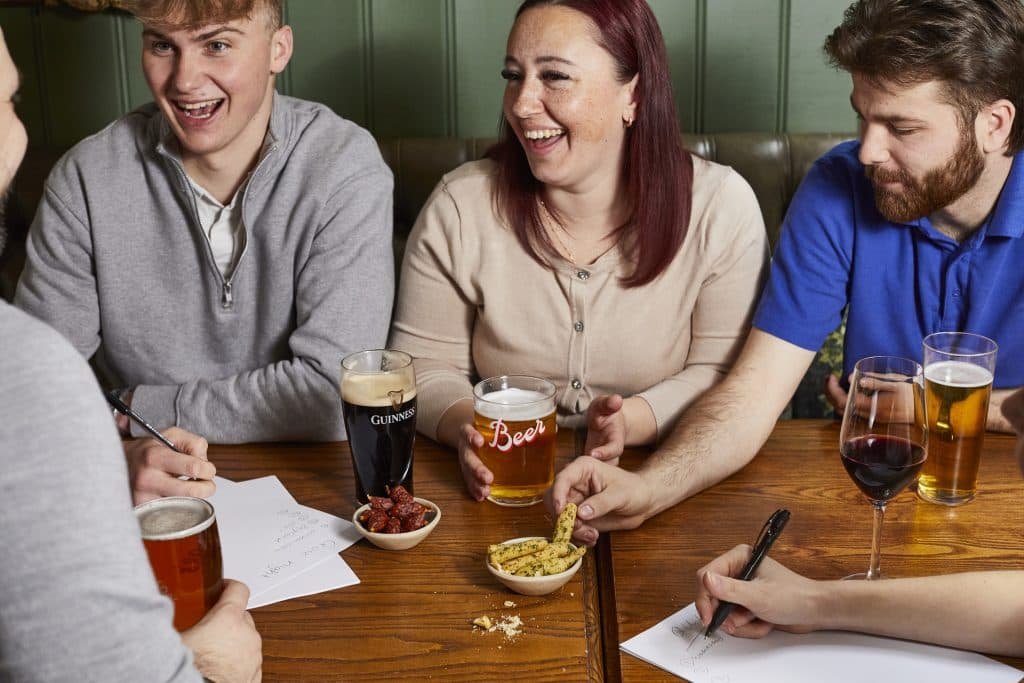
Trivia night looks like pure knowledge, but the teams that win are not always the smartest. They are the most organized, the best at guessing, and the most disciplined about playing to their strengths. Getting better at trivia night with friends is less about studying encyclopedias and more about strategy, teamwork, and knowing how the game actually works.
My team went from middle-of-the-pack to regular winners, and the transformation came from five changes that had nothing to do with anyone getting smarter.
How Can I Get Better at Trivia Night With Friends?
1. Build a Balanced Team
The ideal trivia team is four to six people with non-overlapping knowledge. You want the sports person, the music person, the history buff, the science nerd, the pop culture obsessive, and the person who reads the news every morning. Six specialists beat six generalists every time. Recruit deliberately for gaps; if nobody on your team follows sports, find someone who does before next week.
2. Play the Format, Not Just the Questions
Every trivia night has a structure: rounds, point values, bonus questions, wagering opportunities. Learn it. Save your team’s strongest category focus for the high-value rounds. Understand the wagering mechanics; many games are won or lost on a single smart bet, not on cumulative knowledge. Know whether wrong answers are penalized, because that determines whether guessing is smart or reckless.
3. Master the Art of the Educated Guess
Most trivia questions contain clues beyond the direct ask. Dates narrow possibilities enormously; if the question involves a 1960s event, the answer is from a small set of famous 1960s things. Multiple choice means eliminating wrong answers first, which often leaves an obvious winner. Wordplay in the question frequently hints at the answer. And when truly stuck, guess the most famous possible answer; trivia writers favor well-known facts, so the obvious guess is right more often than probability suggests.
4. Organize Your Table
Assign a captain who makes final calls and keeps the team moving. Read each question aloud so everyone processes it. Give every question thirty seconds of genuine thought before answering; the first instinct is often wrong, but so is overthinking. Keep one person tracking scores and standings so you know when to wager aggressively. Silence the loudest voice when they are confidently wrong; confidence and correctness are uncorrelated.
5. Study Smart, Not Hard
You cannot learn everything, but you can learn the high-frequency trivia topics. Recent major news, Oscar winners, capital cities, famous quotes and their authors, sports championships, and basic science facts recur constantly. Skim a “common trivia answers” list before the game; it genuinely helps. Follow the news casually; current events rounds reward awareness, not expertise. And learn your team’s weak categories specifically rather than studying randomly.
Night-Of Tactics
- Arrive early. Good tables, settled nerves, and time to organize beat rushing in mid-round-one.
- Bring the right supplies. Pens, paper, and a phone for the answer submission app if required. Some venues ban phones; know the rules.
- Do not over-order food mid-game. A distracted team misses questions. Eat before or during breaks.
- Trust specialists. When the music person is sure, go with it even if others disagree. Deferring to expertise wins rounds.
- Stay for the whole game. Comebacks happen in final rounds. Leaving early forfeits the wager round where games are decided.
Beyond the Bar
Trivia skills transfer to other social competitions. Board game nights reward the same quick thinking, digital trivia apps let you practice solo, and casual video games with quiz modes scratch the same itch. When the competitive energy needs a sillier outlet, karaoke for shy singers is the perfect palate cleanser.
For finding trivia nights near you, Eventbrite lists local events, and WIRED covers the trivia and quiz app scene.
Building a Trivia Practice Routine
Fifteen minutes a day of casual learning compounds remarkably. Read the news: skim headlines daily; current events rounds are free points for the informed. Learn the capitals and flags: geography questions recur endlessly and the set is finite. Study Oscar winners: Best Picture winners by year are trivia gold. Learn the periodic table basics: element symbols and common facts appear constantly. Follow sports casually: know the champions, the stars, and the storylines. Use quiz apps: ten minutes of daily quizzing builds recall speed. You are not studying for an exam; you are building a broad, shallow knowledge base where trivia answers live. The goal is familiarity, not expertise.
Hosting Your Own Trivia Night
Running trivia is as fun as playing it. Format: five to six rounds of ten questions, varied categories, one wager round for drama. Writing questions: aim for a difficulty curve within each round; every team should get some right. Verify every answer from two sources; nothing kills credibility like a wrong answer key. Hosting: read clearly, keep pace brisk, build energy between rounds. Prizes: silly trophies beat cash; the glory is the point. Tech: a simple slideshow and a microphone are enough. Hosting teaches you how questions are constructed, which makes you a better player; you start seeing the clues instead of just the questions.
Trivia FAQs
What is the ideal team size? Four to six people with non-overlapping knowledge. Six specialists beat six generalists every time.
Should we guess or pass? Depends on the scoring. If wrong answers are not penalized, always guess; the obvious answer is right more often than probability suggests.
How do I get better at guessing? Use the question’s clues: dates narrow possibilities, and trivia writers favor famous answers. Eliminate wrong options first.
What should we study? Current events, Oscar winners, capitals, famous quotes, sports champions. High-frequency topics give the best return.
Does the loudest person win? No. Confidence and correctness are uncorrelated; trust the specialist even when outvoted.
The takeaway: recruit for coverage, learn the format, guess intelligently, organize the table, and study the high-frequency topics. Trivia is a team sport, and the best team usually wins. Now go recruit your specialists, study the capitals, and bring home the bar-tab prize. Good luck out there.



