
How to Fold Clothes to Save Drawer Space
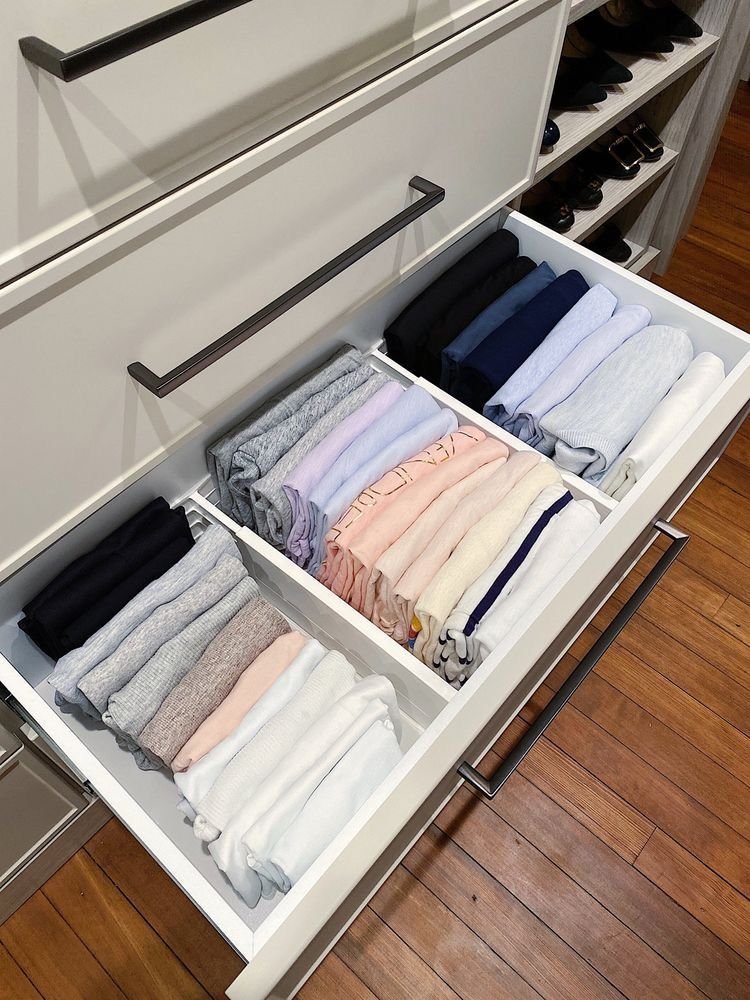
Your drawers are a mess. You know the shirt is in there somewhere — under the avalanche, probably — but finding it requires excavation. Meanwhile, minimalists on the internet have drawers that look like filing cabinets, every item visible at a glance. That system has a name (file folding, popularized by Marie Kondo), and it’s genuinely transformative for small spaces. If you’re asking what is the best way to fold clothes to save drawer space, here’s the complete method: the folds, the arrangement, and the maintenance that keeps it working.
File Folding: The Core Technique
The principle: fold clothes into rectangles that stand upright like files, so every item is visible when you open the drawer. No more digging — you see everything, you wear everything. Here’s how:
- T-shirts/tops: lay face-down, fold each side to the center (sleeves tucked), then fold in half or thirds lengthwise into a long rectangle, then fold that rectangle into halves or thirds until it stands upright. The final packet should be roughly the height of your drawer.
- Pants/jeans: fold in half lengthwise (or fold one leg over the other), smooth flat, then fold into thirds or fourths into a standing rectangle. Jeans are bulky — thirds usually works.
- Sweaters/knits: same as T-shirts but don’t compress — fold loosely to avoid stretching. Chunky knits may only fold in half; that’s fine.
- Underwear: fold into small rectangles or simple thirds. They take seconds each and the drawer transformation is dramatic.
- Socks: lay one on top of the other (don’t ball them — balling stretches the elastic), fold in halves or thirds. They’ll stay paired and take half the space.
- Towels/linens: fold into thirds lengthwise, then into a rectangle that fits the shelf standing up. Hotel-style, visible, accessible.
Arranging the Drawer
Folding is half the system; arrangement is the other half. Stand everything upright in rows, like files — this is what makes items visible and accessible. Organize by category, then color: all T-shirts together arranged light to dark, all workout tops together, and so on. The color gradient isn’t just pretty — it helps you find things fast. Use drawer dividers or small boxes to keep categories separated; without dividers, file-folded items eventually slump into each other. One layer deep: the system’s magic is that nothing hides under anything else. If a drawer needs stacking, it’s overstuffed — that’s a purge signal, not a folding problem.
What to Fold vs. Hang
File folding doesn’t replace hanging — they work together. Hang: blazers, dresses, button-downs, delicate blouses, structured trousers. Fold: knits and sweaters (hanging stretches them), T-shirts, jeans, casual pants, underwear, workout clothes. Getting this split right is half of small closet organization — hang what needs hanging, file-fold the rest, and suddenly the same space holds twice as much.
Maintenance: Keeping the System Alive
The system decays without one habit: refold when putting laundry away. It takes 20 seconds per item once you know the folds — barely longer than shoving. The failure mode is “I’ll organize it later,” which recreates the avalanche in two weeks. Make it easy: fold laundry immediately (not “later”), keep the drawer categories stable so everything has a home, and do a quick 5-minute reset monthly — refold anything that’s slumped, pull out what you haven’t worn. Pair this with the one-in-one-out rule to prevent drawer overflow permanently.
For travel, the same folds pack beautifully — file-folded clothes in packing cubes are visible, compact, and arrive less wrinkled than traditionally folded clothes. It complements wrinkle-free travel fabrics perfectly: the right fabrics and the right folds mean opening your suitcase to outfits, not chaos.
Folding for Travel (the Same System, Packed)
File folding was made for suitcases. Pack by outfit: fold each day’s clothes together so you grab one bundle, not five items. Use packing cubes as drawers: one cube per category, file-folded inside — the cube becomes a portable drawer you can pull out and use as-is. Heaviest on the bottom: jeans and sweaters low (near the wheels), delicates on top. Fill the gaps: rolled socks and underwear in shoe cavities and corners — dead space is where wrinkles form. The wrinkle rule: file-folding creates soft folds, not hard creases — but for wrinkle-prone fabrics, roll instead of fold, or place tissue between folds. Unpack into drawers on arrival using the same file system and the hotel dresser becomes as organized as home. The travelers with the neatest suitcases aren’t packing less — they’re folding better.
Drawer Organization Beyond Folding
Folding is the foundation; these complete the system. Drawer dividers: spring-loaded or custom-cut — they maintain the file structure permanently. Without them, files slump within weeks. The top-drawer rule: daily essentials (underwear, socks) in the top drawer — minimize morning friction. Seasonal drawers: rotate like the closet — current season accessible, off-season stored elsewhere. The one-category-per-drawer ideal: when drawers allow, don’t mix categories — the visual clarity speeds everything. Smalls in boxes: tiny items (jewelry, accessories) in small boxes within drawers — never loose. The monthly 5-minute reset: refold slumpers, pull unworn items, wipe the drawer — maintenance beats overhauls. A drawer system that takes 5 minutes monthly to maintain beats a “perfect” system that collapses quarterly. Consistency over intensity — the theme of all good organization.
The Minimalist Drawer (How Little You Need)
Challenge the assumption that drawers must be full. The reality: most people wear 20% of their clothes 80% of the time — the rest is drawer filler. The experiment: for one month, wear only what fits in half your drawers — box the rest. You’ll discover the true essentials (and probably not miss the box). The keepers: the pieces you reached for repeatedly — these earn permanent drawer space. The box: after the month, donate unopened — you have proof you don’t need them. The result: half-empty drawers that stay organized effortlessly, mornings with real choices instead of false abundance. The principle: the organized drawer isn’t about fitting more in — it’s about keeping only what earns the space. Less stuff, less maintenance, more wearing. The minimalist drawer is the final form of the organized drawer.
The Practical Takeaway
This weekend: pull out one drawer, learn the file fold for its contents (ten minutes of practice), arrange everything standing in color order, and add a divider. Then maintain it by refolding as you put laundry away. One drawer becomes two, everything becomes visible, and getting dressed gets faster. Small technique, outsized payoff — the best kind of organization. The official KonMari site has video demonstrations of the folding methods.






