Why Your Cat Scratches Furniture and How to Stop It Humanely
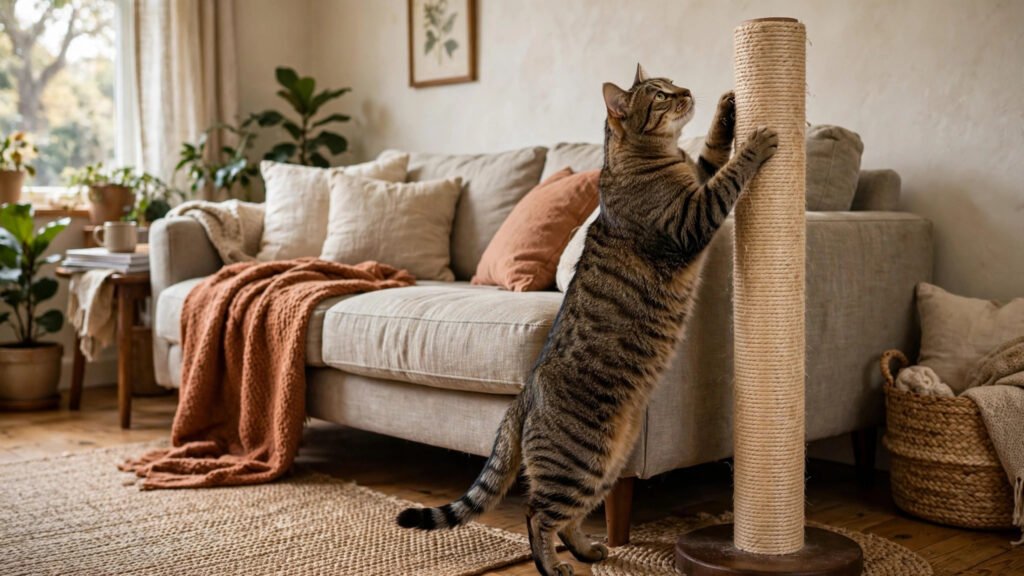
Your couch is shredded, your favorite armchair looks like it lost a fight, and you’re wondering if your cat is doing it out of spite. She’s not. Scratching is one of the most deeply hardwired behaviors in cats — as natural as purring — and no amount of scolding will remove the need. The good news: you don’t have to choose between your cat and your furniture. Once you understand why cats scratch, redirecting the behavior is straightforward, humane, and highly effective. Declawing, on the other hand, is off the table — here’s everything that actually works.
Why Cats Scratch: It’s Not About Your Couch
Scratching serves three biological functions. First, claw maintenance: scratching sheds the dead outer sheath of the claw, keeping the sharp new claw underneath functional — it’s hygiene, not vandalism. Second, exercise: the full-body stretch of a good scratch works the back, shoulders, and legs. Third, and most overlooked: communication. Cats have scent glands in their paw pads, so scratching marks territory both visually and chemically. That shredded couch arm is your cat’s version of a nameplate on the door.
This is why punishment fails so reliably. You’re not addressing a misbehavior; you’re fighting an instinct. A cat that stops scratching the couch because she’s scared will scratch the curtains instead — or develop stress behaviors. The strategy that works is redirection: make the right surfaces irresistible and the wrong ones unappealing.
The Scratching Post Strategy (Done Right)
Most failed scratching-post attempts trace to the wrong post, not a stubborn cat. Cats have strong preferences, and matching them matters:
Material
Watch what your cat targets now. Couch-shredders usually prefer upholstery-like textures — get a post wrapped in fabric or carpet. Woodwork-scratchers want something harder — natural wood or bark-textured posts. Most cats love sisal rope, the all-around best bet. Cardboard scratchers are cheap, beloved by many cats, and satisfy the shredding urge.
Orientation
Does she scratch chair arms and doorframes (vertical) or rugs and couch seats (horizontal)? Match the post orientation to the preference. Many cats want both — a tall vertical post plus a flat cardboard scratcher covers most preferences.
Stability and height
The number one post mistake: wobbly, short posts. A post that tips over teaches the cat that posts are scary. It must be tall enough for a full stretch (at least 30 inches for average cats) and heavy or wall-mounted enough to stay put when she throws her weight into it.
Placement
Put posts where the cat already scratches — right next to the couch arm, not exiled to a back bedroom. Cats scratch to mark high-traffic territory; a post in the laundry room is irrelevant to them. You can move it gradually once the habit transfers.
Make the post rewarding: sprinkle catnip, dangle toys, feed treats on it. When she uses it, praise calmly. You’re building a habit loop — the post becomes the default because good things happen there. The ASPCA behavior guides confirm that proper post selection and placement resolve most scratching complaints without any aversive methods. PetMD’s overview of declawing alternatives is worth sharing with anyone still considering the surgery.
Making Furniture Unappealing (Humanely)
While building the new habit, protect the old targets. Double-sided sticky tape (products made specifically for furniture) on scratched areas is highly effective — cats hate the texture. Aluminum foil works as a temporary deterrent. Fitted furniture covers or throws protect during the transition. Citrus-scented sprays deter some cats (test on hidden fabric first).
What about the already-damaged furniture? Trimming helps cosmetically, and choosing durable, pet-friendly materials for your home is a long-term strategy — tightly woven fabrics like microfiber and canvas resist claws far better than loosely woven upholstery, a lesson that applies to furniture as much as floors.
Starting Kittens Right: Prevention Beats Cure
If you have a kitten, you can skip the furniture wars entirely. Kittens form scratching habits between 8 and 16 weeks — whatever they scratch during this window becomes their lifelong preference. Place a tall, stable sisal post next to their favorite nap spot from day one (cats love a good scratch right after waking), reward every use with a treat, and gently redirect from furniture the handful of times they try it. Kittens trained this way rarely develop furniture-scratching habits at all.
The same window applies to nail trims: handle your kitten’s paws daily, press gently to extend the claws, reward calm acceptance, and introduce the clipper as a non-event with treats. A cat that learned nail trims as a kitten accepts them for life; a cat meeting clippers for the first time at age three does not. Early positive exposure is the cheapest behavior investment in cat ownership — ten minutes a day for a month buys you a decade of easy grooming. The scratching post they love as a kitten becomes the post they use as a senior, and your furniture survives the entire journey untouched.
Nail Trims and Soft Claw Caps
Regular nail trims (every 2–3 weeks) blunt the damage without affecting the behavior — the cat still scratches, but the claws do less harm. Most cats accept trims with gradual training and treats; your vet or groomer can demonstrate technique or do it for a small fee.
Soft plastic claw caps (glued over trimmed nails, lasting 4–6 weeks) are another option many owners love. They’re humane, painless when applied correctly, and eliminate damage entirely. They need regular replacement and don’t suit cats that go outdoors (they impair defense and climbing).
Why Declawing Is Not the Answer
Declawing isn’t nail removal — it’s amputation of the last bone of each toe, comparable to removing human fingertips at the last joint. It can cause chronic pain, litter box avoidance, biting (the cat’s remaining defense), and lasting behavioral changes. It’s banned or restricted in many countries and increasingly in American cities and states — New York banned it statewide in 2019, with more jurisdictions following. Major veterinary organizations oppose it as elective surgery. With effective alternatives available, there’s no justification left.
And remember the bigger picture: a home set up for cats stays nicer for everyone — keeping a clean house with pets starts with meeting their needs so they don’t meet them on your belongings.
Conclusion
Your cat scratches because she’s a cat — maintaining claws, stretching, and marking her territory. Give her tall, stable, well-placed scratching surfaces she actually likes, make the couch temporarily unappealing with sticky tape, keep nails trimmed, and the furniture destruction stops. It takes a few weeks of consistency, not a battle of wills. Work with the instinct instead of against it, and everybody wins — including the couch.
Frequently Asked Questions
How do I stop my cat from scratching furniture permanently?
Provide appealing scratching posts (tall, stable, right material and location), deter furniture with double-sided tape temporarily, and reward post use. Most cats redirect within 2-4 weeks.
Is declawing cruel?
Veterinary organizations widely consider elective declawing inhumane — it’s toe-bone amputation that can cause chronic pain and behavior problems. It’s banned in New York state and many other jurisdictions.
Do claw caps hurt cats?
No, when applied correctly to trimmed nails they’re painless. They fall off naturally in 4-6 weeks and need reapplication. They’re best for indoor-only cats.
Why does my cat scratch right after I say no?
She’s not being defiant — scratching is instinctive and the urge doesn’t vanish because you objected. Punishment doesn’t teach an alternative; redirection does.
What scratching post material is best?
Sisal rope suits most cats. Match material to your cat’s current preference: upholstery-scratchers like fabric-covered posts, woodwork-scratchers prefer bark or wood textures.