Is the Nintendo Switch Still Worth Buying in 2026?
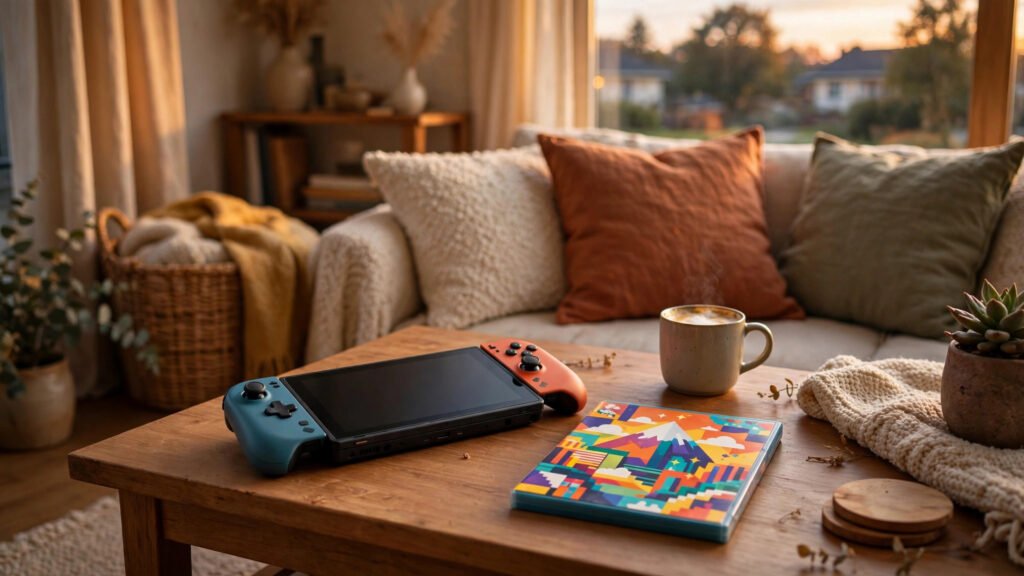
The Nintendo Switch launched in 2017 — ancient history in console years — yet walk into any American game store in 2026 and it’s still there, still selling, still the console your nephew begs for. With a successor now on shelves, the question gets sharper: is the original Switch still worth buying in 2026, or is it finally time to let the little hybrid retire?
This guide gives you the full 2026 picture: where the Switch stands in Nintendo’s lineup, what the game library looks like after nearly a decade, how the price compares to newer options, who should still buy one, and who should skip it.
The 2026 Reality: The Switch 2 Exists Now
Let’s address the elephant in the room first. Nintendo’s next-generation hardware has arrived, and it’s backward compatible with most Switch games while offering better performance, improved visuals, and new exclusives built for the stronger hardware. That changes the value equation for the original Switch significantly.
But it doesn’t zero it out. Nintendo has a long history of supporting older hardware well into a successor’s life — the 3DS received meaningful releases for years after the Switch launched. More importantly, the original Switch’s price has dropped to impulse-buy territory in many retail channels, especially refurbished and pre-owned. The question isn’t whether the Switch 2 is better — it is — but whether the original still delivers enough joy per dollar to justify its (now much lower) price.
The Library: Nearly a Decade of Games
Here’s the Switch’s enduring superpower: its library. After nine years, the Switch has amassed one of the deepest catalogs in gaming history — landmark Nintendo exclusives, a golden age of indie titles that found their natural home on a portable system, and ports of major third-party games that seemed impossible on handheld hardware in 2017.
For a new buyer in 2026, this is actually an advantage the Switch 2 can’t match yet: a complete, critically vetted library where every classic is identified, every hidden gem is documented, and patient gamers can buy legendary titles at deep discounts. Casual players building a collection will find years of acclaimed games available cheap — the “patient gamer” strategy has never been more rewarding than with a mature console at end of life.
The caveat: new releases are increasingly Switch 2-first, with original Switch versions (when they exist) running noticeably worse. If playing the newest games at their best matters to you, that alone may settle the decision.
Price and Value in 2026
The original Switch’s strongest argument in 2026 is price. New units have seen permanent cuts, refurbished models from reputable sellers are abundant, and the used market is flooded with systems from upgraders — often bundled with games and accessories at a fraction of original cost.
Do the total-cost math: a used or refurbished Switch plus a handful of discounted evergreen titles can cost less than a single new Switch 2 with two games. For a kid’s first console, a second TV setup, or a travel system you won’t cry over if it gets scuffed, that value proposition is genuinely compelling. Frequent travelers in particular may prefer the cheaper, replaceable original as a road companion over risking premium hardware.
The Models: Which Switch, If Any
Three models exist, and the choice matters more in 2026 than it used to. The OLED model — with its gorgeous screen, better kickstand, and improved dock — is the one to get if buying new; the screen upgrade transforms handheld play, and price gaps have narrowed. The standard model makes sense only at a steep discount. The Switch Lite, the handheld-only budget option, remains the cheapest entry point and a perfect kid’s console — no detachable parts to lose, no dock needed.
Whichever you choose, buy from reputable sellers with return policies. The used market’s abundance is great for prices but requires the usual caution about worn batteries and drift-prone controllers — budget for the possibility of replacing Joy-Cons, whose analog sticks were the hardware’s Achilles’ heel.
Who Should Still Buy a Switch in 2026
Parents buying a first console: The Switch’s family-friendly library, parental controls, and now-low prices make it the default choice. Check age appropriateness on the ESRB ratings site — Nintendo’s catalog skews all-ages, but not exclusively.
Patient gamers on a budget: If you don’t care about playing releases on day one, the Switch offers hundreds of masterpieces at bargain prices. This is the highest games-per-dollar ratio in console history.
Households wanting a second system: A Switch for the kids’ room, the travel bag, or the vacation home makes more sense at 2026 prices than it ever did.
Collectors and Nintendo loyalists: The complete library era means every must-play is available and documented. Completionists can now “finish” the Switch generation definitively.
Who Should Skip It
Buy the successor instead if: you want the newest releases at their best, you’re buying your primary console for the next several years, or the price gap between a new Switch and the newer hardware is small in your market. There’s no prize for buying obsolete hardware as your main system — the savings only make sense when the use case fits (kids, travel, secondary setup, backlog diving).
Also skip if you’re primarily a portable gamer who already owns a capable handheld PC or plays mostly on a phone — the Switch’s portability edge has narrowed as alternatives matured. Families seeking together-time gaming might also weigh whether the Switch’s party games still beat a board game night for their crew.
How Long Will It Stay Useful?
Nintendo typically supports online services for older hardware for years, and the Switch’s massive install base means indie developers will keep releasing for it while the audience remains. Expect new first-party Nintendo releases to taper off, but the eShop, online play, and existing library aren’t going anywhere soon. As a backlog machine and party console, a 2026 Switch purchase stays useful for years — it just won’t be where the cutting edge lives.
Check the ESRB ratings guide when building a family game library — it details content descriptors beyond the letter rating.
Conclusion
The Nintendo Switch in 2026 is the best value proposition in console gaming for specific buyers: parents, budget gamers, travelers, and second-system households. Its decade-deep library at fire-sale prices delivers more joy per dollar than anything else on the shelf. But it’s a conscious trade — you’re buying the past at a discount, not the future. If this is your main console for the years ahead, step up to the newer hardware. If it isn’t, the little hybrid that could still has plenty of game left.
Frequently Asked Questions
Is the Nintendo Switch discontinued in 2026?
Nintendo has shifted focus to its successor, but the original Switch remains widely available new, refurbished, and used. Software support for new first-party releases is winding down, while the eShop and online services continue operating.
Can the original Switch play Switch 2 games?
No — new games built exclusively for the newer hardware won’t run on the original Switch. Backward compatibility flows the other way: the new hardware plays (most) original Switch games, often with enhancements.
Is a used Nintendo Switch worth buying?
Often yes, given the flooded market and low prices — but inspect battery health, test the Joy-Cons for stick drift, and buy from sellers with return policies. Budget for potential Joy-Con replacement, the system’s most common failure point.
Which Switch model is best in 2026?
The OLED model for handheld play thanks to its superior screen, the standard model only at a deep discount, and the Switch Lite as the cheapest kid-friendly handheld-only option. Avoid paying near-original retail for any model this late in the cycle.
How many years of life does a 2026 Switch purchase have?
As a library/backlog and party console, easily 3–5+ years — the games don’t expire. As a platform for new releases, its best days are behind it. Buy it for what it already has, not what’s coming.