How to Stop a Puppy From Biting Hands and Feet: Training
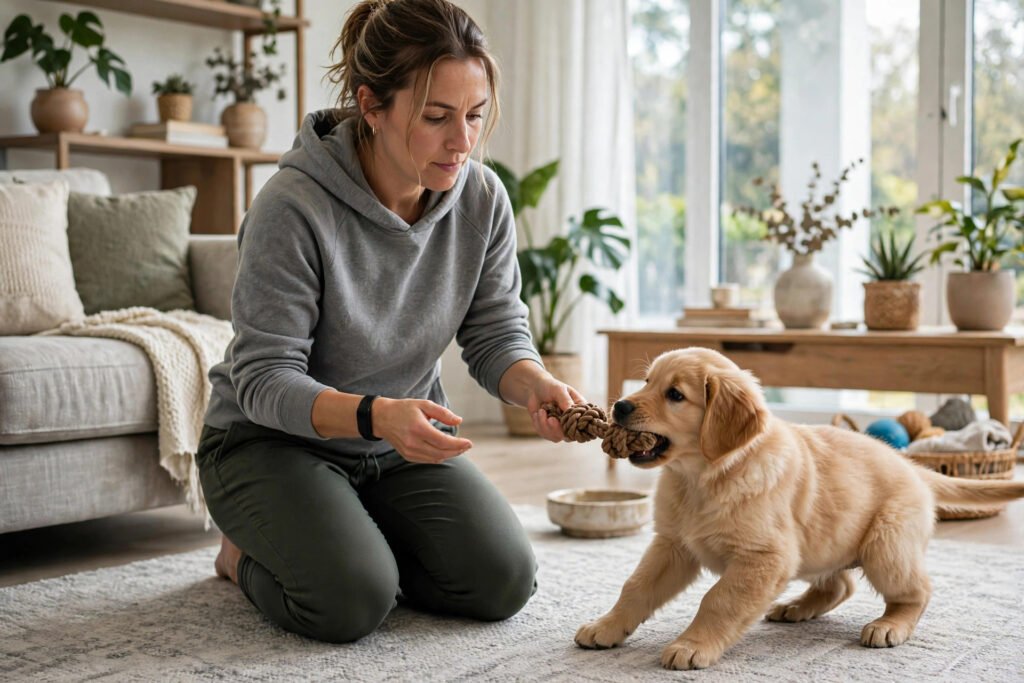
Those needle-sharp puppy teeth on your hands, your feet, your pant legs — every puppy owner in America knows the feeling. It’s completely normal: puppies explore the world with their mouths, and biting is how they learned to play with their littermates. But “normal” doesn’t mean “acceptable forever,” and the window for teaching bite inhibition is short. Puppies that don’t learn gentle mouth manners by about four to five months old become adolescent dogs with a serious problem. Here’s the training protocol that actually works — and the popular mistakes that make biting worse.
Understanding Why Puppies Bite
Puppy biting serves developmental purposes. In the litter, puppies learn bite inhibition from each other: bite too hard, the sibling yelps and stops playing. Removed from the litter at eight weeks, your puppy transfers this learning to you — your hands and feet become the new littermates. Teething (starting around 12 weeks, with adult teeth arriving by six months) adds genuine mouth discomfort that chewing relieves. And overtired puppies bite more — a puppy that’s been awake too long turns into a furry shark, which is why the biting often peaks in the evening.
The goal isn’t zero mouth contact overnight. It’s teaching the puppy, in stages: first that human skin is fragile (bite inhibition), then that teeth on skin ends fun (no biting at all). This staged approach mirrors how puppies naturally learn, just with you as the teacher.
The Core Protocol: Yelp, Withdraw, Redirect
Step 1: Mark the pain
When teeth touch skin with any pressure, give a short, high-pitched “ouch!” — mimicking a littermate’s yelp — and immediately stop all interaction. Go still, tuck your hands, turn slightly away. You’re communicating in the puppy’s own language: that hurt, and fun stops when it happens.
Step 2: Brief social timeout
If the puppy persists after your “ouch,” calmly leave the room or step behind a baby gate for 20–30 seconds. Not as punishment — as information. Biting makes the wonderful human disappear. Return calmly and resume. Most puppies connect the dots within days: teeth on human = human vanishes.
Step 3: Redirect to legal chewing
Always follow up by offering an appropriate chew toy. The message isn’t “never use your mouth” — it’s “use your mouth on this, not me.” Keep toys stashed around the house so redirection is instant. Frozen carrots, frozen Kongs stuffed with peanut butter, and rubber chew toys all soothe teething gums.
This protocol is endorsed across modern training science; the American Kennel Club training resources describe the same withdraw-and-redirect sequence as the foundation of bite inhibition work. The ASPCA’s puppy nipping guide adds useful troubleshooting for pups that escalate instead of calming.
Handling the Special Cases
Feet and pant legs
Moving feet trigger chase-and-grab instincts. When the puppy attacks your feet, freeze completely — movement is the reward. The instant she disengages, redirect to a toy. Wearing shoes indoors during the training phase removes the most tempting targets.
The evening “witching hour”
That 7–9 p.m. bite frenzy is usually overtiredness, not defiance. An overtired puppy can’t learn — enforce naps. Puppies under 16 weeks need 18–20 hours of sleep daily, and most biting epidemics trace to chronically under-rested puppies. Crate or pen for a nap, and watch the evening shark transform back into a sweet puppy.
Biting children
Kids’ fast movements and high-pitched reactions are irresistible to puppies. Supervise all interactions, teach children to “be a tree” (stand still, arms folded, look away) when the puppy gets mouthy, and give the puppy structured outlets — a tired puppy with a chew toy is a safe puppy around kids.
What if the yelp makes it worse?
Some puppies get more excited by the “ouch!” — for these pups, skip the yelp and go straight to the silent withdrawal. Training is about the individual dog in front of you, not the textbook. Getting the fundamentals right from the start matters as much as any technique — choosing a pet that fits your lifestyle includes honestly assessing whether you have the time for puppy training, because this phase demands consistency from everyone in the household.
Teaching Children the Bite Protocol
Kids and puppies are a special challenge: children’s fast movements, high-pitched voices, and tendency to run trigger every chase-and-bite instinct a puppy has. Worse, kids naturally do the exact wrong things — waving hands, squealing, running away — which the puppy reads as the best game ever. Every child who interacts with the puppy regularly needs the same training the adults get, adapted for age.
The rules for kids: be a tree when the puppy gets mouthy (stand still, fold arms, look away — boring trees don’t get bitten); never run from the puppy (running triggers chase); redirect with a toy instead of hands; and no face-to-face wrestling games. Young children should always be supervised with the puppy — not because the puppy is dangerous, but because neither species has impulse control yet. Practice the protocol as a family drill: it feels silly, but a household where everyone responds identically is a household where the puppy learns in days instead of months. And teach kids that the puppy isn’t being “mean” — she’s learning, just like they are. Empathy for the learning process keeps everyone patient through the land-shark phase.
Mistakes That Make Biting Worse
Physical punishment. Hitting, alpha rolls, scruff shakes, or holding the mouth shut teach the puppy that hands are scary — creating a dog that bites from fear, which is far more dangerous than puppy mouthing. Every major veterinary behavior organization opposes punishment-based methods for biting.
Wrestling and rough play with hands. If hands are toys during play, they’re toys all the time. Keep hands for petting and feeding; toys are for wrestling.
Inconsistency. If biting ends play with you but gets giggles from your partner, the puppy learns nothing. Every human in the house must follow the same protocol.
Ignoring it and hoping they outgrow it. Some puppies do mellow with age, but many rehearse biting into adolescence, when those jaws are strong enough to bruise. The learning window for bite inhibition narrows significantly after 4–5 months.
The Timeline: What Progress Looks Like
Weeks 8–12: frequent mouthing, learning that pressure ends fun. Weeks 12–16: teething intensifies chewing needs — provide abundant appropriate outlets. By 4–5 months: mouthing should be rare and gentle. By 6 months, with consistent work, teeth-on-skin should be essentially gone. Regression during adolescence (6–12 months) is normal — just reapply the protocol calmly. If biting is intense, breaking skin regularly, or paired with stiff body language and growling (not play growling), consult a certified professional dog trainer or veterinary behaviorist promptly. And remember the unglamorous side of puppyhood: keeping a clean house with pets gets much easier once the land-shark phase ends.
Conclusion
Puppy biting is normal, temporary, and fixable — with the right method applied consistently. Yelp or withdraw when teeth touch skin, take brief social timeouts for persistence, redirect to legal chews, enforce naps to prevent overtired frenzies, and never use punishment. Most puppies learn gentle mouth manners within weeks. You’re not just stopping an annoying habit; you’re building the foundation of a dog that’s safe around hands for the rest of her life.
Frequently Asked Questions
At what age do puppies stop biting?
With consistent training, most puppies significantly reduce mouthing by 4-5 months and stop by 6 months. Teething ends around 6 months when adult teeth are fully in.
Should I yelp when my puppy bites?
A short, high-pitched “ouch” mimics littermate feedback and works for most puppies. If it excites your puppy more, skip the yelp and use silent withdrawal instead.
Is it okay to let my puppy chew on my hands gently?
It’s better to teach that teeth don’t belong on skin at all. Allowing “gentle” mouthing sends mixed signals that confuse the learning process.
Why does my puppy bite more at night?
Evening bite frenzies are usually overtiredness. Puppies need 18-20 hours of sleep daily — enforce naps and the “witching hour” shark typically disappears.
When should I get professional help for puppy biting?
If biting regularly breaks skin, involves stiff body language or serious growling, or isn’t improving by 5-6 months despite consistent training, consult a certified trainer or veterinary behaviorist.