How to Start a Gaming YouTube Channel From Zero in 2026
Gaming YouTube looks like a lottery from the outside — millions of channels, a handful of stars, and an algorithm that feels like weather. But look closer at the channels that broke through in the last few years and a pattern emerges: they didn’t win by being the best player or the funniest person. They won by being the most useful, the most consistent, or the most specific. In 2026, starting a gaming channel from zero is still very possible — if you stop trying to be the next mega-star and start serving an underserved corner instead.
This guide covers the realistic 2026 landscape, how to pick a niche you can actually win, the minimum gear you need (it’s less than you think), a content strategy for your first 50 videos, and how monetization really works for small channels.
The Honest 2026 Landscape
Let’s not sugarcoat it: generic “let’s play” content with no angle is nearly impossible to grow in 2026. The algorithm has years of watch-time data telling it exactly which established channels satisfy viewers, and a new channel offering the same thing has no reason to be recommended. Reaction-style content and highlight compilations face additional headwinds from copyright enforcement and platform policy shifts.
But gaming remains one of YouTube’s largest categories, and the platform constantly needs fresh supply in specific niches: new game releases create information vacuums, underserved games have hungry audiences, and tutorial/guide content gets searched (not just recommended) — which means new channels can rank. The opportunity in 2026 isn’t “gaming YouTube.” It’s a specific slice of it. Like any side hustle, the riches are in the niches.
Picking a Niche You Can Win
Your niche needs three properties: an audience with unmet needs, a topic you can sustain for 100+ videos without burning out, and a format where a newcomer can plausibly be the best answer. Some 2026-friendly angles:
New and upcoming games. When a major game launches, search demand for guides, builds, and explanations explodes while supply is thin. Channels that prepare content for launch week can ride the wave. The trade-off: it’s feast or famine, and you’re on the game’s schedule.
Underserved classics and retro. Deep dives, challenge runs, and lore explanations for beloved older games have evergreen audiences and far less competition than current AAA titles. Retro gaming’s audience is loyal and underserved by the algorithm’s recency bias.
Educational and analytical content. “How game design works” essays, industry analysis, and history documentaries attract viewers who watch to the end — the metric YouTube loves most. This format rewards research and writing over reflexes, which suits many creators better.
Hyper-specific utility. Achievement guides, boss strategies, settings optimization, budget builds — boring to describe, gold to rank for. A channel that answers “how do I beat X” for hundreds of X’s builds a search-driven library that compounds for years.
The Minimum Viable Setup
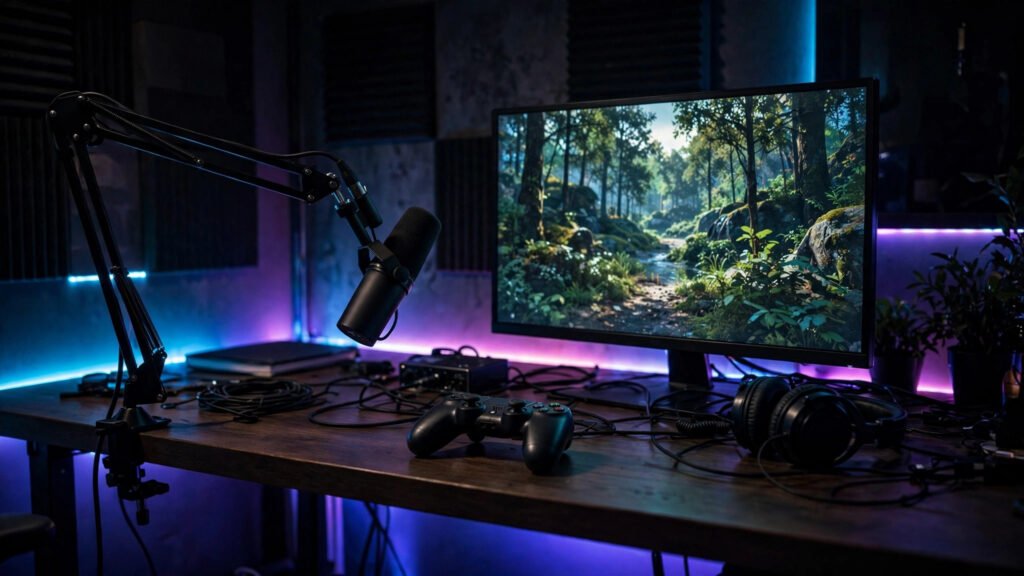
Gear is the most overthought part of starting. In 2026, the minimum viable setup is: a decent USB microphone (audio quality matters more than video quality — viewers forgive 720p, they don’t forgive bad audio), free editing software (DaVinci Resolve’s free tier is professional-grade), and a capture method (console built-in recording, OBS for PC, or a capture card if you’re serious).
Total startup cost can stay under $150 if you already own a gaming device. Don’t buy a fancy camera, lighting rig, or stream deck before you’ve published 20 videos — gear doesn’t fix content problems, and most beginners quit before gear would have mattered. Your phone is already a capable production tool for face-cam segments while you’re starting out.
Your First 50 Videos: The Strategy
Here’s the plan that gives new channels their best shot:
Videos 1–10: Learn in public
Your first videos will be bad. That’s the tuition. Publish anyway, on a schedule you can sustain (one per week beats three per week for a month then burnout). Study your analytics after each upload: where do viewers drop off? That timestamp is your most honest feedback.
Videos 11–30: Find your format
By now you’ll see which videos get traction. Double down on what works, kill what doesn’t, and systematize production — templates, checklists, and batching turn a chaotic hobby into a sustainable operation. Starting any content channel follows the same arc: the format emerges from doing, not planning.
Videos 31–50: Compound and expand
With a proven format and a small loyal audience, expand deliberately: series and playlists that keep viewers watching multiple videos, collaborations with similar-size channels (the most underused growth lever), and strategic coverage of new releases in your niche.
Throughout: thumbnails and titles are half the battle. Study what gets clicked in your niche without resorting to deception — curiosity gaps work, clickbait that disappoints kills channels. And engage genuinely with every early commenter; your first hundred subscribers are worth more than your next ten thousand.
How Monetization Really Works
YouTube’s Partner Program requires 1,000 subscribers and 4,000 watch hours (or Shorts views equivalent) — a milestone that takes most gaming channels 6–18 months of consistent work. Gaming ad rates (CPMs) are middling compared to finance or tech, so ad revenue alone rarely sustains a channel early.
The channels that monetize fastest diversify early: affiliate links for gear and games, sponsorships from brands targeting gamers (attainable at surprisingly small subscriber counts in specific niches — and remember the FTC’s endorsement disclosure rules apply to paid promotions), channel memberships, and digital products like guides or presets. Treat ad revenue as the bonus, not the business — the business is the audience relationship.
The Small Business Administration’s startup resources apply surprisingly well to treating your channel as a business: know your costs, project conservatively, and don’t quit your day job on hope.
The YouTube Creator Academy offers free courses on production, audience building, and monetization that pair well with the strategy above.
Conclusion
Starting a gaming YouTube channel from zero in 2026 is hard but far from hopeless — the creators who break through share a formula: a specific underserved niche, minimum viable gear, relentless consistency through the first 50 videos, and monetization beyond ads. The algorithm doesn’t owe you an audience, but it reliably rewards channels that serve one well. Pick your corner, publish your first bad video this week, and let the data teach you the rest. Everyone you admire started exactly where you are now: at zero, with an upload button.
Frequently Asked Questions
How long does it take to grow a gaming YouTube channel?
Most channels take 6–18 months of consistent uploading to reach monetization thresholds, and 2+ years to build a meaningful audience. Channels in well-chosen niches with search-driven content often grow faster than personality-driven entertainment channels.
Do I need a capture card to start?
No. PC creators can use free OBS software, and modern consoles have built-in recording and streaming. A capture card becomes worthwhile only when you’re consistently publishing and want higher quality or dual-PC setups.
Is it too late to start a gaming channel in 2026?
For generic content, effectively yes. For specific niches — new games, underserved classics, guides, analysis — there’s constant opportunity because games keep releasing and audiences keep searching. The platform rewards specificity more than ever.
Should I do long videos or Shorts?
Both serve different purposes: Shorts can drive discovery and subscriber growth quickly but monetize poorly and build weaker loyalty; long-form builds watch time, ad revenue, and genuine audience connection. Most successful new channels use Shorts as a funnel into long-form content.
How much money can a small gaming channel make?
Below monetization thresholds: nothing from ads. At 10,000–50,000 subscribers with diversified income (affiliates, sponsors, memberships), many creators earn hundreds to low thousands monthly. Full-time income typically requires 100,000+ engaged subscribers or exceptional niche monetization.