Breaking Out at 30? Causes and Fixes for Adult Acne
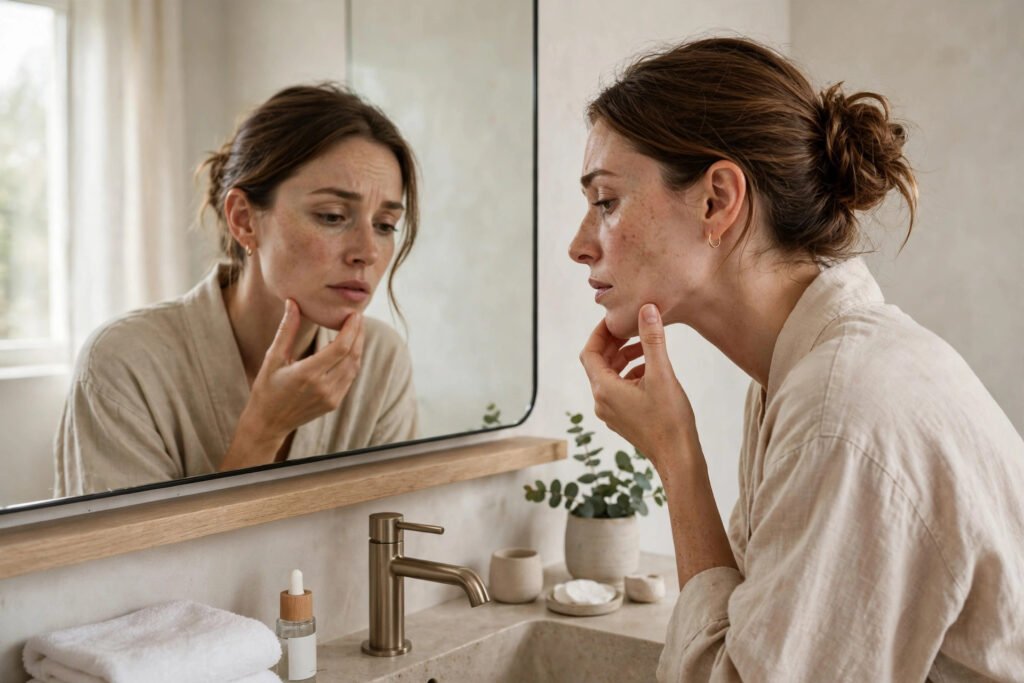
You had clear skin through your twenties. Now at 30, your jawline is staging a rebellion and you want to know what changed. Welcome to adult acne — one of the most common and least discussed skin realities for women in their thirties. Up to 40 percent of adult women experience acne in their 30s, and its causes differ meaningfully from teenage breakouts. The good news: once you identify your trigger, adult acne is highly treatable. Here’s what’s actually behind the sudden breakouts and what to do about each cause.
Cause #1: Hormonal Shifts (The Usual Suspect)
Adult female acne clusters along the jawline, chin, and lower cheeks — the classic hormonal pattern — and flares with menstrual cycles. In your early 30s, subtle shifts in androgen sensitivity (not necessarily abnormal hormone levels) increase sebum production in these zones. Common triggers at this age: stopping hormonal birth control (the post-pill androgen rebound can last 6–12 months), postpartum hormonal recalibration, and perimenopause’s early hormonal fluctuations, which can begin in the late 30s.
What works: topical retinoids (adapalene/Differin, available over the counter) normalize the follicle lining and are first-line for adult acne; azelaic acid (15–20%) targets both acne and the post-inflammatory marks adult skin heals slowly from; and for persistent hormonal patterns, dermatologists may prescribe spironolactone, which blocks androgen receptors in skin. If breakouts are deep, cystic, and cyclical, skip the product-hopping and see a dermatologist — hormonal acne rarely surrenders to drugstore cleansers alone. The American Academy of Dermatology notes that adult acne often needs prescription-strength intervention, and that’s normal, not a failure.
Cause #2: Stress and Cortisol
Your 30s often combine career pressure, relationships, possibly young children, and financial stress — a cortisol cocktail with direct skin consequences. Cortisol stimulates sebaceous glands and increases skin inflammation, and research links perceived stress levels to acne severity. The cruel feedback loop: breakouts cause more stress, which causes more breakouts.
Address both ends. Topically, niacinamide (4–5%) reduces sebum and calms inflammation — it’s one of the best-tolerated adult-acne ingredients. Systemically, the unglamorous basics matter enormously: 7–9 hours of sleep (sleep deprivation spikes cortisol), regular exercise (a potent cortisol regulator), and actual stress management rather than stress endurance. Also audit the hidden stress-acne amplifiers: picking and squeezing (causes the inflammation that creates lasting marks), and over-exfoliating in frustration — compromised skin barriers break out more, not less.
Cause #3: Product and Lifestyle Triggers
Sometimes the breakout isn’t your body — it’s your bathroom shelf. Common culprits that appear in your 30s: switching to richer anti-aging moisturizers that clog acne-prone skin (look for “non-comedogenic” and gel or lotion textures rather than heavy creams), new hair products (pomades and oils migrating to the forehead and temples cause “pomade acne”), and expired or contaminated makeup. Diet’s role is modest but real for some: high-glycemic diets and dairy (particularly skim milk) correlate with acne in susceptible individuals — worth a two-month elimination test if other causes don’t fit.
Don’t overlook the mechanical triggers: dirty phone screens pressed to the jawline daily, pillowcases unchanged for weeks, and face-touching habits. These sound trivial until you realize your “hormonal” jawline acne sits exactly where your phone rests. Swap to speakerphone, change pillowcases twice weekly, and keep hands off your face — free interventions that genuinely help. Supporting skin from the inside matters too: foods that support healthy skin provide the nutrients your skin needs to heal, complementing whatever topical routine you build. When you do wear makeup, choosing shades that suit warm skin tones lets you use less product for the same polished effect, which breakout-prone skin appreciates.
Cause #4: The Skincare Routine Itself
Paradoxically, many 30s breakouts are caused by anti-breakout efforts. The typical pattern: new actives introduced all at once (retinoid + vitamin C + exfoliating acids + benzoyl peroxide), skin barrier destroyed, breakouts explode, more products added in panic. If your routine has more than 4–5 products or you started multiple actives within weeks of the breakout, simplify immediately.
The adult-acne starter routine: gentle cleanser, one active (adapalene or azelaic acid), lightweight non-comedogenic moisturizer, sunscreen every morning. That’s it for 8–12 weeks — actives need that long to show results, and judging them at week three is the top reason people abandon effective treatments. Introduce one new product at a time, two weeks apart, so you can identify culprits. And Mayo Clinic’s dermatology resources remind us: if over-the-counter routines fail after three months, or acne is scarring, painful, or affecting your quality of life, that’s the threshold for professional care — not a reason to buy a seventh serum.
When to See a Dermatologist Promptly
Book sooner rather than later if: breakouts are cystic or nodule-type (deep, painful, no head), you’re developing scars or dark marks that persist months, acne appeared suddenly with other symptoms (irregular periods, excess facial hair, hair thinning — possible PCOS or hormonal disorders needing medical workup), or OTC treatment hasn’t helped in 12 weeks. Dermatologists have tools drugstores don’t — hormonal therapies, prescription retinoids, chemical peels, light therapies — and early treatment prevents the scarring that’s far harder to fix than the acne itself. Don’t feel you must “earn” the appointment by suffering first; dermatologists consider persistent adult acne a standard medical visit, and many now offer teledermatology for straightforward cases.
Conclusion
Sudden breakouts at 30 are usually hormonal shifts, stress, product triggers, or routine overload — not a return of your teenage skin. Match the treatment to the cause: retinoids and possibly hormonal therapy for jawline patterns, barrier repair and simplification for routine-induced breakouts, lifestyle fixes for stress-driven flares. Give any approach 8–12 weeks, see a dermatologist if it’s cystic, scarring, or hasn’t improved in three months, and remember that adult acne is a medical condition with medical solutions — not a hygiene failure or a life sentence. Clear skin at 30 is absolutely achievable; it just needs the adult playbook, not the teenage one.
Frequently Asked Questions
Why am I getting acne at 30 when I never had it as a teen?
Adult-onset acne is common, especially in women — hormonal sensitivity shifts, stress, and lifestyle changes trigger it independently of teenage history. Up to 40 percent of adult women experience it. It’s a different condition from teen acne and responds to different treatments.
Does stopping birth control cause acne?
Often, yes — discontinuing hormonal contraception can trigger an androgen rebound causing jawline breakouts for 6–12 months. It usually stabilizes, but a dermatologist can ease the transition with topical retinoids or other therapies if it’s severe.
How long does it take for acne treatments to work?
Eight to twelve weeks for most topicals (retinoids, azelaic acid) — skin cell turnover takes time. Judging a product at three weeks is premature. If there’s zero improvement at 12 weeks, it’s time to change strategy or see a dermatologist.
Can diet really affect adult acne?
Modestly, for some people. High-glycemic foods and dairy show the strongest associations in research. It’s worth a structured two-month trial eliminating one variable at a time — but diet is rarely the sole cause, so don’t neglect proven topical treatments while experimenting. Keep a simple food-and-flare diary during the trial; patterns are easier to spot in writing than in memory.
Should I exfoliate more if I’m breaking out?
Usually the opposite — over-exfoliating destroys the skin barrier, triggering more breakouts and inflammation. If you’re already using acids or scrubs daily and still breaking out, cut back to 2–3 times weekly and focus on barrier repair with a simple moisturizer for two weeks before reassessing.