How to Fade Acne Scars Without Expensive Treatments
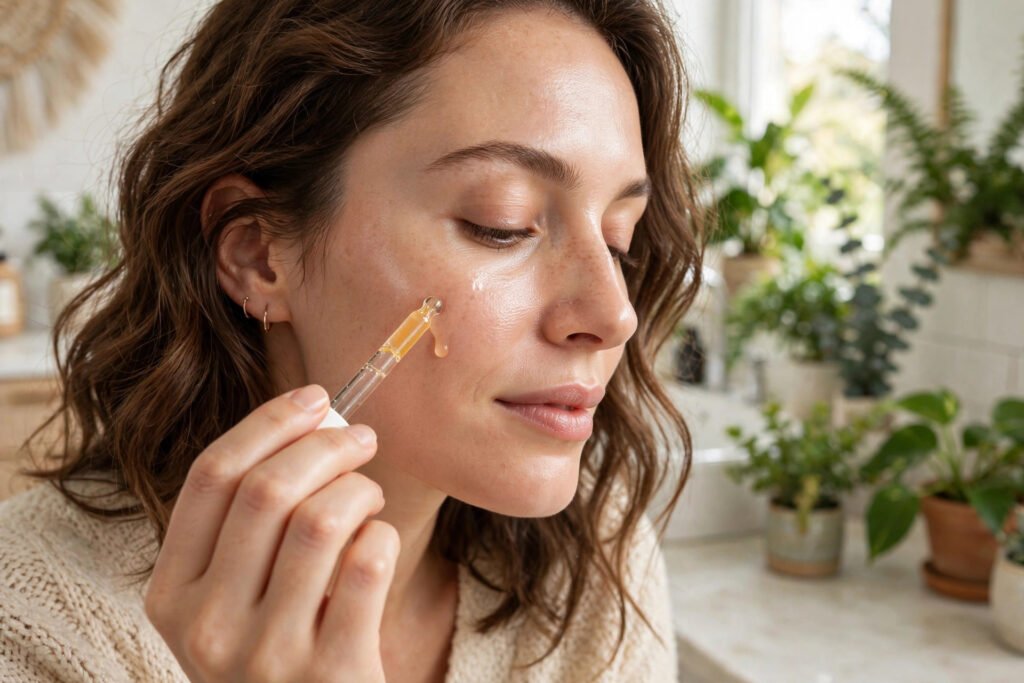
The acne finally cleared — but it left souvenirs: dark spots, pitted scars, and uneven texture that makeup can only do so much to hide. Before you price out $2,000 laser packages, know this: dermatologists will tell you that consistent at-home treatment fades most mild-to-moderate acne marks significantly within 3–6 months, for under $50. Expensive in-office procedures have their place, but they’re the last resort, not the first step. Here’s the evidence-based at-home playbook, organized by scar type.
First: Identify Your Scar Type (Treatment Depends on It)
Not all acne marks are scars, and the distinction determines everything. Post-inflammatory hyperpigmentation (PIH) — flat dark or red spots where pimples were — is discoloration, not scarring, and fades reliably with at-home treatment. Post-inflammatory erythema (PIE) — persistent red/pink marks — is damaged capillaries, slower to fade but improvable. True atrophic scars — icepick (narrow deep holes), boxcar (round craters with defined edges), rolling (broad depressions) — are structural collagen loss; at-home treatments improve them modestly, while deep cases need professional procedures.
Honest expectations: PIH responds excellently to at-home care (80–90% improvement realistic). PIE improves moderately. Mild rolling and boxcar scars can soften visibly; deep icepick scars barely budge without professional intervention. Knowing which you have prevents wasting months on vitamin C serums for structural scars that need subcision or lasers — and prevents paying for lasers for dark spots a $15 serum would have fixed.
The At-Home Arsenal (In Order of Effectiveness)
1. Sunscreen — the non-negotiable foundation
Every other treatment on this list fails without daily SPF 30+. UV exposure darkens PIH dramatically and is the top reason marks “won’t fade.” This single habit outperforms most serums. Mineral or chemical — whichever you’ll actually wear daily — applied every morning, reapplied if outdoors. No sunscreen, no fading. Period.
2. Retinoids — the multi-tasker
Adapalene (Differin, OTC) or prescription tretinoin accelerates cell turnover, fades PIH, smooths texture, and stimulates the collagen that softens shallow scars. It’s the closest thing to a do-everything scar treatment available without a prescription pad. Start 2–3 nights weekly, build to nightly over a month; expect mild flaking initially (the “retinoid uglies” pass). Results become visible at 12 weeks, significant at 6 months.
3. Vitamin C (L-ascorbic acid) — the brightener
A 10–20% L-ascorbic acid serum used in the morning inhibits melanin production, directly fading dark marks. Look for opaque packaging (vitamin C degrades in light and air) and give it 8–12 weeks. It pairs beautifully with sunscreen — together they’re the core PIH-fading duo. Those supporting skin through nutrition for healthy skin get an additional edge, since vitamin C works from the inside too.
4. Azelaic acid and niacinamide — the gentle workers
Azelaic acid (10% OTC, 15–20% prescription) fades PIH with less irritation than stronger actives — excellent for sensitive skin. Niacinamide (4–5%) reduces discoloration and strengthens the barrier. Both are well-tolerated enough for twice-daily use and layer well with retinoids (alternate mornings/evenings).
5. Chemical exfoliants — the texture smoothers
Glycolic or lactic acid (AHAs) at 8–12% smooth the uneven texture around shallow scars and accelerate mark fading. Use 2–3 times weekly, never on the same night as retinoids initially. At-home peels stronger than 15% risk burns and rebound hyperpigmentation — leave aggressive peels to professionals.
What About Microneedling and Devices at Home?
At-home microneedling rollers (0.25mm) are relatively safe and may modestly boost serum absorption, but deeper needles (0.5mm+) belong in clinics — improper technique causes scarring worse than the acne marks. LED light therapy masks have modest evidence for redness and healing support; they’re a reasonable adjunct, not a primary treatment. Be deeply skeptical of any device promising “laser results at home” — true ablative and deep fractional treatments require controlled clinical settings, and at-home burns from overpowered devices are a real dermatology-office phenomenon.
Your 6-Month At-Home Routine (Putting It Together)
Morning: gentle cleanser, vitamin C serum (wait a minute to absorb), lightweight moisturizer, SPF 30+ sunscreen. Evening: cleanser, retinoid (start 2–3 nights weekly, build to nightly), moisturizer. 2–3 times weekly: swap the retinoid for an AHA exfoliant on non-consecutive nights. Daily: azelaic acid or niacinamide can layer under moisturizer morning or night once your skin tolerates the core routine.
Months 1–2: expect mild flaking and possibly slight purging from the retinoid — this is normal adjustment, not failure. Take progress photos in consistent lighting every two weeks; daily mirror checks lie, but photos reveal the gradual fading you’ll otherwise miss. Months 3–4: dark marks visibly lighter, texture smoother. Months 5–6: reassess — most PIH substantially faded. Whatever remains at this point is what professional treatments would target, and you’ll need far less of them than if you’d started there.
When Professional Treatment Is Worth It
Consider in-office procedures when: at-home treatment plateaued after 6 months of consistent use, scars are moderate-to-severe atrophic (deep boxcar, icepick), or the psychological burden justifies the cost. The effective options: fractional laser resurfacing ($1,000–$2,500 per session, 3–5 sessions) for texture and shallow scars; microneedling with PRP ($600–$1,200/session) for rolling scars; subcision ($300–$600) for tethered rolling scars; TCA CROSS for icepick scars; fillers for isolated deep scars. Always consult a board-certified dermatologist — the Mayo Clinic’s dermatology resources explain what to expect from these procedures, and medspas vary wildly in quality.
and the American Academy of Dermatology maintains a directory for finding qualified providers.
A cost-saving strategy: do 4–6 months of diligent at-home treatment first, then get professional assessment of what remains. Most patients find the professional bill drops dramatically — sometimes to zero — because the at-home work already resolved the easy 70 percent. And choosing flattering makeup shades in the meantime helps you feel confident while treatments work their slow magic.
Conclusion
Fading acne scars without expensive treatments is realistic for most mild-to-moderate marks: daily sunscreen plus a retinoid plus vitamin C, consistently for 3–6 months, resolves the majority of discoloration and softens shallow texture — for under $50 total. Reserve professional procedures for deep structural scars that plateau after diligent home care. The expensive mistake isn’t skipping lasers; it’s buying lasers for dark spots, or buying serums for craters. Match the treatment to the scar type, protect with SPF, be patient for the full 6 months, and let consistency do what money can’t rush.
Frequently Asked Questions
How long does it take to fade acne scars at home?
Dark marks (PIH): 3–6 months of consistent treatment with sunscreen, retinoid, and vitamin C. Red marks (PIE): 6–12 months. Shallow textural scars: 6+ months for modest softening. Anyone promising results in two weeks is selling something, not science.
Do acne scars go away on their own?
Dark and red marks often fade naturally over 6–24 months (faster with sunscreen, slower without). True atrophic scars (pits and craters) are permanent without treatment — they’re structural collagen loss, not discoloration, and don’t resolve spontaneously.
Is vitamin C or retinol better for acne scars?
They do different jobs and work best together: vitamin C fades pigmentation (dark marks), retinoids improve texture, stimulate collagen, and fade marks. If you must choose one, pick the retinoid — it’s the more versatile scar treatment. Ideally use vitamin C mornings, retinoid nights.
Can I microneedle at home for acne scars?
Shallow (0.25mm) rollers are relatively safe for product absorption but do little for actual scars. Effective scar microneedling requires 1.0–2.5mm depths that belong in clinical settings — at-home attempts at these depths risk infection and worse scarring. Leave real microneedling to professionals.