Start Seeds Indoors Without Grow Lights (2026 Guide)
Seed packets promise a garden for pennies — but the standard advice assumes you own grow lights, heat mats, and a shelving unit. What if you just have a sunny windowsill and determination? Starting seeds without grow lights is absolutely doable; humans did it for centuries before LEDs existed. The catch: windowsills have real limitations (weak light, temperature swings, leggy seedlings), and success requires working around them deliberately rather than hoping for the best. Here’s how to raise strong transplants with nothing but sun, soil, and household ingenuity.
Understand What Seeds Actually Need (And What Windowsills Lack)
Seeds need four things: moisture, warmth, oxygen, and — after germination — light. The first three are easy indoors. Light is the challenge: a south-facing window delivers a fraction of outdoor intensity, and only for part of the day. The University of Minnesota Extension’s seed-starting guides confirm that light intensity — not duration alone — determines whether seedlings stay stocky. Seedlings respond to insufficient light by stretching tall, pale, and weak (“legginess”) — reaching for light that isn’t enough. Leggy seedlings rarely recover fully, which is why light management is 80 percent of windowsill seed-starting success.
Temperature is the second factor: most seeds germinate best at 65–75°F (peppers and tomatoes prefer 75–85°F). The top of a refrigerator or near (not on) a radiator provides gentle bottom warmth — the poor man’s heat mat. Once sprouted, seedlings prefer cooler conditions (60–65°F) — which conveniently matches most homes and produces stockier growth. A thermometer on the sill for a week before sowing tells you exactly what you’re working with; guessing wastes seeds.
Choose Seeds That Forgive Windowsills
Not all seeds are equal candidates. Windowsill champions: lettuce, spinach, and salad greens (harvestable at windowsill size — you may never need to transplant), basil and herbs (compact, light-tolerant), marigolds and nasturtiums (vigorous, forgiving), beans and peas (large seeds, fast, strong), zinnias and cosmos (tough annuals that power through). Challenging but doable: tomatoes and peppers — possible on sills but demand the brightest window and benefit most from the tricks below; start them only if you have a true south-facing window. Skip on sills: plants needing 12+ weeks indoors (onions, celery, rosemary) — the light deficit compounds over long indoor periods; direct-sow or buy transplants instead.
Timing matters more without lights: start 1–2 weeks later than packet recommendations. Packets assume optimal light; windowsill seedlings grow slightly slower, and starting too early produces overgrown, leggy transplants waiting for warm weather. Count back from your last frost date, then add the delay. Fresh seeds matter too — germination rates decline yearly; test old packets with a damp paper towel before committing sill space. For your first attempt, forgiving beginner plants from seed build confidence before you tackle demanding varieties.
The Windowsill Setup That Works
Containers: anything with drainage holes — yogurt cups, nursery pots, even eggshells for tiny seeds. Bigger is better: 3–4 inch pots prevent the root-binding that stunts sill seedlings. Soil: seed-starting mix (fine, sterile, low-nutrient — garden soil compacts and harbors damping-off fungi). Moisten the mix before filling pots; dry pockets repel water later.
Sowing: plant at 2x the seed’s diameter deep (tiny seeds barely covered, beans an inch). Water gently from below (set pots in a tray of water — top-watering dislodges seeds). Cover with a humidity dome or plastic wrap until germination (seeds need consistent moisture to sprout), then remove immediately — prolonged humidity after sprouting invites damping-off disease, the number-one seedling killer.
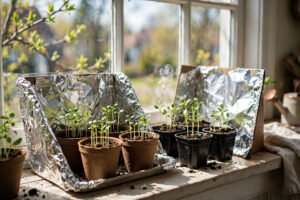
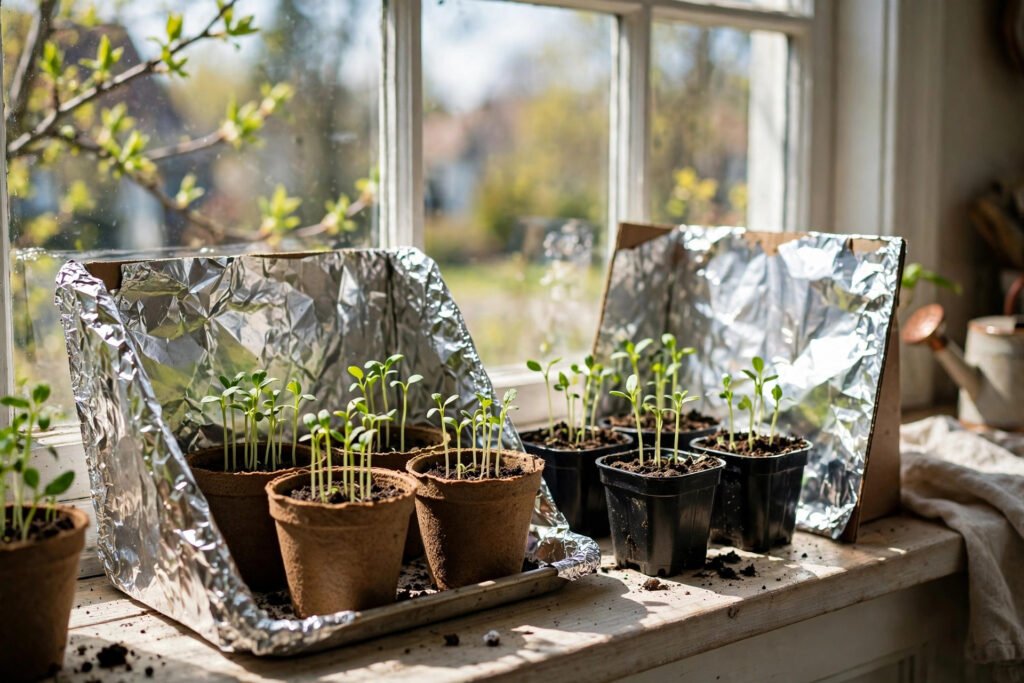
Light maximization: this is the make-or-break. Use your brightest south-facing window (north-facing won’t work — don’t try). Place seedlings as close to the glass as possible. Line the back and sides with aluminum foil or white cardboard reflectors — this simple trick can increase effective light 30–50% by bouncing it onto the shaded sides, dramatically reducing legginess. Rotate pots a quarter-turn daily for even growth. If you have no south window, an east or west window plus reflectors can work for tolerant species — but adjust expectations and seed choices accordingly.
Preventing Legginess: The Daily Discipline
Legginess is the windowsill gardener’s nemesis, and prevention beats cure. Brush them: gently running your hand over seedlings 2–3 times daily (or a fan on low nearby) simulates wind — the mechanical stress triggers stockier growth (thigmomorphogenesis, if you want the fancy term). This folk wisdom is scientifically validated and remarkably effective. Keep them cool: 60–65°F after germination; warmth + low light = stretch, cool + low light = compact. Crack the window nearby if safe.
Don’t overfertilize: seed-starting mix has enough nutrition for 2–3 weeks; early fertilizer pushes soft leggy growth. Begin half-strength liquid feed only after true leaves appear. Give them room: crowded seedlings compete for light and stretch — thin ruthlessly to the strongest per cell. It feels wasteful; it’s essential. If seedlings do get leggy, tomatoes can be buried deeper at transplant (they root along the stem — a unique rescue), but most species can’t be saved once stretched. Prevention is everything.
Hardening Off and Transplanting
Windowsill seedlings are soft — they’ve never felt real wind or direct sun. Transplanting them directly outdoors causes shock that can kill or set back weeks. Harden off over 7–10 days — the National Gardening Association’s transplanting guides give day-by-day schedules for different seedling types. day 1–2, one hour of shade outdoors; gradually increase sun and time; by day 7–10, full days outside, nights in if frost threatens. Skip this and even perfect seedlings fail — it’s the most-skipped step and the most common cause of transplant death.
Transplant on an overcast day or in the evening, water deeply, and mulch immediately. For balcony gardeners, hardening off is simpler — the “outdoors” is steps away — and many sill-started seedlings can live their whole lives in containers, making windowsill starting a complete system rather than just a stepping stone.
Conclusion
Starting seeds without grow lights works when you respect the light limitation: choose forgiving varieties, maximize your brightest window with reflectors, rotate daily, brush seedlings for stockiness, keep them cool, thin ruthlessly, and harden off before transplanting. You won’t match a grow-light setup’s output — but you’ll raise perfectly good transplants for pennies, learning plant instincts that light-owners never develop. The sun is free; the windowsill is ready; the seeds are waiting.
Frequently Asked Questions
Can I start seeds on a north-facing windowsill?
Not successfully for most vegetables and flowers — north windows provide too little intensity, producing hopelessly leggy seedlings. Use south-facing ideally, east or west with reflectors as a fallback for tolerant species like lettuce and herbs. If north is all you have, a single inexpensive LED shop light changes everything.
Why are my seedlings tall and spindly?
Insufficient light — the universal cause of legginess. Move closer to the glass, add foil reflectors, ensure 12–14 hours of bright exposure, keep temperatures cool (60–65°F), and brush seedlings daily. Once severely leggy, most seedlings can’t be saved (tomatoes excepted — bury the stem deeper).
When should I start seeds indoors without grow lights?
About 1–2 weeks later than packet recommendations, since windowsill growth is slightly slower. Count back from your area’s last frost date. Starting too early is the classic mistake — oversized leggy transplants waiting weeks for warm weather rarely thrive.
Do I need a heat mat to germinate seeds?
No — the top of a refrigerator, near (not on) a radiator, or any consistently 65–75°F spot works. Most common seeds germinate fine at room temperature; only heat-lovers like peppers truly benefit from extra warmth, and even they germinate (just slower) without it.