How to Prune Rose Bushes Without Killing Them
Roses have a reputation for being finicky, and pruning is where most of the fear lives. Cut too much and you’ve murdered the bush; cut too little and it’s a tangled mess. Here’s the reassuring reality: roses are far tougher than their reputation. They’re vigorous plants that evolved to be grazed and broken, and they respond to proper pruning with explosive growth and heavier blooms. The gardeners who kill roses with pruning are rare — the ones who get spectacular results just follow a few principles. Here’s the complete method for every major rose type.
When to Prune (Timing Is Half the Battle)
Modern repeat-blooming roses (hybrid teas, floribundas, grandifloras, most shrub roses): prune in late winter or early spring, just as buds begin to swell but before leaves emerge. In most U.S. zones, that’s February–March in the South, March–April in the North. The forsythia-blooms rule is the classic indicator: when forsythia flowers, prune roses. Pruning too early risks frost damage to fresh cuts; too late wastes the plant’s spring energy on growth you’ll remove.
Once-blooming roses (old garden roses, many climbers, ramblers): prune right after flowering in early summer — never in spring, or you’ll cut off this year’s blooms, which form on old wood. Climbing roses: train main canes horizontally (this triggers flowering along their length) and prune side shoots after blooming. Deadheading (removing spent flowers) continues through the season for repeat bloomers — it redirects energy from seed production into new blooms and is the easiest high-impact rose task there is.
Tools and the Cuts That Matter
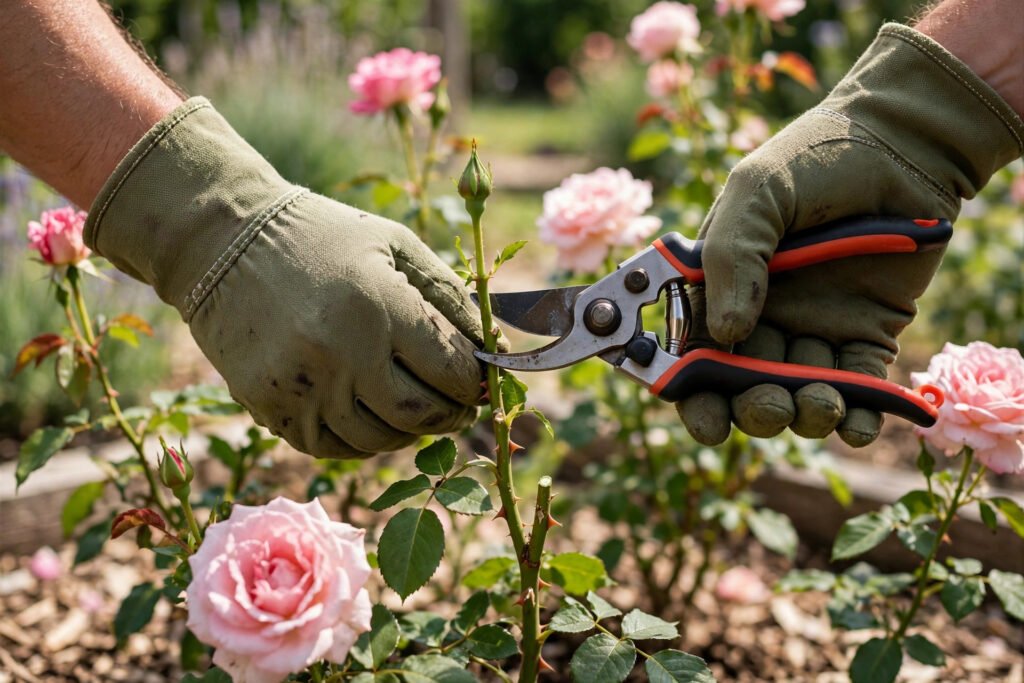
You need: sharp bypass pruners (not anvil pruners, which crush stems), loppers for thick canes, and thick gauntlet-style gloves — rose thorns are serious. The University of Georgia Extension’s rose-pruning guides demonstrate the same angled-cut technique professionals use. Disinfect blades with rubbing alcohol between bushes (not just between cuts) to prevent spreading disease; this 30-second habit prevents more rose deaths than any other practice. Cut at a 45-degree angle, about 1/4 inch above an outward-facing bud — the angle sheds water away from the bud, and outward-facing buds direct growth away from the bush’s center, keeping it open and airy.
The three D’s come first, always: remove dead wood (brown, brittle — cut back to green tissue), damaged canes (broken, diseased), and diseased growth (discolored, cankered). Then remove crossing canes that rub each other (rubbing wounds invite disease), inward-growing stems, and weak spindly growth thinner than a pencil. These removals alone transform most neglected bushes — and they’re impossible to get wrong, because dead and diseased wood should always go. When in doubt about a variety’s specific needs, the Missouri Botanical Garden’s plant finder includes pruning guidance for hundreds of rose cultivars.
How Much to Cut: By Rose Type
Hybrid teas and grandifloras: the hardest prune — cut back to 12–18 inches, leaving 3–5 strong canes. It looks brutal; it’s correct. These roses bloom on new wood, and hard pruning produces the long-stemmed flowers they’re famous for. Floribundas: moderate — reduce by one-third to one-half, shaping for fullness. Shrub roses (including Knock Outs): light shaping — remove a third of oldest canes at the base yearly to renew, tip back the rest. These are nearly indestructible; even shearing them with hedge trimmers (yes, really) produces acceptable results, though hand-pruning looks better.
Climbers: don’t cut the main structural canes — prune only the lateral flowering shoots back to 2–3 buds, and remove old unproductive canes at the base every few years. Ramblers: after flowering, cut flowered shoots back hard and tie in new growth for next year. The universal safety rule: you cannot kill a healthy rose by pruning too much in the right season — the plant will regrow from the base (grafted roses may sucker from rootstock, which you should remove, but the plant survives). What kills roses is disease, poor drainage, and neglect — not enthusiastic pruners.
After Pruning: The Recovery Care
Pruning is surgery; aftercare determines results. Feed: apply balanced rose fertilizer as new growth reaches 2–3 inches — pruned roses are hungry, building an entire canopy from reserves. Mulch: 2–3 inches of organic mulch (not touching stems) retains moisture and feeds soil biology; raised beds with rich soil give roses the drainage and fertility they crave — roses hate wet feet more than almost anything. Water deeply: new growth needs consistent moisture; deep weekly watering beats daily sprinkles.
Watch for problems: the fresh cuts and tender growth are vulnerable — inspect for aphids (blast off with water), black spot (remove affected leaves, improve air circulation — which your open pruning just did), and cane dieback (cut back to healthy tissue). A preventive dormant spray (horticultural oil) right after pruning smothers overwintering pests. For gardeners expanding beyond roses, forgiving plants for beginners make good companions while you build rose confidence — success with easy plants funds the patience for demanding ones.
Deadheading and Summer Care: The Season-Long Work
Pruning isn’t a once-yearly event — summer deadheading determines whether repeat bloomers actually repeat. Remove spent flowers by cutting back to the first five-leaflet leaf below the bloom; this is where the next flowering shoot emerges. Do it continuously — a weekly 10-minute deadhead round through summer doubles or triples total blooms versus neglected bushes. Don’t just snap off the flower head (it leaves an ugly stem stub that dies back); cut properly to the leaf joint.
Summer care beyond deadheading: water deeply at the base (never overhead — wet foliage invites black spot and mildew; soaker hoses or drip irrigation are ideal), maintain mulch to keep roots cool and moist, and watch for Japanese beetles (hand-pick into soapy water in the morning when they’re sluggish — the single most effective organic control). Stop fertilizing 6–8 weeks before your first expected frost — late feeding pushes tender growth that winter kills. Let the last flush of blooms form hips (seed pods) in fall; the plant reads this as season’s end and hardens off properly. These small seasonal habits separate the gardens with roses from the gardens with spectacular roses.
Conclusion
Pruning rose bushes without killing them is straightforward: time it right (late winter for repeat bloomers, after flowering for once-bloomers), always remove the three D’s first, cut at 45 degrees above outward buds with clean sharp tools, match the severity to the rose type, and feed and mulch afterward. Roses evolved to survive far worse than your pruners — prune with confidence, and the bush will repay you with the heaviest bloom season it’s had in years.
Frequently Asked Questions
Can you kill a rose bush by pruning too much?
Almost never, if timed correctly — healthy roses regrow vigorously even from hard pruning, which is exactly what hybrid teas need. The real risks are pruning at the wrong time (spring-pruning once-bloomers removes the flowers) and spreading disease with dirty tools, not cutting too much.
When should I prune roses in spring?
When forsythia blooms in your area — typically February–March in southern zones, March–April in northern ones. Prune as buds swell but before leaves emerge. Pruning too early exposes fresh cuts to hard frosts; too late wastes spring growth energy.
Should I seal pruning cuts on roses?
Generally no — modern arboriculture finds sealants trap moisture and pathogens. Clean 45-degree cuts heal naturally. The exception: in areas with cane borers, a dab of wood glue on large cuts can deter egg-laying — but good sanitation matters more.
How far back can I cut overgrown roses?
For repeat-blooming types, you can cut to 12–18 inches in late winter and they’ll rebound spectacularly. For once-bloomers and climbers, never remove more than a third of old wood in one year — they bloom on old growth, so staged renewal over 2–3 years is safer.