Why Your Dog Licks Their Paws Constantly: Causes & Fixes
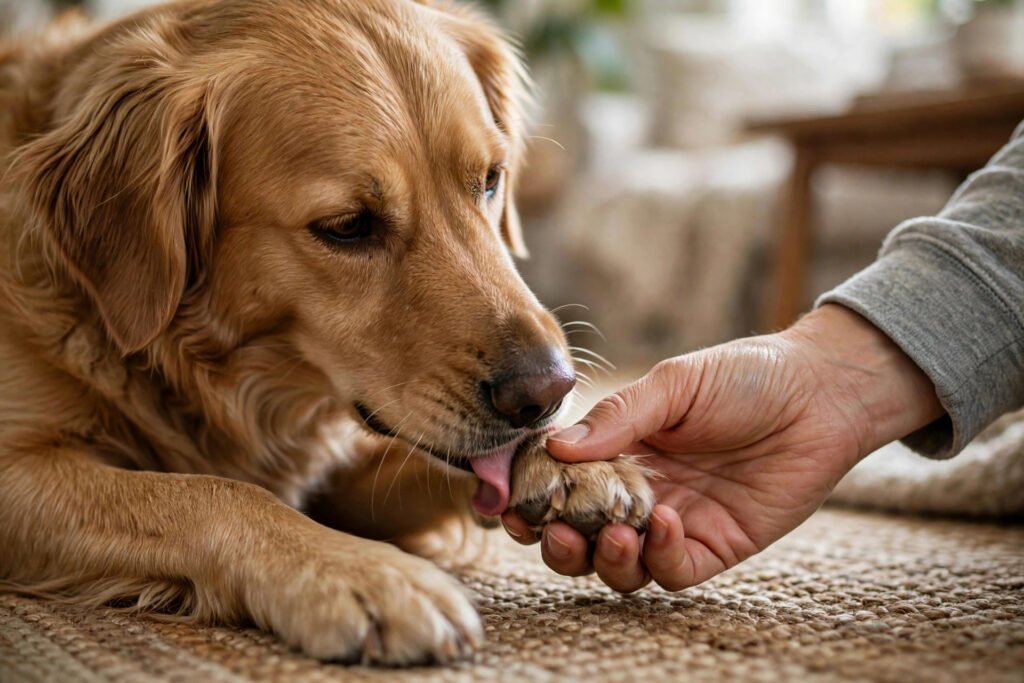
It’s 2 a.m. and the sound wakes you up again: lick, lick, lick — your dog working on her paws with the dedication of a full-time job. Occasional paw licking is normal grooming. Constant paw licking is your dog telling you something is wrong — and the cause is almost never “it’s just a habit.” From allergies to pain to anxiety, persistent paw licking is one of the most common reasons American dog owners visit the vet, and it’s also one of the most misdiagnosed. Here’s how to figure out what’s driving it and what actually helps.
Normal vs. Problematic: Where’s the Line?
Dogs lick their paws briefly as part of routine grooming — a few licks after a walk or before sleep is normal. The line into problematic: licking that’s frequent, prolonged, or focused; licking that interrupts activities or sleep (yours and hers); and any licking that’s caused visible changes — redness, brown staining of the fur (from porphyrins in saliva), hair loss, sores, or swelling between the toes. If the paws look different than they used to, the licking has crossed from behavior to symptom.
Cause #1: Allergies (The Most Common Culprit)
Allergies are the runaway leading cause of chronic paw licking in dogs, and American vets see it constantly. Two main types:
Environmental allergies (atopy): pollens, dust mites, molds, grasses. The paws pick up allergens on every walk, and the thin skin between the toes reacts. Classic pattern: seasonal licking (worse in spring/fall), all four paws, often with itchy ears or belly. Wiping paws with a damp cloth after every walk removes allergens before they trigger the itch — simple, free, and surprisingly effective.
Food sensitivities: less common than environmental, but real — usually proteins (beef, dairy, chicken, wheat). Pattern: year-round licking, often with ear infections or digestive signs. Diagnosis requires a strict 8–12 week elimination diet trial with a novel or hydrolyzed protein — not just switching kibble brands casually.
Modern veterinary medicine has good tools here: anti-itch medications like oclacitinib (Apoquel) and lokivetmab (Cytopoint) target the itch pathway specifically, allergy testing and immunotherapy for long-term management. What doesn’t work well: endless rounds of steroids without a plan, or grain-free fad diets without veterinary guidance. Supporting skin health from the inside helps too — foods that support healthy skin benefit dogs as well as people, and omega fatty acid supplements have modest evidence for skin barrier support.
Cause #2: Pain
Dogs lick what hurts — it’s an instinctive self-soothing response. Paw-focused licking can signal: a thorn, splinter, or foxtail embedded between toes (foxtails are a serious seasonal hazard in the western US); a torn nail or injured pad; arthritis in the toes or wrists (common in seniors); or interdigital cysts — painful bumps between the toes that certain breeds (Bulldogs, Labs) develop chronically.
Key clue: pain-related licking is usually focused on one paw or one spot, while allergy licking tends to involve multiple paws. If she’s fixated on a single paw, examine it carefully — spread the toes, check the pads, look between them. Anything swollen, bleeding, or foul-smelling needs a vet visit.
Cause #3: Anxiety, Boredom, and Compulsive Behavior
Licking releases endorphins — it’s literally self-medicating. Dogs with anxiety, boredom, or insufficient stimulation can develop lick granulomas: raw, thickened patches (usually on the foreleg or paw) from obsessive licking. These are both a symptom and a self-perpetuating problem, because the licking itself causes inflammation that itches, prompting more licking.
Distinguishing anxiety licking: it often happens during downtime, when the dog is under-stimulated, or in response to stress triggers — and the dog may seem “zoned out” while doing it. The fix addresses the root: more exercise, more mental enrichment, predictable routines, and for true compulsive disorders, veterinary behavioral intervention sometimes including anti-anxiety medication. Learning to read canine stress signals matters here — the same skill as distinguishing anxiety from ordinary stress helps you tell a boredom habit from genuine distress.
Cause #4: Irritants and Infections
Don’t overlook the simple stuff: road salt and ice-melting chemicals in winter (rinse paws after walks), lawn pesticides and fertilizers, hot pavement in summer (if it’s too hot for your hand, it’s too hot for paws), and contact irritants from cleaning products on floors. Yeast and bacterial infections thrive in the warm, moist environment between toes — especially in dogs with allergies, creating a vicious cycle. Yeasty paws often smell like corn chips (the famous “Frito feet”) — a little is normal, a lot with redness means infection.
Soothing Already-Irritated Paws at Home
While you’re diagnosing the cause, you can relieve the discomfort driving the licking cycle. Oatmeal paw soaks: lukewarm water with colloidal oatmeal for 5–10 minutes soothes itchy, inflamed paws — the same anti-itch mechanism as oatmeal baths for humans. Paw balms: fragrance-free balms with shea or coconut bases protect cracked pads and reduce the dryness-itch cycle; apply before walks in winter as salt protection. Epsom salt soaks (lukewarm, brief, with thorough rinsing — and never let the dog drink the water) can draw out minor irritation between toes.
What to avoid: human anti-itch creams with hydrocortisone or antihistamines unless your vet specifically approves (many are toxic if licked in quantity); essential oils (tea tree oil is toxic to dogs); and excessive bathing, which strips the paw’s natural oils and worsens dryness. An e-collar or recovery sleeve used short-term breaks the lick-inflammation-lick cycle while treatments take effect — think of it as a cast for the habit, not a permanent solution. Soothing care plus cause-directed treatment resolves most paw-licking cases within weeks; soothing alone just buys comfort while you investigate.
The Diagnostic Path: What to Do
Week 1 — home detective work: examine all paws closely, start post-walk paw wiping, note patterns (which paws? what time of day? seasonal?). Try an e-collar or bitter spray short-term to break the cycle while you investigate — but these manage, not cure. VCA’s overview of canine skin allergies and PetMD’s itchy-paw diagnostics walk through the same differential your vet will use.
If it persists 1–2 weeks or there’s visible damage: vet visit. Expect skin scrapings or cytology to check for infection, discussion of allergy workup, and possibly a diet trial. Bring your pattern notes — “worse after walks in the park, started in April” is diagnostic gold.
Don’t: apply human anti-itch creams without veterinary approval (many are toxic if licked), ignore brown staining and sores hoping they’ll resolve, or assume it’s “just anxiety” without ruling out medical causes first. Medical causes are more common and more treatable.
Conclusion
Constant paw licking is a symptom with a cause — usually allergies, sometimes pain, occasionally anxiety, sometimes simple irritants. The path forward is methodical: examine the paws, track the pattern, start with paw hygiene, and get veterinary diagnostics if it persists or causes damage. Most dogs improve dramatically once the actual driver is identified. Your dog isn’t doing it to annoy you at 2 a.m. — she’s asking for help in the only language she has.
Frequently Asked Questions
Why does my dog lick his paws so much?
Most commonly allergies (environmental or food), followed by pain, irritants like salt or chemicals, infections, and anxiety-driven compulsive licking. Pattern and paw appearance help distinguish.
How do I stop my dog from licking her paws?
Identify the cause first — wiping paws after walks helps allergies; vet treatment addresses infections and pain; enrichment helps anxiety licking. Suppressing licking without treating the cause rarely works long-term.
Are brown stains on paws from licking harmful?
The staining itself (from saliva porphyrins) is cosmetic, but it’s a marker of chronic licking that deserves investigation — the underlying itch or pain is the real issue.
Can food allergies cause paw licking?
Yes, though environmental allergies are more common. Food-related licking is typically year-round and often comes with ear or digestive symptoms. Diagnosis needs a strict elimination diet trial.
When should I take my dog to the vet for paw licking?
When licking persists beyond 1-2 weeks despite paw hygiene, causes redness, sores, hair loss, or swelling, focuses on one paw (possible foreign body or injury), or comes with odor suggesting infection.