Is Skin Purging Normal? How to Tell Purge vs. Breakout Apart
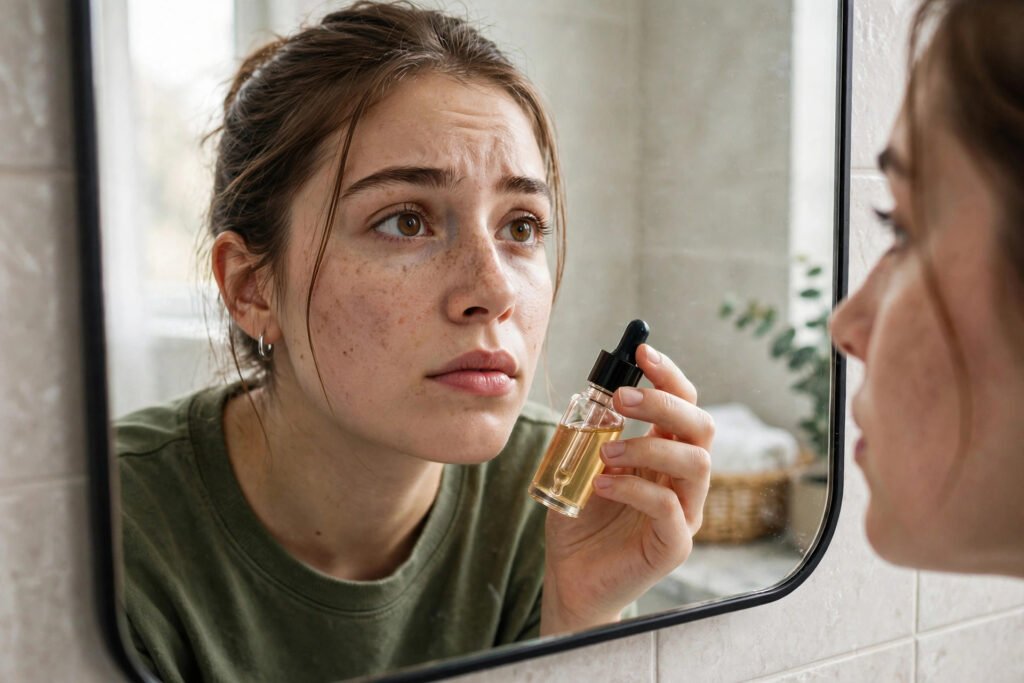
You started a new serum everyone’s raving about, and within a week your skin is breaking out. Is the product working — or is it wrecking your face? Welcome to the purging debate, one of skincare’s most confusing topics. “Skin purging” is real, but it’s also the most abused excuse in the beauty industry — brands and influencers wave it around to explain away what is often just a bad reaction. Knowing the difference saves you from suffering through weeks of breakouts for a product that’s harming you, or abandoning a product that was about to transform your skin. Here’s how to tell.
What Purging Actually Is (The Science)
Skin purging is an accelerated cell turnover response. Certain active ingredients — retinoids, alpha-hydroxy acids (AHAs), beta-hydroxy acids (BHAs), benzoyl peroxide — increase the rate at which skin cells renew. This speedup pushes existing microcomedones (the tiny pre-pimples lurking under the surface) out faster. The result: a temporary flare of breakouts in areas where you normally break out, caused by ingredients with a known exfoliating or cell-renewing mechanism.
Key word: certain ingredients. Purging is a pharmacological effect of specific actives. A basic moisturizer, a vitamin C serum, a new sunscreen, or a hydrating toner does not cause purging — these products don’t accelerate cell turnover. If they break you out, that’s not purging; that’s a reaction. This distinction is where most confusion lives, and where marketing exploits the term.
Purging vs. Breakout: The Four Tests
Test 1: The ingredient test
Does the new product contain a known purging trigger — retinoid (tretinoin, retinol, adapalene), AHA (glycolic, lactic, mandelic acid), BHA (salicylic acid), or benzoyl peroxide? Yes → purging is possible. No → it’s a breakout or irritation, full stop.
Test 2: The location test
Purging appears where you normally break out — it accelerates existing congestion. New breakouts in areas that are usually clear (jawline when you normally break out on the forehead, for instance) suggest a reaction to the product, not purging.
Test 3: The timeline test
Purging follows the skin’s renewal cycle: it typically begins within days to two weeks and resolves within 4–6 weeks as the accelerated turnover clears the backlog. Breakouts that start after a month, or persist beyond 6–8 weeks, are not purging — they’re telling you the product doesn’t suit you.
Test 4: The lesion test
Purging produces the usual suspects — whiteheads, blackheads, small pimples similar to your normal breakouts. New symptoms suggest reaction instead: painful cystic bumps where you never get them, widespread redness, itching, burning, rash-like texture, or hives. Irritation and allergy look different from purging, and they don’t improve with continued use.
If you’re unsure, a dermatologist can distinguish in one visit — and the American Academy of Dermatology emphasizes that persistent or severe reactions warrant professional evaluation rather than internet diagnosis. The NIAMS skin health resources explain the underlying biology of cell turnover in plain language.
If It IS Purging: How to Get Through It
Don’t add more actives. The purge means the product is working hard; piling on additional exfoliants will tip into barrier damage. Simplify to cleanser, the purging product, moisturizer, sunscreen.
Support the barrier. Gentle cleanser, adequate moisturizer, ceramides and niacinamide — a calm barrier handles turnover better. Skip harsh scrubs and astringent toners entirely during the purge.
Don’t pick. Picking purge pimples risks scarring and prolongs the process. Hydrocolloid patches are the safe alternative for whiteheads.
Protect with sunscreen. Actives that cause purging increase sun sensitivity — daily SPF is non-negotiable, and sun exposure worsens post-inflammatory marks.
Wait the full cycle. Give it 4–6 weeks before judging. Most purges peak around weeks 2–3 and clear by week 6. If it’s clearly improving, stay the course; if it’s worsening at week 6, stop.
Overall skin resilience helps you weather the process — foods that support healthy skin (antioxidants, omega-3s, zinc) won’t stop a purge, but well-nourished skin recovers faster from any disruption.
Retinoid Purging: The Special Case
Retinoids deserve their own discussion because their purge is the most dramatic — and the most worth pushing through. Tretinoin and adapalene purges typically start in weeks 2–4, peak around weeks 6–8, and clear by weeks 10–12 — a longer timeline than acid purges, because retinoids remodel skin more deeply. The purge often looks worse than the original acne, which is why so many people quit at exactly the wrong moment.
The retinoid-specific survival guide: start low and slow (pea-sized amount, 2–3 nights weekly, building up over a month — the “retinoid sandwich” method of moisturizer-retinoid-moisturizer buffers irritation for beginners), never combine with other strong actives during the adjustment period, and moisturize aggressively. The “retinoid uglies” (peeling, redness, purge combined) are temporary; the long-term payoff — the most evidence-backed anti-aging and anti-acne ingredient in dermatology — is why dermatologists consider pushing through a true retinoid purge one of skincare’s highest-ROI decisions. But the same rule applies: if it’s worsening past week 12, or the reaction includes signs of allergy rather than turnover, stop and consult a professional.
If It’s NOT Purging: What to Do Instead
Stop the product immediately if you see: itching, burning, swelling, hives, rash, or breakouts in entirely new areas. Return to your baseline routine (the products your skin tolerated before) and let the skin calm for 1–2 weeks. When reintroducing anything new, patch-test on the jawline and introduce one product at a time — the cardinal rule that makes future diagnosis possible. If reactions are severe or recurrent, see a dermatologist; you may have a specific allergy (fragrance and essential oils are common culprits) worth identifying properly.
Be skeptical of “purge” claims for products without active exfoliants — and of anyone telling you to push through months of worsening skin. Patience has limits, and they’re measured in weeks, not seasons. Tracking your skin’s patterns helps here too — just as recognizing deficiency signs requires observing patterns over time, distinguishing purge from reaction requires watching location, timeline, and lesion type systematically.
Conclusion
Skin purging is real but narrow: it happens only with cell-turnover actives (retinoids, AHAs, BHAs, benzoyl peroxide), in your usual breakout zones, clearing within 4–6 weeks. Everything else marketed as “purging” — breakouts from moisturizers, serums without actives, new areas, itching, or months of worsening skin — is a reaction, and the right move is to stop the product. Apply the four tests, support your barrier through a true purge, and never let anyone convince you that suffering indefinitely is part of the process.
Frequently Asked Questions
How long does skin purging last?
Typically 4-6 weeks — one full skin renewal cycle. It often peaks around weeks 2-3, then clears. Breakouts persisting beyond 8 weeks are not purging.
What ingredients cause skin purging?
Retinoids (retinol, tretinoin, adapalene), AHAs (glycolic, lactic acid), BHAs (salicylic acid), and benzoyl peroxide. Products without these actives don’t cause purging.
Can moisturizer cause purging?
No — basic moisturizers don’t accelerate cell turnover, so they can’t cause purging. Breakouts from a new moisturizer indicate a reaction, clogged pores from the formula, or an allergy.
Should I keep using a product that’s making me break out?
Only if it passes all four tests (purging-type active, usual locations, within 4-6 week timeline, normal lesion types). Otherwise stop the product and let your skin recover.
Does purging happen with vitamin C serums?
Generally no — vitamin C isn’t a cell-turnover accelerator. Breakouts from vitamin C usually indicate sensitivity to the formula (often the low pH of L-ascorbic acid) rather than purging.