Mixing Skincare Brands: Is It Okay? Dermatologists Answer
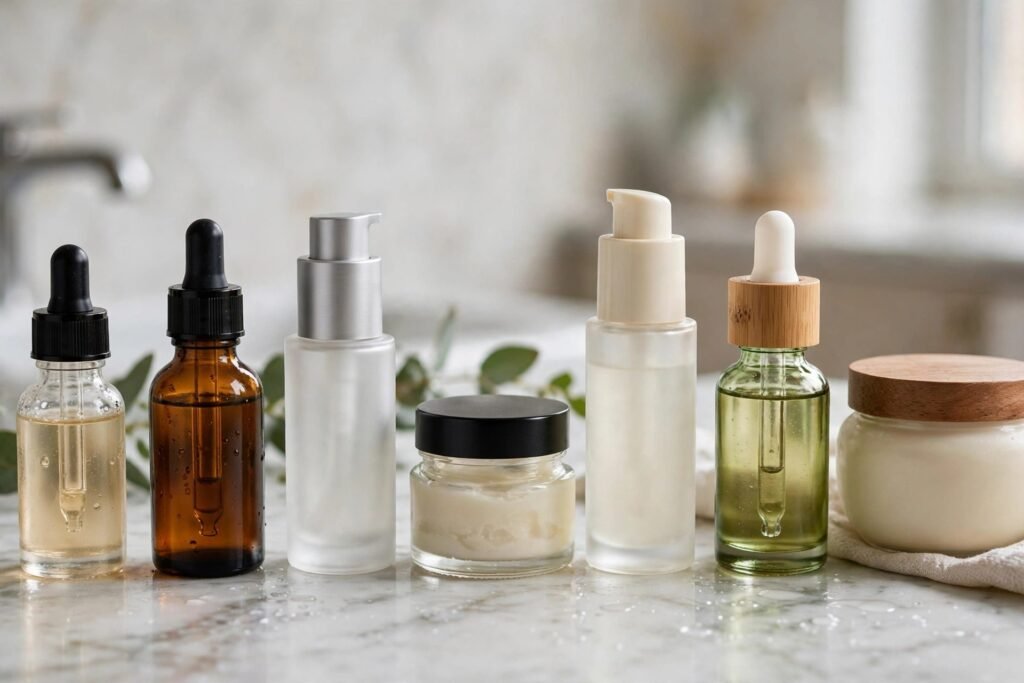
Open any skincare enthusiast’s bathroom cabinet in America and you will find a glorious mess: a CeraVe cleanser next to a The Ordinary serum, a La Roche-Posay moisturizer beside a Paula’s Choice exfoliant. Mixing skincare brands is the norm, not the exception — but it raises a fair question. Is it actually okay, or are you sabotaging your skin by cocktailing products that were never designed to meet?
The short answer: yes, it is generally fine — with a few important exceptions. Skincare brands want you to believe you need their entire line, but dermatologists consistently say otherwise. What matters is not matching logos, but matching ingredients, pH levels, and your skin’s tolerance. Here is how to mix brands safely and get the best of every shelf.
Why the “Use One Line” Advice Exists (and Who Benefits)
Let us be honest about the marketing first. Brands formulate product lines to work together and market them as systems because selling you five products beats selling you one. There is a kernel of truth — products within a line are tested together and will not contain directly conflicting actives — but it is not a skin-health requirement. No dermatological principle says your cleanser and moisturizer must share a logo.
In fact, most dermatologists mix brands in their own routines and recommend patients do the same: the best cleanser for your skin might come from one brand, the best vitamin C from another, and the best sunscreen from a third. Chasing a single brand often means settling for mediocre products in categories where that brand is weak. The American Academy of Dermatology’s skincare basics focus on ingredient function and routine order — not brand loyalty.
The Real Rules: What Actually Matters When Mixing
Forget brands. These are the principles that determine whether your mixed routine works:
Ingredient compatibility beats brand matching. Certain active ingredients conflict regardless of whose label is on the bottle. Do not layer strong retinoids with AHAs/BHAs in the same routine unless your skin is well adapted — the combined exfoliation causes irritation. Do not mix benzoyl peroxide with retinoids at the same time (they deactivate each other; use one morning, one night). Vitamin C (L-ascorbic acid) plus niacinamide was once considered a conflict, but modern formulations have largely resolved this — still, if you notice flushing, separate them.
pH and formulation order matter. Apply products thinnest to thickest: cleanser, toner, serums, moisturizer, sunscreen (morning). Low-pH actives like vitamin C and chemical exfoliants go on clean, dry skin first so they can work at their intended acidity.
Introduce one new product at a time. This is the golden rule of mixing brands. Add a single new product, use it for one to two weeks, and watch for reactions. If your skin flares up after adding three new products at once, you will never identify the culprit.
Combinations That Work Beautifully Across Brands
Some cross-brand pairings are genuinely synergistic. Hyaluronic acid serum (any brand) under any moisturizer boosts hydration for all skin types. Niacinamide plays well with almost everything and calms the irritation that stronger actives cause. A gentle cleanser from a drugstore brand paired with a high-quality vitamin C serum and a dermatologist-recommended sunscreen is the backbone of countless excellent routines — and costs a fraction of a luxury line.
Moisturizer “cocktailing” — mixing a drop of facial oil into your moisturizer, or layering a hydrating serum under a richer cream in winter — is brand-agnostic by nature and works wonderfully. Your skin cannot read labels; it only responds to ingredients. Supporting the whole system with skin-friendly nutrition matters as much as any topical combination.
Combinations to Avoid (Regardless of Brand)
These are the genuinely risky mixes:
Multiple strong exfoliants. A glycolic toner plus a salicylic cleanser plus a retinoid is a recipe for a compromised barrier — redness, stinging, and flaking. Pick one exfoliating active per routine.
Retinoids + benzoyl peroxide simultaneously. As noted, they cancel each other out. Separate by at least morning/evening.
Too many actives, too fast. Vitamin C in the morning, niacinamide midday, retinol at night, exfoliating acids twice a week — each is fine alone, but stacking them all from day one overwhelms the skin. Build gradually.
Fragranced everything. Mixing brands multiplies your fragrance exposure since each product adds its own scent compounds. If your skin is sensitive, choosing fragrance-free across brands eliminates a major irritation variable. The FDA’s cosmetics labeling rules explain how “fragrance” appears on ingredient lists so you can spot it across any brand.
The Patch Test: Your Universal Safety Net
Whenever you introduce a product from a new brand — especially an active — patch test first. Apply a small amount behind the ear or on the inner forearm, wait 24 to 48 hours, and watch for redness, itching, or bumps. It is mildly tedious and enormously valuable. A two-day patch test has saved countless faces from week-long reactions.
When Sticking to One Brand Actually Helps
There are two situations where brand loyalty has merit. First, prescription or clinical systems (like a dermatologist-prescribed acne regimen) are designed as calibrated combinations — do not freestyle those. Second, very sensitive or reactive skin sometimes does better with a minimal, single-line routine simply because fewer variables make troubleshooting easier. In both cases, the benefit is simplicity and predictability, not magic brand synergy.
Building Your Best Mixed-Brand Routine
A dermatologist-approved framework that works across any brands: morning — gentle cleanser, antioxidant serum (vitamin C), moisturizer, SPF 30+ sunscreen. Evening — cleanser (double cleanse if you wear makeup), treatment (retinoid or exfoliating acid, not both nightly), moisturizer. Everything else — essences, masks, oils — is optional enhancement. Choose each slot’s winner on merit, ignore the logos, and give the routine four to six weeks before judging results. Skin cell turnover takes about 28 days; no routine shows its true effect sooner.
And remember that topical products are only half the equation — managing stress naturally visibly improves skin, since stress hormones directly drive inflammation and breakouts no product cocktail can fully counter.
Conclusion
Mixing skincare brands is not just okay — it is how most great routines are built. Brands sell systems; dermatologists prescribe ingredients. Match actives intelligently, respect the conflicts (retinoids versus benzoyl peroxide, exfoliant stacking), introduce products one at a time, and patch test. Do that, and your multi-brand shelf is an advantage, not a risk — a curated team of the best players at each position rather than a mediocre starting five in matching uniforms.
Frequently Asked Questions
Can mixing skincare brands cause breakouts?
Mixing brands does not inherently cause breakouts — incompatible ingredients or over-exfoliation do. If breakouts start after adding a new product, the specific product or combination is the issue, not the fact that the logos differ.
Should my cleanser and moisturizer be the same brand?
No. Cleansers rinse off within a minute, so brand-matching them to leave-on products provides no benefit. Choose each product for how well it performs its own job.
Is it bad to use a luxury serum with a drugstore moisturizer?
Not at all — this is one of the smartest budget strategies in skincare. Splurge where formulation sophistication matters most (serums, treatments) and save where it matters least (cleansers, basic moisturizers).
How long should I wait between applying different brands’ products?
About 30–60 seconds between layers, or until each layer feels absorbed rather than wet. Low-pH actives (vitamin C, exfoliating acids) benefit from a full minute on clean skin before the next step.
Can I mix The Ordinary with CeraVe?
Yes — this is one of the most popular combinations in American skincare, and dermatologists frequently recommend it. The Ordinary’s targeted serums layer well under CeraVe’s barrier-supporting moisturizers. Just follow the compatibility rules for specific actives.