
How Can AI Help With Managing Personal Finances
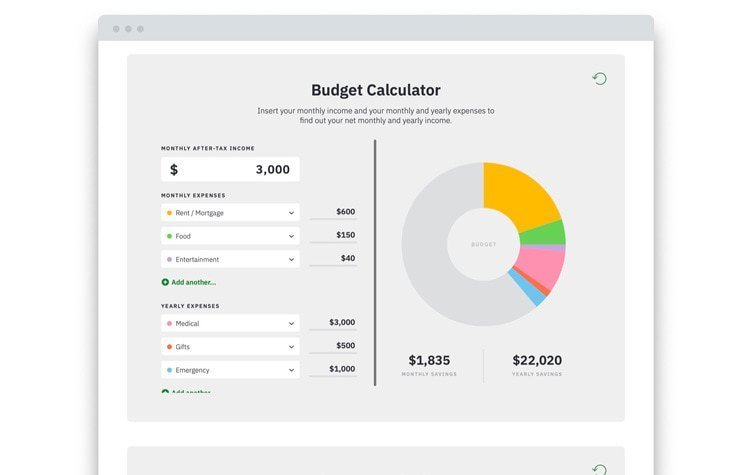
Budgeting apps tell you where your money went. AI can help you decide where it should go. From spotting subscriptions you forgot about to building a debt payoff plan to answering “can I afford this?” in plain English — if you are asking how can AI help with managing personal finances, here is the realistic guide to what works, what is hype, and where to be careful.
One important framing: AI is an excellent financial assistant and a terrible financial advisor. It organizes, calculates, and explains brilliantly. It does not know your life, and it cannot be held accountable. Keep that distinction and you will get real value safely.
How Can AI Help With Managing Personal Finances? The Practical Uses
Budgeting and Spending Analysis
- Building a budget from scratch: “I earn $4,200/month after tax. Rent is $1,400. Help me build a realistic budget with savings goals.” — AI creates a solid starting framework in seconds
- Categorizing spending: paste in (anonymized) transaction lists and ask AI to categorize and identify patterns
- Finding leaks: “Here are my subscriptions: [list]. Which are redundant, and what am I spending annually?” — the subscription audit alone often saves hundreds
- Explaining the jargon: APR, amortization, expense ratios, tax-loss harvesting — AI explains financial concepts in plain English on demand
Debt Payoff Planning
- Avalanche vs. snowball: give AI your debts (balances, rates, minimums) and ask it to model both payoff strategies with timelines and total interest
- Refinancing analysis: “Is refinancing my $280,000 mortgage from 7.2% to 6.5% worth it given $4,000 in closing costs?” — AI runs the break-even math instantly
- Payment prioritization: which debt to attack first when the math and the psychology point different directions
Saving and Investing Guidance
- Emergency fund sizing: based on your actual expenses and job stability, not generic rules
- Retirement projections: “If I save $500/month at 7% average returns for 25 years…” — AI runs the compound growth math and shows scenarios
- Explaining investment options: 401(k) vs. Roth IRA vs. HSA — what each does, in language that makes sense
- Big purchase analysis: “Can I afford a $35,000 car?” — AI models the true cost including insurance, depreciation, and opportunity cost
AI-Powered Finance Apps Worth Knowing
- Your bank’s AI features: most major banks now offer AI spending insights, predictive balances, and savings automation built in
- Cleo: AI budgeting assistant with a conversational interface, popular with younger users
- YNAB (with AI-assisted categorization): the gold standard budgeting method, now with smarter automation
- Robo-advisors (Betterment, Wealthfront): AI-driven investing with automatic rebalancing — genuinely useful for hands-off investors
Where to Be Very Careful
- Never share account credentials: no legitimate AI tool needs your bank login — use official bank integrations, never paste passwords into chatbots
- Anonymize financial data: share amounts and categories, never account numbers, names, or identifying details — see sharing personal info with AI chatbots
- Verify the math: AI arithmetic is usually right but not always — double-check important calculations
- AI is not a fiduciary: it has no legal obligation to act in your interest and no accountability if its advice costs you money
- Beware generic advice: “invest in index funds” is fine generally; specific investment recommendations from AI should be treated as starting points for your own research, not decisions
- Tax and legal complexity: AI explanations of tax strategy are educational, not advice — consult a CPA for your actual situation
When to See a Human Professional
AI handles the fundamentals well. See a human fiduciary financial advisor for: complex tax situations, estate planning, major life transitions (inheritance, divorce, business sale), and any decision where the stakes exceed your ability to absorb a mistake. The best approach for most people: AI for education and organization, human professional for high-stakes decisions, with AI helping you ask the professional smarter questions.
Building a Monthly Money Routine With AI Help
Financial success is mostly routine. Here is a monthly system where AI does the heavy lifting:
- 1st of month (20 min): Money date. Review last month: ask AI to categorize your spending from exported transactions and highlight anomalies — “What changed vs. last month? Any concerning trends?” Set this month’s top 3 money priorities.
- Weekly (10 min): Quick check. Glance at accounts, confirm no fraud, check progress on priorities. AI can summarize: “Am I on track with my grocery budget?” Fast, boring, effective.
- Quarterly (1 hour): Deeper review. AI analyzes 3 months of data for patterns — subscription creep, lifestyle inflation, savings rate trends. Rebalance: increase automated savings if income rose, cut what is not serving you.
- Annually (half day): Strategic planning. AI models scenarios — “What if I increase 401(k) contributions by 3%?” “How does paying $200 extra on the mortgage change the payoff date?” Review insurance, beneficiaries, estate documents. The big-picture session that compounds.
- Ongoing: Automate everything. Savings transfers, bill payments, investment contributions — automation beats willpower universally. AI helps design the system; automation executes it.
The routine matters more than any single decision. People with boring monthly money dates build wealth; people making brilliant sporadic moves do not. AI makes the routine faster and smarter — but showing up for it monthly is still yours to do. Put the money date on your calendar now, recurring, non-negotiable. Future you is counting on present you.
Key Takeaways
AI is an excellent financial assistant and a terrible financial advisor. Use it to organize, calculate, and explain — keep credentials private, anonymize data, verify important math, and bring in a human fiduciary for high-stakes decisions.
- Build budgets from your real numbers, model debt payoff strategies (avalanche vs. snowball), and analyze big purchases with true-cost math.
- Run the monthly money routine: AI-categorized spending review, weekly quick checks, quarterly deeper analysis, annual strategic planning.
- Never share account credentials or identifiable financial data with chatbots — share amounts and categories, never account numbers.
- The best approach: AI for education and organization, human professional for complex situations — with AI helping you ask smarter questions.
Related reading: On the privacy front, review the privacy risks of AI assistants before connecting financial accounts to any AI tool.
Further reading: the Consumer Financial Protection Bureau for unbiased financial education and tools.
The Bottom Line
Use AI to build budgets, model debt payoff scenarios, understand financial concepts, and organize your money life — while keeping credentials private, anonymizing data, and verifying important math. It is the best free financial literacy tutor ever created. For the decisions that really matter, pair it with a human fiduciary. Organized money plus informed decisions beats financial anxiety every time.






