
Wardrobe Basics Every Woman Needs: The Essential List
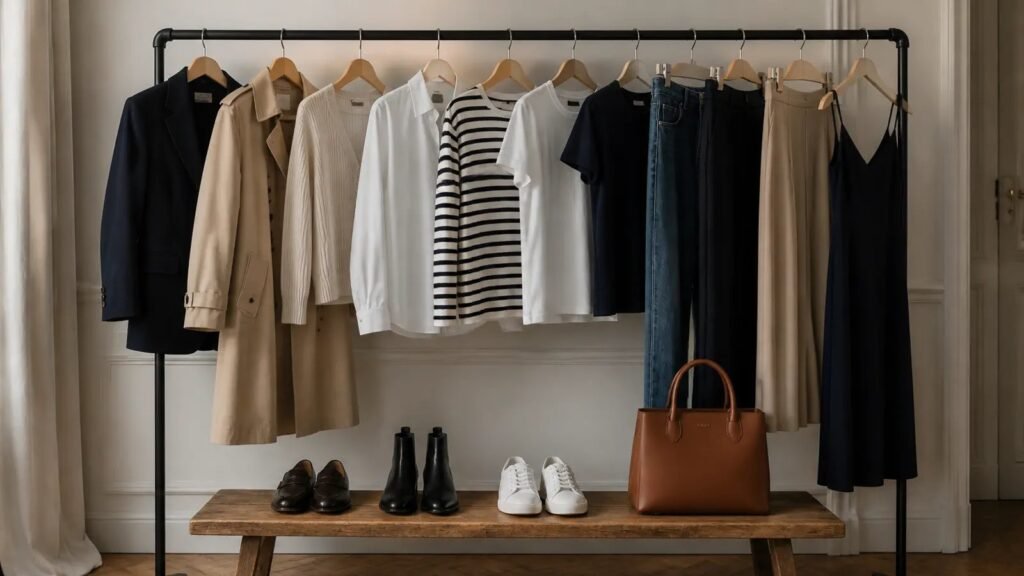
Staring at a closet full of clothes and feeling like you have nothing to wear is a universal experience — and it usually means the same thing: lots of trendy pieces, not enough foundation. The fix isn’t more shopping. It’s getting the basics right. When people ask what are the must-have wardrobe basics for women, they’re really asking for the pieces that make everything else work — the reliable core that turns random clothes into actual outfits. Get these right and getting dressed becomes the easiest part of your morning.
What Are the Must-Have Wardrobe Basics for Women?
A wardrobe basic earns its place by being versatile, timeless, and endlessly combinable. Here’s the core checklist — not a shopping mandate, but the pieces worth investing in because you’ll wear them hundreds of times:
- Dark-wash straight or slim jeans. The hardest-working item in most wardrobes. Dark wash dresses up or down; a clean, simple cut without heavy distressing stays timeless.
- Black trousers or tailored pants. For work, dinners, events — the grown-up anchor piece. Look for a mid-rise with a clean line through the leg.
- White button-down shirt. Crisp, endlessly layerable, appropriate almost everywhere. Roll the sleeves for casual, tuck it for polish.
- Neutral T-shirts and tanks (2–3). White, black, gray, or navy in a good cotton. The base layer for everything.
- A well-fitting blazer. Instantly upgrades jeans, dresses, everything. Black or navy, structured shoulders, hitting at the hip.
- The little black dress. Cliché because it’s true — one dress that works for dinners, events, and funerals with just accessory changes. Styling a little black dress for different occasions multiplies its value enormously.
- A versatile sweater. Crewneck or V-neck in a neutral — layerable nine months a year.
- A classic trench or wool coat. Your outerwear is what the world sees most in cold months; one good coat beats three mediocre ones.
- White sneakers and black flats or loafers. The two-shoe foundation covering casual to polished. Keeping white sneakers clean protects the investment.
- A structured handbag in a neutral. One good bag you carry daily beats five trendy ones. Structure reads as polish.
- Simple jewelry. Stud earrings, a delicate necklace, a classic watch — the quiet finishing touches.
Quality Over Quantity (Within Reason)
Basics are the pieces worth spending a bit more on because of cost-per-wear: a $120 blazer worn 100 times costs $1.20 per wear; a $30 trendy top worn twice costs $15 per wear. The expensive-per-wear item is the cheap one. That said, “invest” doesn’t mean designer — it means the best quality your budget allows from reliable sources. Check seams, fabric weight, and hardware (zippers, buttons) rather than brand names. A $60 blazer with clean construction beats a $200 one with puckered seams.
Prioritize in order of visibility and frequency: coat, shoes, bag, blazer — the things people actually see and you wear constantly. Basics like T-shirts and tanks can come from affordable retailers without apology. Nobody can tell a $12 white tee from a $50 one when it fits well and it’s fresh.
Make the Basics Yours
Here’s where basics become style: the checklist is universal, but the execution is personal. Your best neutrals depend on your coloring. Your ideal jean rise depends on your proportions. Your blazer structure depends on your frame and taste. This is why finding your personal style as a beginner matters — basics are the canvas, and knowing what you love determines what you paint. Who What Wear’s wardrobe essentials shows how the same basics get styled across very different aesthetics.
Maintain, Organize, Refresh
Basics only work if they’re in good shape — a pilled sweater or yellowed white shirt undermines the whole concept. Rotate pieces to extend their life, address stains immediately, and replace the true workhorses (white tees, black pants) before they’re visibly tired. Keep them accessible: organizing even a small closet so basics are visible means you’ll actually reach for them instead of defaulting to whatever’s on top of the pile.
And when the basics start feeling boring — which happens to everyone — resist the urge to overhaul. Making your old wardrobe feel new again through fresh combinations and a few strategic accessory updates scratches the novelty itch without abandoning the foundation. Real Simple’s wardrobe basics guide frames it well: basics are the 80% that makes the 20% of fun pieces wearable.
The Capsule Math: 12 Pieces, 30 Outfits
Here’s the party trick that proves basics work: 12 well-chosen basics generate 30+ distinct outfits. The formula — 4 tops × 3 bottoms × 2 layers × 2 shoe options, minus the combinations that don’t work, still leaves dozens. Try it as an exercise: pull 12 basics from your closet, photograph every combination you’d actually wear, and count. Most people hit 20+ before trying hard. This is why basics are the highest-ROI clothing investment: each piece’s value multiplies by every other piece it combines with. A trendy statement top combines with 2–3 things; a perfect white shirt combines with everything you own. Buy the multipliers, rent the statements.
Basics for Different Lifestyles
The checklist adapts to your life. Corporate office: weight the list toward blazers, trousers, sheath dresses, and closed-toe shoes — polish is the priority. Creative/remote: smart casual — quality knits, dark jeans, one good blazer for video calls, comfortable flats. Stay-at-home parent: durable, washable, comfortable — the basics still apply, just in hardier fabrics and forgiving cuts. Frequent traveler: wrinkle-resistant versions of everything, a true capsule palette, layers over bulk. The principle: basics aren’t a uniform — they’re a formula. Same concept (versatile, quality, combinable), different execution. Audit your actual week: what do you do, where do you go, what do you need? Then weight your basics toward that reality. A wardrobe built for your life beats a wardrobe built for a magazine spread, every time.
The Practical Takeaway
Audit your closet against the checklist this weekend — not to buy everything missing, but to identify your gaps. Fill the highest-impact gap first (usually the blazer, the coat, or the shoes), choosing the best quality your budget allows. Then stop shopping randomly and let the foundation do its job. A closet built on basics doesn’t just make mornings easier — it makes every other piece you own work harder.







3 thoughts on “Wardrobe Basics Every Woman Needs: The Essential List”