
The Best Colors for Warm Skin Tones
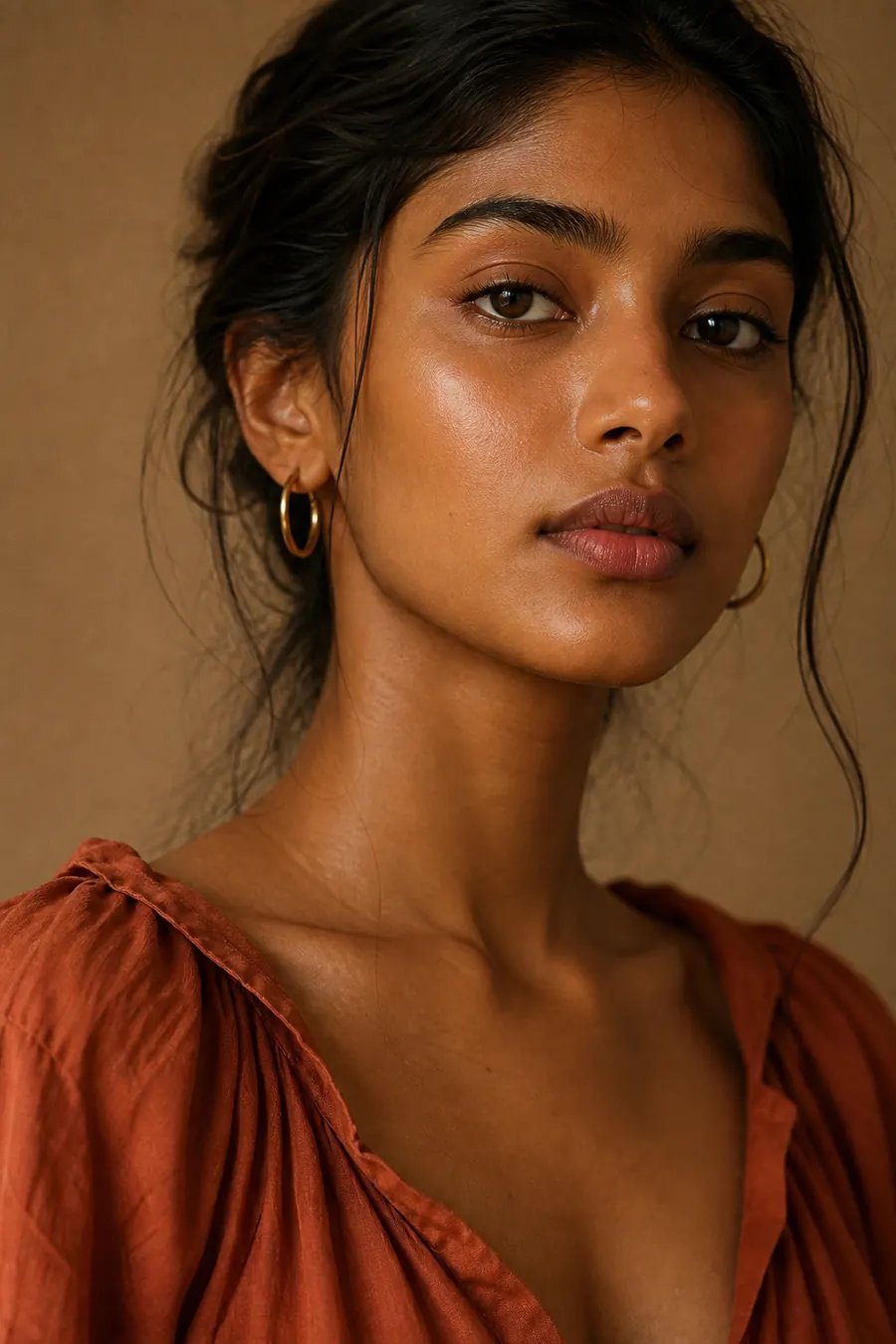
You know that thing where a friend looks radiant in mustard yellow and you look like you have the flu in the same shirt? That’s undertones at work. Your skin’s undertone — warm, cool, or neutral — determines which colors make you glow and which ones wash you out. If you’re asking what colors look best on warm skin tones, you’re about to discover one of the highest-impact style upgrades there is: wearing your colors is like a permanent filter, and it costs nothing.
How to Tell If You Have Warm Undertones
First, confirm you’re actually warm-toned. The classic tests:
- The vein test: look at your wrist in natural light. Greenish veins suggest warm undertones; bluish-purple suggests cool; a mix suggests neutral.
- The jewelry test: gold jewelry flatters warm skin and seems to melt in; silver can look slightly harsh. If gold is obviously “your” metal, you’re likely warm.
- The white test: hold pure white and off-white/cream fabric near your face. Warm skin glows in cream and ivory but can look sallow against stark white.
- The sun test: warm undertones tend to tan relatively easily and rarely just burn (though everyone burns without protection).
None of these is definitive alone — look for the consensus across tests. And undertones are independent of skin depth: warm undertones appear in fair, medium, deep, and every skin tone in between.
What Colors Look Best on Warm Skin Tones
Warm skin harmonizes with colors that share its golden, yellow-based character:
- Earth tones: camel, cognac, olive, terracotta, chocolate brown, warm beige — the warm-toned person’s neutrals. These are your equivalent of someone else’s black and gray.
- Warm reds and oranges: tomato red, brick, rust, coral, burnt orange, paprika. Orange-based reds glow on warm skin where blue-based reds can clash.
- Golden yellows: mustard, honey, amber, marigold. The colors cool-toned people fear are your superpower.
- Warm greens: olive, moss, forest, lime — yellow-based greens rather than blue-based teals.
- Warm neutrals: cream, ivory, champagne, warm taupe, camel. Your whites and beiges should always lean warm.
- Rich jewel tones (warm versions): amber topaz, warm emerald, golden turquoise.
Colors to approach cautiously: icy pastels, stark white, true black worn right at the face (it can be harsh — soften with a scarf or necklace in your colors), and blue-based pinks and reds like fuchsia and cherry. You don’t have to ban them — wearing them away from the face (pants, skirts, shoes) minimizes the effect. Who What Wear’s warm skin tone color guide has visual examples that make this click instantly.
Makeup, Hair, and Metals
The undertone logic extends beyond clothes. Metals: gold, bronze, copper, and rose gold flatter warm skin; if you love silver, wear it away from the face or mixed with gold. Makeup: foundations with golden or yellow bases (not pink), blush in peach, coral, and warm rose rather than blue-pink, lipsticks in tomato red, coral, warm nude, and brick rather than blue-red or frosty pink. Hair color: golden blonde, honey, caramel, copper, auburn, and warm chocolate enhance warm skin; ashy or platinum tones can wash it out. Even neutral nail polish shades look better in warm-leaning versions — think warm beige and peachy nudes over gray-beige.
Build a Warm-Toned Wardrobe
You don’t need to replace everything — start by noticing. When shopping, hold items near your face in natural light (store lighting lies) and watch for the glow-versus-drain effect. Build your neutral base in camel, cream, olive, and brown rather than defaulting to black and gray. Add your power colors — the ones that make people ask if you’ve been on vacation — deliberately. And when a beloved piece is in a “wrong” color, keep it but wear it away from your face, or bridge it with a scarf or jewelry in your tones. Choosing jewelry in gold and warm metals multiplies the effect of wearing your colors.
Understanding your undertones also sharpens your personal style journey — color is one of the fastest ways to make outfits look intentional. InStyle’s skin tone color guide covers all undertone categories if you’re shopping with friends of different tones.
The 5-Minute Closet Color Audit
Here’s a revealing exercise: pull out your ten most-worn items and lay them together. What colors dominate? Now pull the ten least-worn — the ones with tags still on or the “someday” pieces. Compare the palettes. Most people discover their most-worn clothes cluster in their flattering colors (instinct knew before theory did) while the neglected pile is full of “wrong” colors bought because they were trendy or on sale. The audit tells you exactly what to buy more of and what to stop buying — it’s a personalized shopping directive from your own closet. Donate the persistent wrong-color pieces; keeping them just clutters decisions. From now on, every purchase gets the face test: hold it up, check for the glow, buy only the glow.
Warm-Toned Outfit Formulas
Put the color theory into outfits. Everyday: olive trousers + cream sweater + cognac boots + gold jewelry — head-to-toe warm harmony. Work: camel blazer + ivory blouse + chocolate trousers — professional warmth that glows under office lighting. Evening: terracotta or rust dress + bronze heels + gold clutch — the warm-toned equivalent of the LBD. Weekend: mustard top + dark-wash jeans + tan sneakers — casual but radiant. The pattern: anchor in warm neutrals (camel, cream, olive, brown), add one warm color statement, finish with gold-toned metals. Once you see the formula, shopping becomes almost automatic — you stop considering the cool-toned options that never worked and start building a wardrobe where everything matches everything. That’s the real payoff: not just better colors, but an easier closet.
Cool and Neutral Skin: The Quick Reference
Shopping with friends of different undertones? Here’s the cheat sheet. Cool undertones (pink/blue veins, silver jewelry flatters, stark white glows): jewel tones in blue-based versions — emerald, sapphire, true red, fuchsia, icy pastels, black and white. Neutral undertones (mixed veins, both metals work): the lucky middle — most colors work, with slight preference for muted over neon. The universal colors (flatter everyone): true red, teal, soft white (not stark), navy, and blush pink. When in doubt about someone’s undertone, these are the safe gifts and shared-wardrobe picks. Understanding all three makes you the friend everyone asks to shop with — and the knowledge compounds every time you get dressed.
The Practical Takeaway
Confirm your undertone with the vein, jewelry, and white-fabric tests. Then lean into earth tones, warm reds, golden yellows, and olive greens — and notice how many compliments follow. Color analysis isn’t vanity; it’s the cheapest, fastest style upgrade available. Wear your colors and let your skin do the talking.






