
How to Organize a Small Closet: Maximize Every Inch
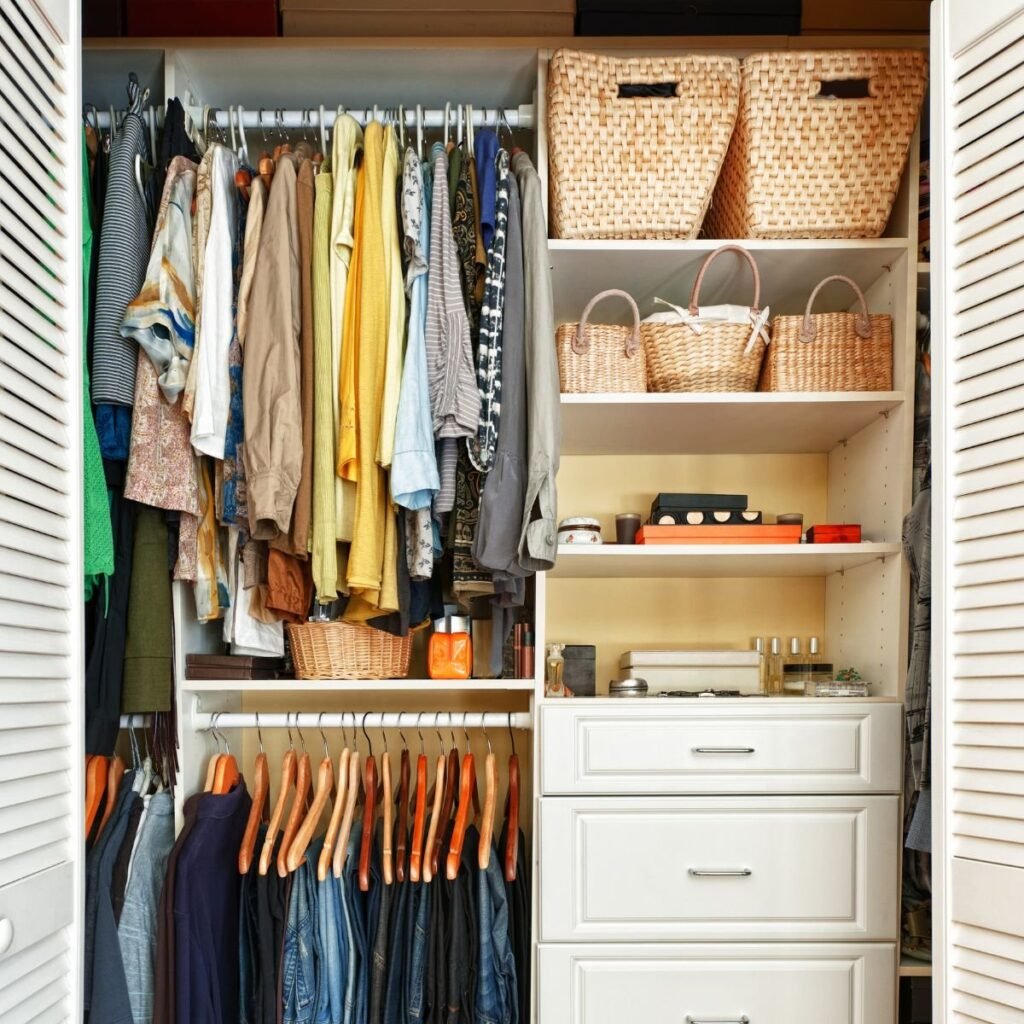
A tiny closet isn’t a curse — it’s a design constraint. And constraints, handled well, produce better results than unlimited space ever does. People with huge closets lose things, forget what they own, and still wear the same ten outfits. A small closet, organized ruthlessly, can hold a complete wardrobe where everything is visible and everything gets worn. If you’re asking what is the best way to organize a small closet, here’s the system: purge first, then engineer every inch.
The Purge Comes First (No Skipping)
You cannot organize clutter — you can only rearrange it. Before buying a single organizer, empty the closet completely and sort everything into four piles: love and wear, maybe (try on — if you wouldn’t buy it today, it goes), donate/sell, and trash (stained, broken, worn out). Be brutal with the maybes: box them, date the box, and if you haven’t opened it in three months, donate it unopened. Most people remove 30–40% of their closet in this step, which is like gaining 30–40% more closet for free.
While you’re at it, pull out the off-season clothes. Storing winter coats and sweaters elsewhere during summer (and vice versa) instantly frees enormous space. Under-bed bins, top shelves, or vacuum bags for the off-season rotation — this single habit does more for small closets than any product.
Engineer the Space: The High-Impact Upgrades
- Double-hang rods. The number-one small-closet upgrade. Most closets have one rod with dead air below it; adding a second rod doubles hanging capacity for shirts, pants, and skirts. Tension rods or inexpensive add-on rods work in rentals.
- Matching slim hangers. Swap bulky plastic and wire hangers for slim velvet ones. They grip clothes (no more slippery straps), take up half the space, and the uniformity alone makes the closet look and function better. This is the cheapest transformation available.
- Use the door. Over-the-door hooks or organizers for bags, scarves, belts, and accessories — prime real estate most people waste.
- Shelf dividers and bins. Deep shelves become black holes without dividers. Shelf dividers keep sweater stacks from avalanching; labeled bins corral accessories, off-season items, and the miscellaneous.
- Go vertical. The space above the top rod and below hanging clothes is usable: top shelf for labeled bins, floor for shoe racks or rolling drawers. Measure before buying anything — small closets punish guesswork.
- Pull-out and tiered solutions. Tiered pant hangers, cascading hooks, and pull-out belt/tie racks multiply capacity in inches, not feet.
Real Simple’s closet organization ideas has visual inspiration for every layout.
The Folding Factor
What you fold versus hang changes everything in a small space. Hang: blazers, dresses, button-downs, delicate blouses, trousers (or fold trousers over hangers). Fold: sweaters and knits (hanging stretches them), T-shirts, jeans, casual pants. And how you fold matters enormously — folding clothes to save drawer space with the file-fold method (clothes standing upright like files) lets you see everything at a glance and fits dramatically more per drawer. Apply file-folding to drawers and deep shelves alike.
Organize by System, Not by Hope
Arrange hanging clothes in a way your brain actually uses: by category then color (all blazers together, arranged light to dark), or by outfit clusters. Either works — the point is a system you can maintain without thinking. Keep daily-wear items at eye level and easy reach; occasion wear and off-season up high or in back. The “one in, one out” rule prevents re-cluttering: every new piece means one leaves. It’s the maintenance contract that keeps the system working.
A well-organized small closet also transforms your relationship with your clothes. When everything is visible, you actually wear everything — no more forgotten gems languishing in the dark. Rediscovering your wardrobe becomes natural when you can see it all. And building around versatile basics means fewer pieces cover more outfits — the small-closet owner’s natural advantage. Good Housekeeping’s organization guides cover the maintenance habits that keep systems from decaying.
The Seasonal Swap System
Twice a year, do the full seasonal rotation — it’s the maintenance that keeps a small closet functional permanently. Out: off-season clothes, cleaned and repaired first (never store dirty — stains set and moths prefer soiled fibers). In: the coming season’s pieces, each tried on quickly — bodies change, and the “it fit in October” assumption wastes space. While you’re in there: purge anything you didn’t wear last season (the honest audit), check for repairs needed, and reassess the system — do the dividers still work? Has a category outgrown its zone? The swap takes an afternoon twice a year and prevents the slow creep of clutter that kills small-closet systems. Pair it with proper moth protection and your off-season clothes emerge pristine every time.
Small Closet, Big Style: The Mindset
Here’s the reframe: a small closet isn’t a limitation — it’s a curatorial advantage. Every piece has to earn its place, which means no dead weight, no “maybe someday,” no decision fatigue. People with huge closets and nothing to wear are drowning in options; you’re forced into the intentionality that creates great style. The most stylish people I know have the smallest wardrobes — they’ve just made every piece count. The one-in-one-out rule isn’t deprivation; it’s quality control. The seasonal swap isn’t a chore; it’s a reunion with clothes you actually missed. Stop wishing for a bigger closet and start appreciating the edit — constraint is the mother of style.
Closet Lighting: The Overlooked Upgrade
You can’t wear what you can’t see — and most closets are caves. The problem: a single dim bulb (or none) makes colors indistinguishable and details invisible, which is why black and navy get confused and you default to the same five things. The fix: battery-powered LED motion-sensor lights ($15–25 for a multi-pack) — stick them under shelves and along the rod. They turn on when you open the door, need no wiring (rental-friendly), and transform visibility instantly. Daylight bulbs if you have a wired fixture — accurate color rendering matters for matching. This $20 upgrade does more for actually wearing your organized closet than any container system. You organized it — now make it visible.
The Practical Takeaway
This weekend: empty it all, purge ruthlessly, move off-season out, install a double rod, switch to slim hangers, and file-fold your drawers. That’s one weekend and under $50 for a closet that holds more, shows more, and stresses you less. Small closet, smart system, zero morning frustration. The space was never the problem — the system was.






