
How to Care for Leather Boots So They Last for Years
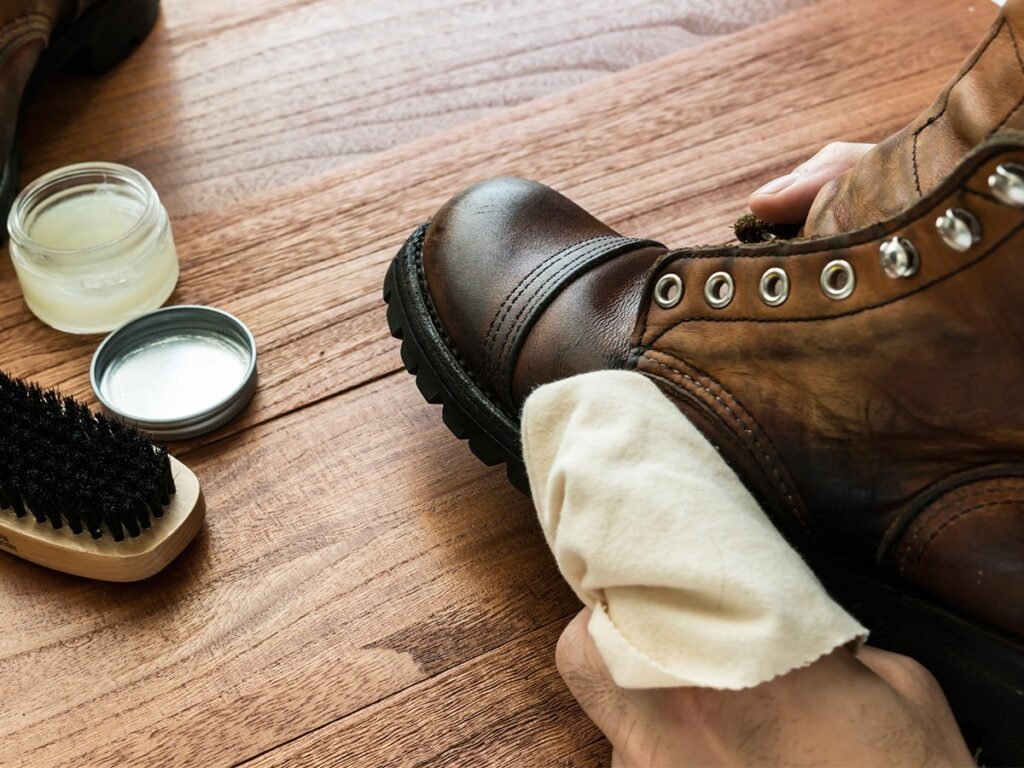
Good leather boots are one of the few purchases that can genuinely last decades. I’ve seen twenty-year-old boots that look better than two-year-old ones — the difference was never the price paid, but the care given. Leather is skin, and like skin, it dries out, cracks, and ages badly without maintenance. If you’re asking how do I take care of leather boots so they last longer, here’s the complete routine: it’s simpler than you think, takes minutes, and the payoff is measured in years.
The Core Routine: Clean, Condition, Protect
Three steps, in order, a few times a year (more for daily-wear boots):
- 1. Clean. Remove laces. Brush off dirt with a horsehair brush (dry dirt first — wet mud smears). For grime, wipe with a damp cloth and saddle soap or dedicated leather cleaner, working in small circles. Never soak leather boots, never use harsh detergents, and never dry them with direct heat — heat cracks leather catastrophically. Stuff with newspaper or shoe trees and air-dry at room temperature.
- 2. Condition. This is the step everyone skips and the one that matters most. Leather dries out; conditioner replaces the oils that keep it supple. Apply a thin, even layer of leather conditioner or mink oil with a cloth, let it absorb for 15–30 minutes, then buff off the excess. Condition every 3–6 months for regular wear, or whenever the leather looks dry or pale. Over-conditioning is possible (too much softens leather excessively) — thin layers, less often, beats globbing.
- 3. Protect. A waterproofing spray or wax (for smooth leather) or silicone spray (for suede/nubuck — different products for different finishes!) guards against water and salt. Reapply at the start of wet seasons. This is what stands between your boots and winter salt stains.
The Spruce’s leather boot care guide details product choices by leather type.
Daily Habits That Add Years
- Rotate. Don’t wear the same boots two days running — leather needs 24 hours to dry from foot moisture. Rotation alone can double boot life.
- Use shoe trees. Cedar shoe trees absorb moisture and hold shape, preventing the toe-box collapse and creasing that ages boots prematurely. The best $25 you’ll spend on footwear.
- Untie fully. Forcing boots on and off without unlacing stresses the heel counter and eyelets. Thirty seconds of unlacing saves the structure.
- Address salt immediately. Winter road salt is leather’s nemesis — white stains that, left untreated, permanently damage the finish. Wipe with a damp cloth (or a vinegar-water solution for stubborn salt lines) as soon as you’re indoors.
- Fix small problems early. Loose stitching, worn heels, separating soles — a cobbler fixes these cheaply when caught early. Quality boots are designed to be resoled; a $60 resole gives $300 boots a second life.
Storage: The Long Game
Clean and condition before storing for the season — dirt left on leather keeps working during storage. Store upright (never folded or crushed) with shoe trees or stuffing, in a cool, dry place out of direct sunlight. Breathable cotton bags beat plastic (which traps moisture and encourages mildew). For suede and nubuck boots, a suede brush restores the nap before storage. These same principles apply to all leather goods — and the mindset extends to protecting clothes in storage generally. GQ’s boot care guide covers the nuances of different leather finishes.
When Boots Are Worth the Investment
All this care pays off most on quality boots — full-grain leather, Goodyear-welted or Blake-stitched construction (resoleable), from makers who build for decades. A $300 pair maintained well costs less per year than replacing $80 pairs every other year, and looks better doing it. Pair them with the rest of a considered wardrobe — the right wedding outfit, a good watch — and boots become part of a personal uniform that never looks dated.
Suede and Nubuck: The Special Cases
Suede and nubuck boots need different care than smooth leather — using smooth-leather products on suede ruins the nap. Cleaning: a suede brush (one side rubber, one side bristle) restores nap and removes dry dirt; a suede eraser handles scuffs and spots. Protection: silicone-based suede protector spray before first wear and reapplied seasonally — suede stains irreversibly without it. Water damage: if suede gets soaked, stuff with newspaper and air-dry slowly, then brush the nap back up once dry. Never use conditioner or wax on suede — they mat the fibers permanently. Storage: breathable bags, never plastic, with shoe trees. Suede is higher-maintenance than smooth leather, but the texture payoff is worth it — just know what you’re signing up for before buying.
Boot Styles Worth Investing In
Not all boots deserve the care routine — invest it in the classics. Chelsea boots: the most versatile boot in existence — jeans to suits, year-round. Chukka/desert boots: casual perfection, endlessly wearable. Work boots: the heritage styles (red wing archetype) — built to be resoled, better-looking with age. Dress boots: the cold-weather answer to dress shoes — polished, warm, professional. What to skip for investment: ultra-trendy styles (dated in two seasons), cheap bonded-leather boots (can’t be conditioned, peel within a year), and anything you won’t wear weekly. The resoling test: before buying, ask “can this be resoled?” — Goodyear-welted and Blake-stitched yes, glued no. Buy boots worth maintaining, then maintain them — that’s the entire philosophy in one sentence.
Resoling: The $60 Second Life
The resoling secret deserves emphasis because most people don’t know it’s an option. When: the tread is worn smooth but the upper is intact — typically every 2–5 years of regular wear. Cost: $50–80 for a full resole, versus $300+ for new quality boots. What to ask: a cobbler can also replace heel caps ($15–25, do these sooner), restitch loose seams, and refinish scuffed leather. Find a good cobbler: ask at quality shoe stores, check reviews — a skilled cobbler is a dying trade worth supporting. The math: $300 boots + $60 resole every 4 years = $90/year for decades of the best boots you’ve owned. The disposable $80 boots replaced every 18 months cost more and look worse the entire time. Resoling isn’t just economical — it’s the philosophy that makes quality footwear the cheapest option.
The Practical Takeaway
Clean when dirty, condition quarterly, protect before wet weather, rotate daily, tree always, and resole instead of replacing. That’s the whole system — maybe two hours a year of actual effort. Do it and your boots will outlast trends, outlast cheap replacements, and look better at year ten than most boots look at year two. Leather rewards care like nothing else you own.







1 thought on “How to Care for Leather Boots So They Last for Years”