
How to Find Your Bra Size at Home: A Fitting Guide
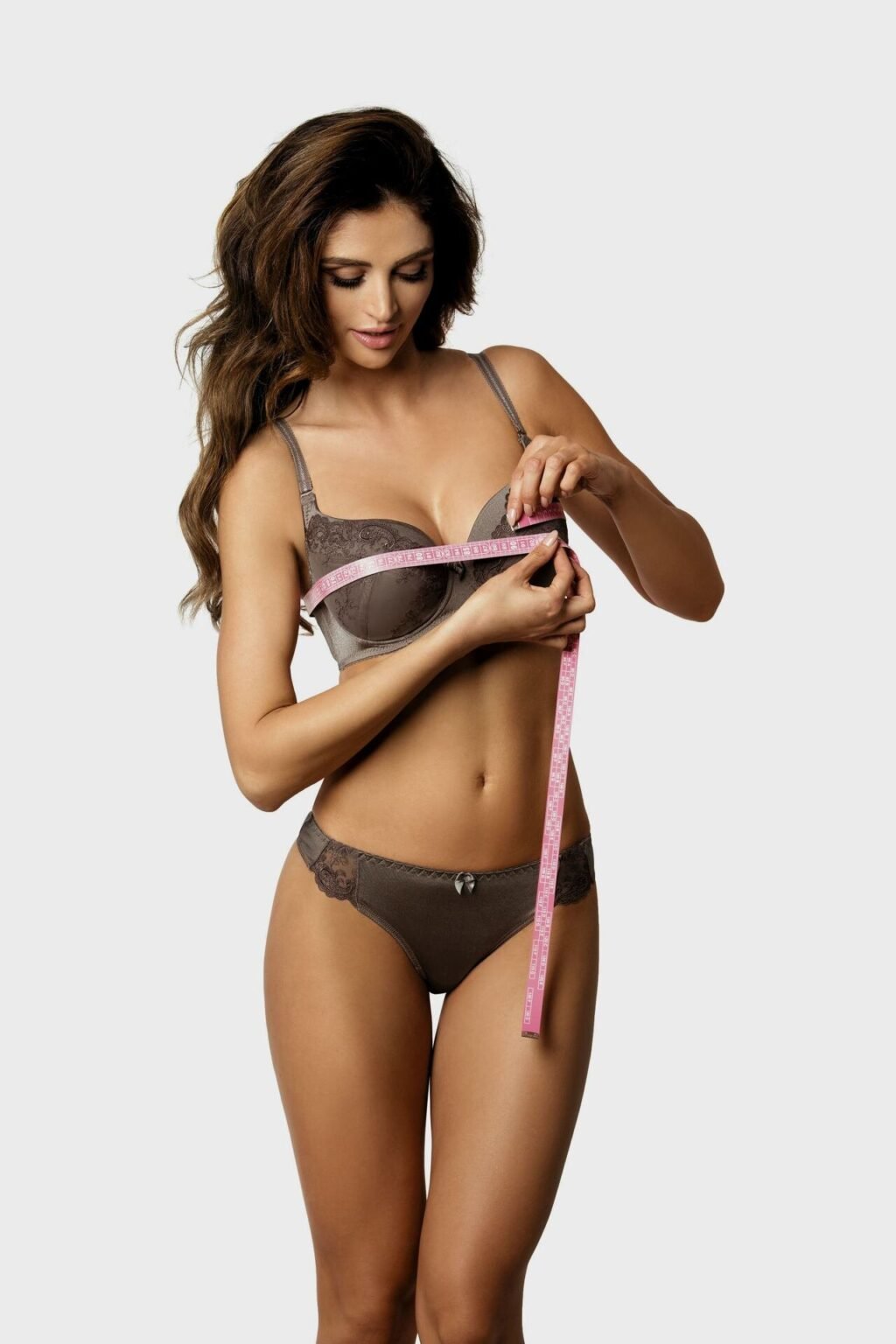
Here’s a statistic that should embarrass the lingerie industry: an estimated 80% of women wear the wrong bra size. Bands riding up, straps digging in, spillage, gaping — most of us just accepted discomfort as the price of support. It’s not. The right size transforms not just comfort but how every top, dress, and blazer fits. If you’re asking how do I find the right bra size at home, you can do it accurately with a soft measuring tape, a mirror, and ten minutes. No fitting room required.
How to Measure Your Bra Size at Home
You’ll need a soft measuring tape and an unpadded bra (or no bra). Stand relaxed — not holding your breath, not sucking in.
- Step 1: Measure your underbust (band size). Wrap the tape snugly around your ribcage directly under your bust, keeping it level all the way around. Round to the nearest whole inch. If it’s even, add 2; if odd, add 3 — that’s a starting band size. (Example: 31 inches → 34 band.) Note: this “+2/+3” method is traditional; many modern fitters prefer using the raw measurement, so treat the result as a starting point, not gospel.
- Step 2: Measure your bust (cup size). Wrap the tape around the fullest part of your bust, keeping it level but not tight. Round to the nearest inch.
- Step 3: Calculate. Subtract band measurement from bust measurement. Each inch of difference = one cup size: 1″ = A, 2″ = B, 3″ = C, 4″ = D, 5″ = DD/E, 6″ = DDD/F, and so on.
So: 34-inch underbust → 36 band; 39-inch bust → 39 − 36 = 3 → C cup → 36C as your starting size. But here’s the crucial part: try on sister sizes too (34D and 38B in this example — same cup volume, different band). The calculator gives you the neighborhood; trying on finds the house.
The Fit Checklist (More Important Than the Number)
Forget the size for a moment and check these fit points — this is what actually matters:
- Band: should sit level all around (not riding up the back — the most common sign the band is too big), snug enough that you can fit two fingers underneath but not more. The band provides 80% of the support, not the straps.
- Cups: no spillage over the top or sides, no gaping or wrinkling. Your breast tissue should be fully enclosed, with the center gore (the piece between cups) lying flat against your sternum.
- Straps: should stay put without digging. If you’re constantly hitching straps, the band is probably too big — straps are fine-tuning, not support.
- Comfort test: sit, raise your arms, bend over. The bra should stay in place through all of it. A bra that only fits when you’re standing statue-still doesn’t fit.
When to Re-Measure
Bra size isn’t permanent. Re-measure after significant weight changes (up or down 10+ pounds), after pregnancy and breastfeeding, annually as a habit (bodies change gradually), and whenever your current bras start failing the fit checklist. Also: different styles fit differently — you may be one size in a T-shirt bra and another in a balconette or sports bra. And sizing varies between brands just as it does with clothes, so always try on.
Build Your Bra Wardrobe
You don’t need twenty bras — you need the right few: 2–3 everyday T-shirt bras (nude for you + black) in your correct size, 1 sports bra that actually supports (high-impact activities need encapsulation, not just compression), 1 strapless/convertible for special necklines, and 1–2 comfortable wireless or bralette options for low-key days. Rotate them — elastic needs rest days, just like shoes. Replace when the band stretches out (you’re on the tightest hook and it’s still loose), the cups lose shape, or the underwire escapes. A well-fitting bra makes every wardrobe basic fit better — it’s foundation in the literal sense.
Bra Care: Make Them Last
Good bras aren’t cheap, so make them last. Hand wash — the machine destroys elastic and underwires; a sink with gentle soap takes five minutes. If you must machine-wash, use a lingerie bag on delicate, and never put bras in the dryer — heat kills elastic fast; lay flat or hang by the center (not the straps, which stretch). Rotate: don’t wear the same bra two days running — elastic needs 24 hours to recover. Fasten before washing so hooks don’t snag other items. Store molded cups nested (don’t invert one cup into the other — it creases the padding). With proper care, a quality bra lasts 1–2 years of regular rotation instead of six months. The most expensive bra is the one you replace constantly because you destroyed it in the dryer.
Sports Bras: The Separate Science
Regular bra rules don’t fully apply to sports bras — the engineering is different. Impact level matters: low (yoga, walking) needs light support; medium (cycling, hiking) needs more; high (running, HIIT) needs maximum — encapsulation (separate cups) beats compression (smashing) for larger busts at high impact. The fit test: jump in the fitting room — if there’s significant movement, size down or try encapsulation. Replace often: sports bras lose elasticity faster — every 6–12 months with regular use. The band is still king: 80% of support comes from the band, same as regular bras. Don’t double up: two bras restrict breathing and don’t actually improve support — get one that fits. A good sports bra makes exercise comfortable; a bad one makes you dread it. This is not the place to economize.
Bra Fitting for Special Situations
Pregnancy and nursing: measure monthly in the third trimester and postpartum — size changes fast. Nursing bras need easy access and soft cups; get fitted in the last month of pregnancy and again 6 weeks postpartum. Post-surgery: follow your doctor’s guidance — compression or surgical bras first, regular fitting after clearance. Weight changes: re-measure every 10–15 pounds — the band changes fastest. Athletes: muscle changes affect fit — recheck with training seasons. Asymmetry: most women differ by up to a cup size — fit the larger side and pad the smaller if needed. The principle: bra size is a moving target, not a tattoo — re-measure with every major body change and stop suffering in the old size out of habit. Your body changes; your bras should keep up.
The Practical Takeaway
Measure today — underbust, bust, calculate, then try on your size plus sister sizes and run the fit checklist. The band should be level and snug, the cups should enclose without spillage or gaping, and the gore should tack. Ten minutes of measuring can end years of discomfort. Your back, your shoulders, and every top you own will thank you. Good Housekeeping’s lingerie fit guides cover brand-specific quirks worth knowing.






