How to Find Quality Clothes at Thrift Stores
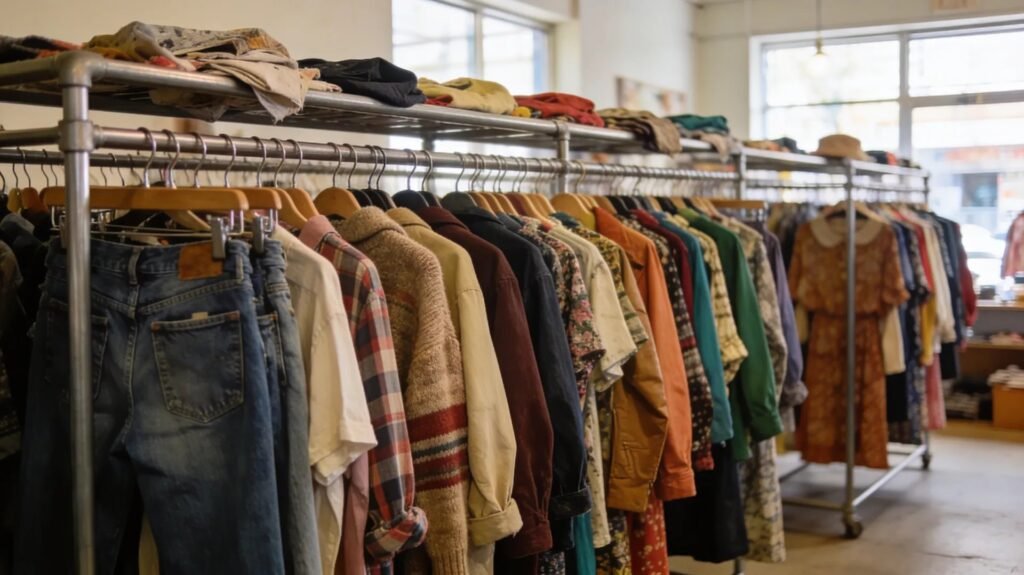
Thrift stores are treasure hunts where the treasure is real: designer blazers for $12, silk blouses for $6, barely-worn quality shoes, vintage pieces no one else owns. But they’re also overwhelming — racks of chaos, inconsistent sizing, and the occasional truly awful find. The difference between thrifters who score and thrifters who leave empty-handed isn’t luck; it’s method. If you’re asking how can I find quality clothes at thrift stores, here’s the system that turns random racks into a curated wardrobe.
Before You Go: The Strategy
- Go with a list, not a hope. “Black blazer, silk blouses, wool sweaters” beats “cute stuff.” A list keeps you focused and prevents the pile of almost-right impulse buys.
- Know your measurements. Sizes are inconsistent across brands and eras (vintage sizing runs small). Knowing your measurements lets you evaluate anything instantly — carry a tape measure or keep numbers in your phone.
- Go regularly. Inventory turns over constantly; the best thrifters visit weekly and spend 20 minutes, not monthly marathons. New-stock days (ask the staff) are prime time.
- Shop the right locations. Affluent neighborhoods yield better donations; stores near colleges get trendy turnover; small-town thrifts are less picked-over. Try several and learn your area.
The Rack Method: How to Hunt
Don’t browse — scan systematically. Work one section at a time, moving quickly and touching fabric as you go. Your hands are the primary tool: feel for natural fibers (wool, silk, cashmere, linen, quality cotton) — they announce themselves by texture. Check the label second: good brands, natural fiber content, and “made in” quality markers. Then inspect ruthlessly: hold up to light for holes and thinning, check armpits for stains, test zippers and buttons, look at seams and hems. The five-second inspection saves the disappointment of discovering damage at home.
Priority sections: blazers and coats (highest value — quality outerwear thrifts best), silk blouses, wool and cashmere knits, leather goods, and menswear (often better quality basics). Check the “wrong” sections too — oversized blazers in menswear, great tees, quality flannels. And always glance at the new-with-tags rack if the store has one — donated unworn pieces at thrift prices.
The Quality Checklist
Before anything goes in the cart: fabric — natural fibers or quality blends (check the content label); construction — straight seams, finished edges, quality buttons/zippers, lining in jackets; condition — no stains (check collars, cuffs, armpits), no holes, no pilling beyond what a fabric shaver fixes, no stretched-out elastic; fit potential — shoulders fitting (hard to alter), everything else tailorable; the wash test — will it survive your laundry routine? “Dry clean only” vintage needs commitment. When in doubt, leave it — thrift regret is real, and the piece will still be someone else’s treasure.
Beyond the Store: Online Thrifting
ThredUp, Poshmark, Depop, and eBay are thrifting with search filters — vastly more efficient for specific hunts. Search by brand + size + item (“Eileen Fisher linen pants medium”) and set alerts. Read measurements, not just sizes. Check seller ratings and return policies. Bundle purchases from one seller to save shipping. Online resale is how you find the quality handbag or the specific blazer without relying on rack luck — and it’s central to updating your wardrobe sustainably.
Thrift Flips: Simple Upgrades
The best thrifters don’t just buy — they improve. Tailoring: the $12 hem or $15 waist take-in that transforms a $10 blazer into a custom piece. Budget tailoring into every thrift trip — even with alterations, you’re at a fraction of retail. Dyeing: faded black jeans, tees, and dresses restored with a $5 dye box. Hardware swaps: replacing cheap buttons on a thrifted blazer or coat ($5, ten minutes) upgrades the whole garment. De-pilling and steaming: the fabric shaver + steamer combo makes thrifted knits look new. Hem adjustments: cropping thrifted jeans or shortening sleeves for a modern fit. The thrift flip mindset — buy for bones (fabric, construction, brand), fix the details — turns good finds into great wardrobe pieces. Some of the best-dressed people you know are wearing $15 of thrift plus $20 of tailoring.
Thrift Store Etiquette and Pro Tips
Etiquette: put back what you don’t want where you found it (or the reshop cart) — the next hunter deserves the organized rack. Don’t hoard the fitting room. Be kind to staff — they see everything and sometimes tip off regulars. Pro tips: check back pockets and linings for forgotten cash (it happens more than you’d think — and yes, it’s yours). Learn the color-tag sale rotation (most chains discount tag colors weekly — time your trips). Shop off-season (coats in summer, swimsuits in winter — less competition, deeper discounts). Check the housewares and book sections too — the best thrifters furnish whole homes. The mindset: thrifting is a practice, not a errand — the regulars who find the best pieces treat it as a enjoyable routine, not a chore. Twenty minutes weekly beats three hours monthly, every time.
The Thrifter’s Toolkit (What to Carry)
Serious thrifters carry a kit. Tape measure: the soft kind — check waist, inseam, and shoulders on the spot (fitting rooms lie, numbers don’t). Phone: for measurements list, brand research (is this label worth it?), and style references. Hand sanitizer: thrift stores are high-touch environments — enough said. Tote bag: for carrying finds (baskets are awkward, carts are overkill). Stain stick: test-treat suspicious spots in the store — if it lifts, it’s minor; if not, pass. Patience: the actual tool — the best finds come to those who look systematically, not frantically. The mindset: you’re not shopping, you’re hunting — the thrill is in the find, and the kit makes you a more effective hunter. Twenty minutes with the kit beats two hours without it.
The Practical Takeaway
List in hand, measurements in phone, regular visits, systematic scanning, ruthless inspection. Thrifting is a skill — your first trips will be slow, your tenth will be surgical. The quality is out there: the silk, the wool, the leather, the pieces with decades of life left. Learn to spot them and you’ll never pay retail for the good stuff again. Good Housekeeping’s thrifting guides map out the best strategies store by store.