How Can I Fix a Door That Will Not Latch Properly
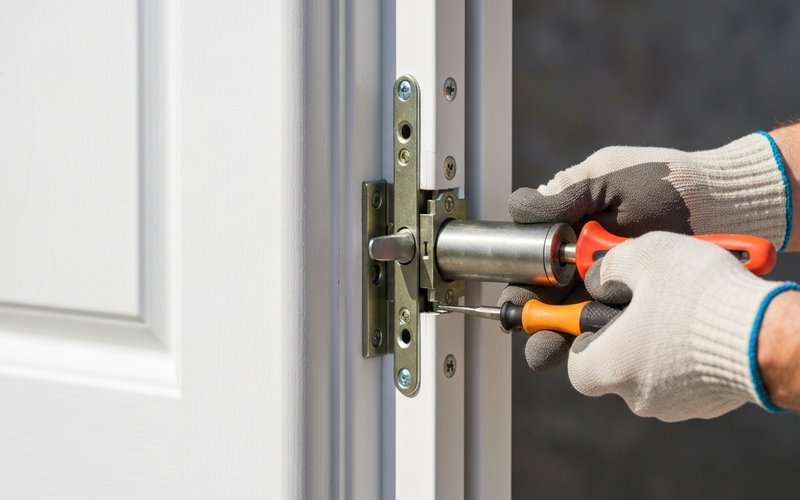
A door that won’t latch is maddening — you push it closed, it bounces back open, and eventually you just leave it ajar and pretend it’s fine. It’s also a privacy and heating issue (an unlatched door doesn’t seal, leaking conditioned air). I’ve fixed this in four different doors now, and the cause is almost always the same: the door or frame has shifted slightly, so the latch bolt no longer aligns with the strike plate. The fix is usually 15 minutes with basic tools.
Here’s how to diagnose and fix a door that won’t latch properly.
How Can I Fix a Door That Will Not Latch Properly?
Diagnose first, fix second. Close the door slowly and watch where the latch bolt meets the strike plate (the metal plate on the frame). The misalignment tells you exactly what’s wrong:
- Latch hits above or below the strike plate hole: the door has sagged or the frame has shifted vertically. Most common cause.
- Latch hits the strike plate edge but won’t enter: horizontal misalignment — the door is too far from or too close to the frame.
- Latch enters but doesn’t catch: the strike plate hole is too shallow, or the latch mechanism itself is sticky/broken.
- Door won’t stay closed even when latched: the strike plate is loose, or the door is warped.
A strip of masking tape on the strike plate with lipstick or marker on the latch bolt gives you a precise witness mark of where the bolt lands — the poor man’s diagnostic tool, and surprisingly effective.
Fix 1: Tighten the Hinges (Try This First)
Loose hinges cause most door sag. Open the door and check each hinge: grab the door and lift — if it moves, the hinges are loose. Tighten all hinge screws on both the door and frame sides. If screws spin without gripping (stripped holes), replace them with 3-inch screws that reach through the frame into the wall stud behind it — this single change fixes sagging doors permanently in most cases. The top hinge carries most of the weight, so start there.
For badly stripped holes, pack them with wood glue and toothpicks or golf tees, let dry, trim flush, and re-drive the screw. It’s an old carpenter’s trick that works remarkably well.
Fix 2: Adjust the Strike Plate
If the latch is close but not quite aligned (off by 1/8 inch or less), adjust the strike plate:
- File the strike plate hole: use a metal file to enlarge the hole in the direction the latch needs to go. Quick, easy, and invisible.
- Move the strike plate: unscrew it, chisel the mortise slightly in the needed direction (a sharp 3/4-inch chisel and light taps), reposition, and reattach. Fill old screw holes with toothpicks and glue if needed.
- Shim the strike plate: if the latch barely misses, a thin cardboard shim behind the strike plate can nudge it into alignment.
- Replace with an adjustable strike plate ($8–$12) — these have oversized holes that allow fine-tuning without chiseling.
Fix 3: Address a Sagging or Binding Door
If the door sags significantly or binds against the frame:
- Shim the hinges: remove one hinge leaf and insert a thin cardboard or commercial hinge shim behind it to change the door’s angle slightly. Shimming the bottom hinge pushes the top of the door toward the frame; shimming the top hinge does the opposite. Small adjustments make big differences.
- Plane the door edge: if the door binds (sticks) against the frame, mark the binding spot with pencil, remove the door, and plane or sand the edge slightly. Remove minimal material — you can’t put it back. Seal the planed edge with paint or polyurethane to prevent moisture swelling.
- Check for seasonal swelling: doors that stick in humid summer months but work fine in winter are swelling with moisture. A dehumidifier helps; planing is a last resort (the door will be loose in winter).
Fix 4: Fix or Replace the Latch Mechanism
Sometimes the alignment is fine but the latch itself is the problem. Remove the doorknob/lever (two screws on the interior side) and inspect: sticky latch bolts often just need cleaning and a shot of graphite lubricant or silicone spray (not WD-40, which gums up over time). If the latch spring is broken or the bolt doesn’t extend fully, replace the latch assembly ($10–$20) — it slides out after removing the knobs, no special skills needed.
While you’re at it, check the door’s bore holes — if a previous owner installed the hardware sloppily with oversized holes, the mechanism shifts and won’t align consistently. A door reinforcer plate ($10–$15) wraps the edge and stabilizes everything.
When the Frame Is the Problem
If the door frame itself has shifted (common in settling houses), you may see uneven gaps around the door — wide at the top on one side, tight at the bottom on the other. Minor settling responds to the hinge and strike adjustments above. Major frame distortion — gaps over 1/4 inch, visible racking — may need the trim removed and the frame re-shimmed and re-secured, which is a bigger job but still DIY-able with a level, shims, and finish nails. If the whole house is shifting (cracks in walls, sloping floors), consult a structural professional before adjusting doors — the door is a symptom, not the disease.
Preventing Future Problems
Don’t slam doors — it loosens hinges and shifts frames over time (teach kids this early). Tighten hinge screws annually as part of home maintenance — five minutes prevents sag. Control indoor humidity (30–50 percent) to minimize seasonal swelling and shrinking. And when painting doors, don’t paint over hinges or into the latch mechanism — paint buildup causes sticking that mimics mechanical problems.
For related door and hardware projects, our guide to essential homeowner tools covers what you’ll need, and weatherproofing for winter addresses the air leaks that unlatched doors cause.
Practical Takeaway
Diagnose the misalignment first (watch where the latch meets the strike plate), tighten hinges with 3-inch screws reaching the stud (fixes most sagging), file or reposition the strike plate for minor misalignment, shim hinges or plane edges for binding, and service or replace the latch mechanism if it’s sticky or broken. It’s a 15–30 minute fix that restores privacy, security, and energy efficiency — one of the most satisfying small repairs in homeownership. Family Handyman’s door repair tutorials show the hinge-shimming technique step by step.