The Best Gaming Headset Under $100: 2026 Top Picks
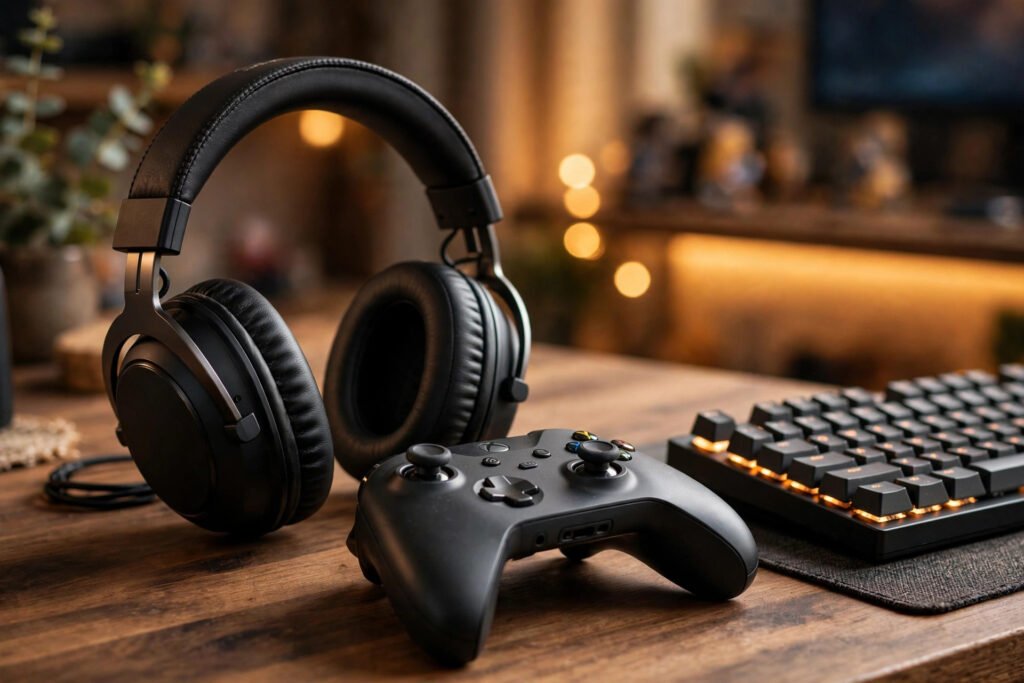
A great gaming headset under $100 is one of the best value propositions in all of tech: the difference between a $30 headset and an $80 one is enormous, while the difference between $80 and $250 is mostly subtle refinements. In 2026, the sub-$100 category is stacked with genuinely excellent options — comfortable for long sessions, with clear positional audio and microphones that won’t embarrass you on Discord. Whether you’re on PC, PlayStation, Xbox, or Switch, here’s how to choose and which models consistently earn their recommendations.
What Actually Matters in a Gaming Headset
Forget the marketing checklist and focus on the four things that determine daily satisfaction. Comfort is king — a headset that hurts after 90 minutes is worthless regardless of sound quality. Look for low clamping force, deep earcups that don’t press on your ears, breathable padding (glasses wearers: this matters doubly), and weight under 350 grams. Comfort is personal, but the models below are consensus picks for long-session wearability.
Sound quality for gaming means clear mids and highs for footsteps and dialogue, plus controlled bass — not the bloated bass that impresses in a 30-second store demo but muddies positional cues. The microphone matters more than most buyers think: your teammates hear it for hundreds of hours. Look for detachable or flip-to-mute mics with decent noise rejection. Build and connectivity: wired 3.5mm headsets work with everything and never need charging — the pragmatic choice under $100. Wireless under $100 exists but involves compromises (2.4GHz budget wireless is decent; Bluetooth adds latency that’s noticeable in competitive games).
The Best Picks Under $100 in 2026
Best overall: HyperX Cloud III (~$90)
The Cloud line has been the default recommendation for a decade because it nails the fundamentals: excellent comfort (famously glasses-friendly), clear balanced sound, and a very good detachable microphone. The Cloud III adds improved drivers and DTS spatial audio. It works wired across PC, PlayStation, Xbox, and Switch — the safe pick if you just want something great without research.
Best budget: HyperX Cloud Stinger 2 (~$50)
Nearly half the price with 80 percent of the experience: light (under 300g), comfortable, decent sound, and a surprisingly good flip-to-mute mic. The build is plasticky and the sound less refined, but at $50 it’s the price-to-performance champion — ideal for younger gamers or anyone unsure how much they’ll play.
Best sound quality: EPOS H6PRO (often ~$80 on sale)
EPOS (Sennheiser’s former gaming division) tunes for clarity over bombast — exceptional positional audio for competitive shooters and a lift-to-mute mic that’s among the best at any price. Regularly discounted from $179 to under $100, it’s the audiophile’s budget pick when on sale.
Best wireless under $100: Logitech G435 (~$70) or Razer Barracuda X (often ~$80)
The G435 is feather-light with solid 2.4GHz + Bluetooth dual connectivity — great for multi-device users, though the mic is mediocre and there’s no 3.5mm fallback. The Barracuda X adds the wired option and better mic. Both involve the standard budget-wireless trade-off: convenience over ultimate fidelity.
Best for console: Sony Pulse 3D / Microsoft Xbox Wireless Headset (often ~$80–$90 on sale)
First-party headsets integrate perfectly with their consoles (Tempest 3D audio on PS5, spatial sound on Xbox) and frequently dip under $100 on sale. If you’re exclusively console, these beat third-party options at the same price for ecosystem integration.
What to Avoid
Skip “7.1 surround” marketing on stereo headsets — it’s virtual processing, not real surround, and Windows Sonic/Dolby Atmos for Headphones (often free or cheap) do it better in software. Avoid no-name Amazon brands with thousands of suspiciously perfect reviews; the return rates tell the real story. For objective measurements, RTINGS tests headsets with lab equipment, and Wirecutter’s gaming headset picks come from hands-on testing panels. Don’t buy “pro gaming” headsets with aggressive “gamer” aesthetics tax — you’re paying for RGB, not drivers. And be wary of ultra-cheap wireless (sub-$50): the latency and connection drops will ruin competitive play.
Also, consider whether you even need a “gaming” headset: quality studio headphones (like the Audio-Technica ATH-M40x, often ~$80) plus a $20 clip-on or USB mic frequently outperform gaming headsets for sound quality — the trade-off is convenience, not having an all-in-one. For casual gaming sessions where chat matters less, this combo is excellent value.
Setup Tips That Matter More Than the Model
Whatever you buy, these free tweaks improve it: enable your platform’s spatial audio (Windows Sonic is free on PC/Xbox; Tempest 3D on PS5) — it genuinely improves positional awareness. Set your mic input level so peaks hit around -12dB (no clipping, no whisper-quiet). Use push-to-talk or a noise gate in Discord to spare teammates your keyboard and background noise. And give any new headset a week of break-in — earpads soften and conform, and what feels slightly tight on day one often becomes perfect by day seven. If you’re also building out your entertainment corner, getting the most from streaming services pairs well with a good headset for movie nights — the same audio quality upgrade applies.
Caring for Your Headset (Make It Last)
A good sub-$100 headset lasts 3–5 years with basic care — or 18 months without it. The care routine: wipe earpads monthly with a slightly damp cloth (sweat and oils degrade padding fastest), store on a stand or hook rather than tossing it on the desk (cables and headbands die from crushing), never wrap cables tightly around the headset (loose loops prevent internal wire breaks), and keep it away from direct sunlight and heat (which embrittle plastics and pads). Replaceable earpads are a longevity superpower — models with available replacement pads (HyperX, EPOS) can feel new again for $15 after two years of wear. And if the mic starts sounding bad, check the foam windscreen first — a $5 replacement often fixes “dying mic” syndrome that’s really just a saturated foam cover.
Conclusion
The best gaming headset under $100 in 2026 is the HyperX Cloud III for most buyers — comfort, sound, and mic with no real weaknesses — with the Cloud Stinger 2 as the budget king at $50 and the EPOS H6PRO as the sound-quality pick on sale. Prioritize comfort and microphone quality over spec-sheet marketing, buy wired unless you specifically need wireless, and enable spatial audio for free performance gains. At this price point, you’re getting 90 percent of the flagship experience for a third of the money — which is exactly why it’s the sweet spot.
Frequently Asked Questions
Are expensive gaming headsets worth it over $100 models?
For most gamers, no — the jump from $30 to $80 is transformative, while $80 to $250 brings refinements (slightly better drivers, premium materials, better wireless) that casual and mid-level players rarely notice. Competitive players and audiophiles may appreciate the difference; everyone else should stay in the sweet spot.
Wired or wireless gaming headset under $100?
Wired, for most buyers: zero latency, zero charging, zero connection issues, and better sound per dollar. Budget wireless is genuinely decent now (Logitech G435, Barracuda X), so choose wireless only if cable-free convenience matters more to you than maximum reliability.
Do I need 7.1 surround sound in a gaming headset?
No — all sub-$500 “surround” headsets are stereo drivers with virtual processing. Free platform spatial audio (Windows Sonic, Tempest 3D, Dolby Atmos for Headphones) applied to a good stereo headset outperforms built-in virtual surround. Spend on driver and comfort quality instead.
How important is the microphone on a gaming headset?
Very, if you play multiplayer — your teammates hear it constantly. A clear mic with good noise rejection matters more than slightly better sound drivers for team games. The HyperX and EPOS mics in the picks above are all genuinely good; sub-$40 headset mics are usually where quality collapses.