Introducing a Second Dog: The Smooth Introduction Protocol
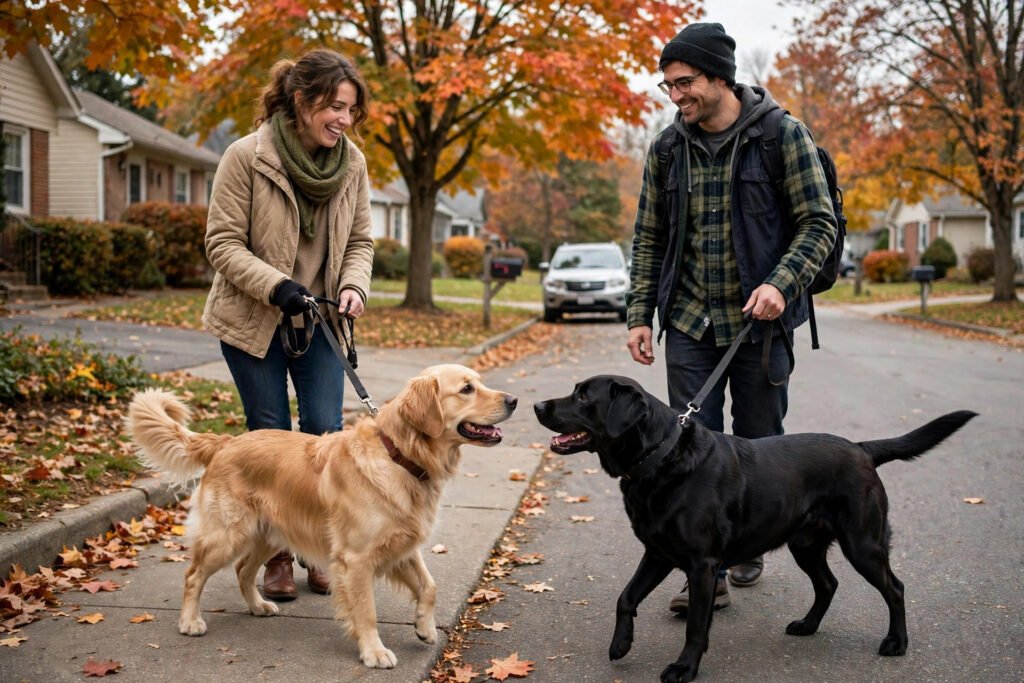
Your dog is wonderful, and you’re picturing double the joy: two dogs wrestling in the yard, cuddling together, keeping each other company. It’s a lovely vision — and it’s achievable. But adding a second dog is one of the most underestimated decisions in pet ownership. It’s not “one dog plus one dog” — it’s a new social system, and the introduction period determines whether you get companionship or conflict. Done thoughtfully, most dogs learn to love having a sibling. Rushed, and you’re managing resource guarding, jealousy, and fights for months. Here’s the protocol for a smooth second-dog introduction.
Before You Commit: The Honest Assessment
First, evaluate your current dog with clear eyes. Is she genuinely social with other dogs — relaxed, playful, appropriate — or merely tolerant? A dog that merely tolerates other dogs may not want a live-in companion. How’s her training? Problem behaviors (jumping, pulling, anxiety) don’t improve with a second dog; they get a rehearsal partner. Is she over 1–2 years old with basic manners solid? Adding a puppy to an untrained adolescent dog is how people end up with two untrained dogs.
Then the practical math: double the food, double the vet bills ($800–$1,600/year for two), double the boarding costs, training time that multiplies (each dog needs individual training plus joint training). And consider the match: opposite sexes pair most easily statistically; similar ages and energy levels work best; two high-drive adolescents is expert mode. A calm, well-socialized adult is the ideal second dog for most homes. This is choosing the right pet at its most consequential — the second dog must fit not just your lifestyle but your first dog’s temperament.
The First Meeting: Neutral Territory
Never introduce the dogs inside your home — that’s the resident dog’s territory, and territorial behavior is at its peak there. The gold-standard first meeting:
Parallel walk. Meet on neutral ground (a quiet street or park). Each dog with a separate handler, starting at a distance where both are calm. Walk in the same direction, gradually decreasing distance as both stay relaxed. Let them notice each other without forced interaction — parallel movement is naturally calming for dogs and lets them gather information without confrontation.
Brief greeting, then move on. When both are loose and relaxed, allow a short 3-second sniff greeting, then cheerfully move apart. Short and positive beats long and tense. Repeat a few times if it’s going well.
Watch the body language. Good signs: loose wiggly bodies, play bows, relaxed faces, voluntary disengagement. Warning signs: stiff freezing, hard staring, raised hackles with a high stiff tail, lip curling. If warnings appear, increase distance and end on a calm note — there’s no deadline.
If the first meeting goes badly, don’t panic and don’t force a second attempt the same day. Bad first impressions can be overcome with slower protocols — but they can’t be overcome by pushing through.
The First Two Weeks: The Decompression Protocol
Bring the new dog home to a managed environment, not free rein:
Separate resources, always. Separate feeding areas (in different rooms initially), separate water bowls, separate beds, separate toys. Resource guarding between new housemates is the number one flashpoint — and it’s preventable. Feed the resident dog first, in her usual spot; the newcomer eats elsewhere. Pick up high-value items (bones, favorite toys) when dogs are together unsupervised.
Supervised together time, separate alone time. Dogs together when you’re actively supervising; separated (different rooms, crates, or pens) when you’re not. This isn’t forever — it’s the first 2–4 weeks while the relationship forms. Most serious fights between new housemates happen in the first month, unsupervised, over resources.
Maintain the resident dog’s routine. Same walk times, same feeding spot, same privileges. The fastest way to create jealousy is letting the newcomer disrupt the resident’s world. Greet and attend to the resident dog first — hierarchy of attention reassures her that her position is secure.
Individual time for each dog. Walk them separately sometimes. Train them separately. Each dog needs one-on-one relationship with you — the new dog to bond, the resident to feel secure. Joint activities build the pack bond; individual time protects the personal bonds.
Building the Relationship: Weeks 3–8
As both dogs relax, gradually increase together time: parallel walks (the relationship accelerator — shared positive experiences build affiliation), then supervised yard time, then indoor coexistence. Introduce shared activities both enjoy. Continue separate feeding indefinitely — many multi-dog households feed separately for life, and it’s simply good management, not a sign of failure.
Expect an adjustment curve, not a straight line: the “honeymoon period” (first 1–2 weeks of cautious politeness) often gives way to boundary-testing as the new dog gets comfortable. Mild squabbles over space or toys are normal communication — intervene only if it escalates beyond ritualized posturing (stiff bodies, hard stares that don’t resolve) into genuine aggression. The American Kennel Club multi-dog resources emphasize that most pairs sort out a comfortable relationship within 2–3 months given proper management. The ASPCA’s multi-dog household guide adds practical detail on feeding and space management.
Troubleshooting: When It’s Not Going Smoothly
Resource guarding between dogs: increase separation around resources, never punish the guarder (punishment escalates guarding), and consult a professional if it intensifies. Management — separate feeding, picked-up valuables — resolves most cases.
Jealousy and attention-seeking: usually the resident dog acting out. Increase her individual attention and exercise; ensure the newcomer isn’t monopolizing you. It fades as security rebuilds.
Play that’s too rough: intervene with cheerful interruptions, enforce rest breaks, and separate if one dog is always the “victim.” Size and age mismatches need more supervision, not less.
Genuine fighting: if fights draw blood, involve sustained attacks rather than noisy posturing, or are increasing in frequency — stop trying to manage it alone. A certified professional or veterinary behaviorist assessment is essential. Some pairings are genuinely incompatible, and recognizing that early is kinder than months of management failure.
Through it all, the unglamorous foundation holds everything up — keeping a clean house with pets doubles in importance with two dogs, and the households that manage the logistics calmly are the ones where the dogs relax fastest.
Conclusion
A smooth second-dog introduction follows a clear arc: honest assessment of fit before committing, neutral-territory first meeting with parallel walking, 2–4 weeks of managed coexistence with separated resources, then gradual relationship building through shared positive experiences. Most well-matched pairs are comfortable housemates within two to three months. The vision of two dogs wrestling happily in the yard is real — it just arrives via patience and protocol, not on day one.
Frequently Asked Questions
How long does it take for two dogs to get used to each other?
Most pairs reach comfortable coexistence in 2-3 months with proper management. The first 2-4 weeks need the most supervision; expect a boundary-testing phase after the initial honeymoon.
Should I get a male or female second dog?
Opposite-sex pairings statistically have the fewest conflicts. Same-sex pairs can work beautifully but carry higher risk of rivalry, especially two females or two intact males.
Where should two dogs first meet?
On neutral territory — never inside the home. A parallel walk in a quiet area, starting at a distance and allowing brief greetings only when both dogs are relaxed, is the gold standard.
Should dogs share food bowls?
No — feed new housemates separately, ideally in different rooms, at least for the first months. Many multi-dog households feed separately permanently; it’s simple, effective management.
My dogs fought — is the pairing doomed?
Not necessarily. One mild scuffle during adjustment is common. But fights that draw blood, escalate in frequency, or involve sustained attacks need professional assessment promptly.