How to Track Fitness Progress Without Obsessing Over the Scale
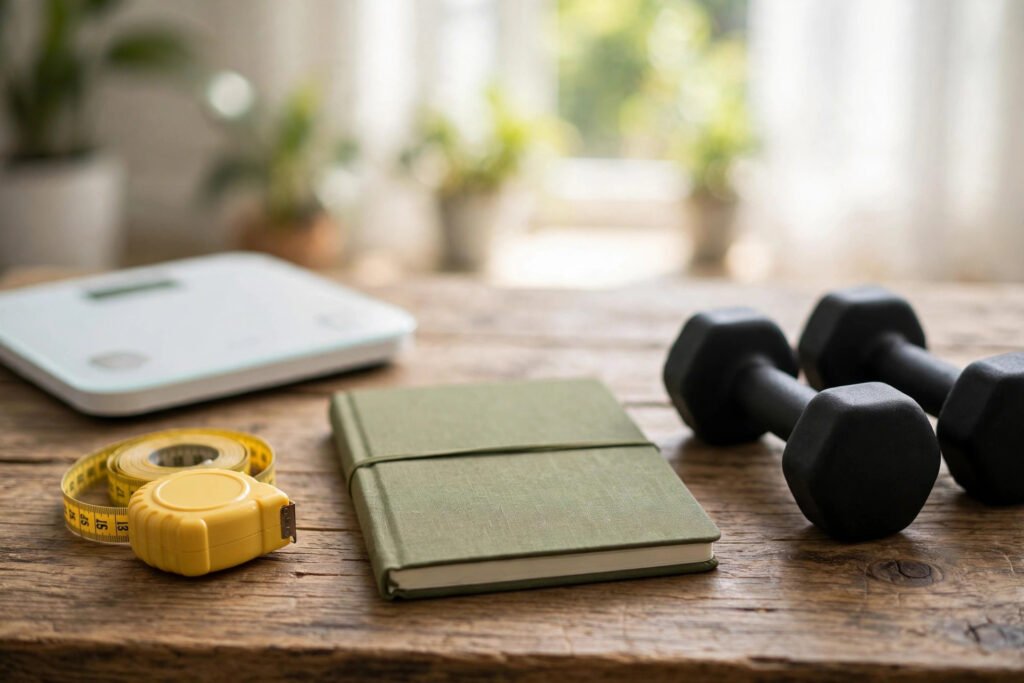
The scale is the worst fitness coach ever invented: it can’t distinguish fat from muscle, it fluctuates with water and hormones, and it reduces weeks of effort to a single number that lies to you on any given morning. Yet millions of people let that number dictate their mood, their motivation, and whether they keep going. There’s a better way to track fitness progress — one built on measurements that actually reflect what’s changing in your body and your capabilities.
This guide gives you a complete scale-free tracking system: why the scale misleads, the measurements that matter more, how to track each one simply, how often to check, and how to read the trends without obsessing.
Why the Scale Lies (the Physiology)
Your body weight can swing 2–5 pounds within a single day from water alone — glycogen storage (each gram of glycogen holds ~3 grams of water), sodium intake, hormonal cycles, inflammation from workouts, even the weather. None of that is fat gain or loss. Meanwhile, the changes you actually want — fat loss plus muscle gain — can cancel out on the scale entirely: the classic beginner who loses 5 pounds of fat and gains 5 pounds of muscle sees a scale that hasn’t moved and concludes nothing happened. Everything happened; the instrument was wrong.
The psychological damage is worse than the measurement error. Daily weigh-ins correlate with disordered eating patterns, exercise avoidance after “bad” numbers, and abandonment of programs that were working — because the scale can’t see the work. Sustainable motivation requires feedback that reflects reality, and the scale’s reality is mostly water.
The Measurements That Actually Matter
Performance metrics: what your body can do
The most motivating tracker of all: capability. Log your workouts simply — weights lifted, reps, distances, times — and watch the numbers climb. A deadlift that goes from 95 to 135 pounds, a mile time dropping from 12 minutes to 10, push-ups from 5 to 20: these are unambiguous, undeniable progress. Performance doesn’t lie, doesn’t fluctuate with water, and directly measures what fitness is for. Keep a basic training log (notebook or app); reviewing three months of entries is the single most motivating experience in fitness.
Body measurements: the tape measure
Waist, hips, chest, arms, thighs — measured monthly with a soft tape, same conditions each time. The tape catches recomposition the scale misses: waist shrinking while weight holds steady means fat loss plus muscle gain — the ideal outcome, invisible to the scale. Waist circumference specifically is also a health metric the CDC flags: it correlates with metabolic risk more usefully than BMI for many people.
Photos: the honest mirror
Monthly progress photos — same lighting, same poses, same clothing — reveal changes too gradual for the mirror’s daily view. Most people are shocked comparing month-one to month-four photos after the scale “showed nothing.” Keep them private, consistent, and judgment-free: they’re data, not a beauty contest.
How clothes fit: the daily sensor
The pair of jeans test — how a specific garment fits over time — is a beautifully simple tracker that needs no equipment or appointments. Clothes don’t fluctuate with water weight; they report body composition changes honestly.
Subjective vitals: energy, sleep, mood
Rate weekly (1–10): energy levels, sleep quality, mood, stress. Fitness improvements show up here before anywhere else — better sleep, steadier energy, improved mood are the point of the enterprise, and tracking them keeps the purpose visible when aesthetics stall. When you exercise affects these vitals too, so note timing alongside the scores.
Building Your Tracking System (Keep It Minimal)
The system that survives is the system that’s easy. Pick three trackers maximum: one performance metric (your training log), one body metric (tape measurements or photos monthly), and one subjective metric (weekly energy/mood check). That’s it. More trackers don’t yield more insight — they yield more opportunities to obsess.
Set the cadence deliberately: workouts logged each session (30 seconds), subjective vitals weekly (Sunday evening, two minutes), body measurements monthly (first of the month, five minutes), photos monthly (same day as measurements). Never track daily except workouts — daily body measurements just reintroduce the scale’s noise problem through a different instrument. Include mobility and pain markers if you’re training around issues — “back pain 6/10 to 2/10” is progress the scale will never show.
Reading Trends Without Obsessing
The rules that keep tracking healthy: trends over points — a single measurement means nothing; three months of direction means everything. Zoom out on bad weeks — one bad weigh-in or weak workout is noise; the monthly trend is the signal. Correlate, don’t catastrophize — energy dip plus poor sleep plus hard training week explains itself; adjust recovery, don’t abandon the program.
Schedule “data fasts” — one week per quarter with no tracking at all, training by feel. This breaks the compulsive loop before it forms and reminds you that the tracking serves the fitness, not the reverse. If you can’t skip a week without anxiety, the tracking has become the problem — scale it back.
Celebrate non-scale victories explicitly: the flight of stairs that doesn’t wind you, the heavy bag carried easily, the doctor’s improved bloodwork, the energy to play with your kids. Write them down. These are the actual returns on your fitness investment — the scale was never the portfolio.
When to Use the Scale (Sparingly, Strategically)
The scale isn’t evil — it’s just a limited tool. Legitimate uses: weekly (not daily) weigh-ins as one data point among many, primarily for those with significant weight to lose where the trend is unmistakable; or for athletes managing weight classes. If you use it: same time, same conditions, weekly maximum, and always interpreted alongside your other three trackers. The moment the number affects your mood or behavior for the day, it’s demoted from tool to tyrant — put it away for a month.
The American College of Sports Medicine offers resources on setting and monitoring fitness goals beyond body weight.
Conclusion
Tracking fitness progress without obsessing over the scale means building a three-tracker system — performance (training log), body (tape/photos monthly), and subjective vitals (weekly energy and mood) — checking on a deliberate cadence, reading trends instead of data points, scheduling tracking fasts, and celebrating the non-scale victories that are the actual point. The scale measures your gravitational relationship with Earth at 7 a.m. Your fitness is everything else. Track that.
Frequently Asked Questions
How often should I take progress photos?
Monthly — same lighting, poses, clothing, and time of day. More frequent photos just capture noise; monthly intervals reveal the gradual changes that daily mirrors miss. Keep them private and consistent.
What’s the best single fitness progress metric?
Performance — what your body can do. Strength numbers, times, distances, and reps are objective, motivating, and directly measure fitness. If you track only one thing, track your training.
Why isn’t my weight changing if I’m working out?
Most commonly: body recomposition (losing fat while gaining muscle — the scale nets to zero while your body transforms), water fluctuations masking fat loss, or the timeline being too short. Check the tape measure and photos before concluding nothing is happening.
Should I throw away my scale?
Not necessarily — but demote it. Weekly maximum, one data point among several, and put it away entirely if the number affects your mood or eating that day. Many people do better with the scale in a closet than on the bathroom floor.
How long before I see measurable progress?
Performance improvements: 2–4 weeks. Visible body changes: 8–12 weeks. Significant transformation: 6+ months. The people who quit at week six were one month from seeing it — which is why trend-tracking beats daily judgment.