
What Are the Limitations of AI That People Should Know About
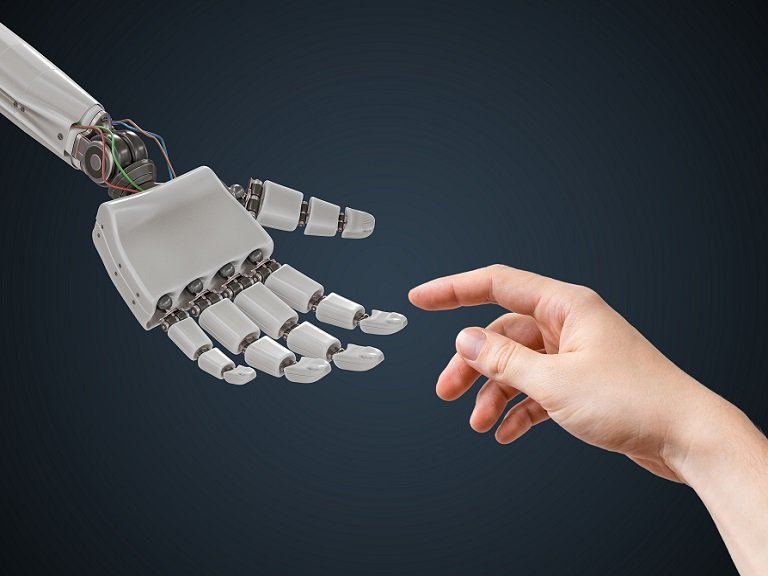
AI systems are incredibly capable and confidently wrong with alarming frequency. They invent citations, fabricate statistics, and state falsehoods with total assurance. If you rely on AI for anything important — work, health, money, school — you need to know what are the limitations of AI that people should know about. This is the essential user’s manual for AI’s blind spots.
Understanding limitations does not diminish AI’s value. It is what separates people who use AI well from people who get burned by it.
What Are the Limitations of AI That People Should Know About? The Big Ones
1. Hallucination: Confident Fabrication
The number one limitation. AI models generate plausible-sounding text, not verified facts. They invent: academic citations that do not exist, historical events that never happened, statistics with no source, quotes nobody said, and even fake legal cases (which has gotten lawyers sanctioned). The danger is the confidence — AI does not hedge when it is wrong; it doubles down eloquently. Rule: never trust an AI-provided fact you have not verified independently.
2. Knowledge Cutoffs and Staleness
AI models have training cutoffs — they do not know what happened after their last training update unless they have live web access. Even with web access, they may retrieve outdated information. For anything time-sensitive (prices, laws, medical guidelines, current events), verify with current sources.
3. No Real Understanding
AI processes patterns in language; it does not understand meaning the way humans do. This shows up as: failing at simple logic puzzles while acing complex essays, giving different answers to rephrased identical questions, and confidently reasoning from false premises. Impressive language fluency is not the same as comprehension.
4. Bias in, Bias Out
AI reflects biases in its training data — cultural, gender, racial, and ideological. This affects hiring advice, content moderation, image generation, and countless subtle outputs. The bias is often invisible because the output sounds neutral and authoritative.
5. No Accountability
When AI is wrong, nobody is responsible — not really. The user who acted on bad AI advice bears the consequences. This matters enormously for medical, legal, and financial decisions: the AI cannot be sued, fired, or held accountable. You can.
Domain-Specific Limitations
- Math and logic: better than they used to be, still unreliable for multi-step reasoning — always verify calculations
- Current events: without browsing, AI knows nothing recent; with browsing, it may misread or misattribute
- Specialized expertise: AI sounds expert on everything, which means it sounds expert on things it understands shallowly — medicine, law, and engineering need real professionals
- Emotional intelligence: AI simulates empathy convincingly but feels nothing; for genuinely sensitive situations, this matters
- Physical world: AI has no body, no senses, no lived experience — its “knowledge” of the physical world is entirely secondhand
How to Work Safely Within the Limitations
- Verify facts independently: especially names, dates, numbers, and citations — my guide on checking if AI gave you wrong information is the practical companion to this article
- Use AI for drafting, not deciding: great for starting, structuring, and brainstorming; dangerous for final answers on high-stakes questions
- Cross-check with authoritative sources: for health, Mayo Clinic; for law, actual statutes; for news, established outlets
- Ask for sources: “cite your sources” improves accuracy somewhat — then actually check them
- Be extra skeptical of flattery: AI tends to agree with users; “you’re right” from an AI means nothing
- Keep humans in the loop: for anything affecting health, money, legal status, or safety, AI advises and humans decide
The Meta-Limitation: Over-Trust
The most dangerous limitation is not in the AI — it is in us. Research consistently shows that people over-trust AI output, especially when it is well-written and delivered instantly. The eloquence creates an illusion of authority. Cultivating what researchers call “appropriate skepticism” — trusting AI for what it is good at while verifying what matters — is the essential AI literacy skill.
This connects to teaching the next generation well: my guide on teaching kids to use AI responsibly covers how to instill these habits early.
Famous AI Failures and What They Teach
Abstract warnings are forgettable; real failures stick. These are instructive:
- The lawyers and the fake cases (2023): attorneys submitted a legal brief citing six cases that did not exist — invented by ChatGPT. The lawyers were sanctioned. Lesson: AI fabricates authoritative-sounding specifics; professional verification is non-negotiable in high-stakes domains.
- The chatbot that sold a car for $1 (2024): a dealership’s AI chatbot agreed to sell a vehicle for $1 when a customer got it to “agree” in conversation. Lesson: AI systems need guardrails and human oversight for anything involving commitments, prices, or policies.
- AI-generated mushroom foraging guide dangers: AI-generated foraging books with potentially lethal misidentifications appeared on marketplaces. Lesson: in safety-critical domains (food, medicine, law), AI errors can be literally fatal — expert verification is not optional.
- The deepfake CFO wire fraud (2024): criminals used AI-generated video of a company’s CFO in a video call to authorize a $25M transfer. Lesson: “seeing is believing” is dead; verification procedures must assume media can be faked.
- Biased hiring and lending tools: multiple AI systems were found to discriminate against protected groups, learning bias from historical data. Lesson: AI scales whatever patterns exist in training data — including injustice. Auditing for bias is essential, not optional.
Each failure teaches the same meta-lesson: AI’s capabilities are real, and so are its failure modes. The organizations and individuals who thrive are those who design for the failures — verification workflows, human oversight, guardrails — rather than assuming the capabilities come without risks.
Key Takeaways
AI hallucinates confidently, knows nothing past its cutoff, inherits human biases, and bears no accountability. Learn the limitations and the capabilities become genuinely transformative — ignore them and you will get burned.
- Hallucination is the #1 risk: AI invents citations, statistics, and events with total assurance. Never trust an AI fact you have not verified.
- Real failures teach the lesson: sanctioned lawyers with fake cases, chatbots selling cars for $1, lethal foraging guides — design for failure modes.
- The most dangerous limitation is in us: over-trust. Eloquent, instant output creates an illusion of authority — cultivate appropriate skepticism.
- Use AI for drafting, brainstorming, and structuring; keep humans deciding on health, money, legal, and safety matters.
The Bottom Line
AI hallucinates confidently, knows nothing after its cutoff, understands nothing truly, inherits human biases, and bears no accountability. None of this makes it useless — it makes it a powerful assistant that requires supervision. The people who thrive with AI are not the ones who trust it most; they are the ones who verify best. Learn the limitations, and the capabilities become genuinely transformative.






