How to Crate Train a Puppy Fast: The 14-Day Protocol That Works
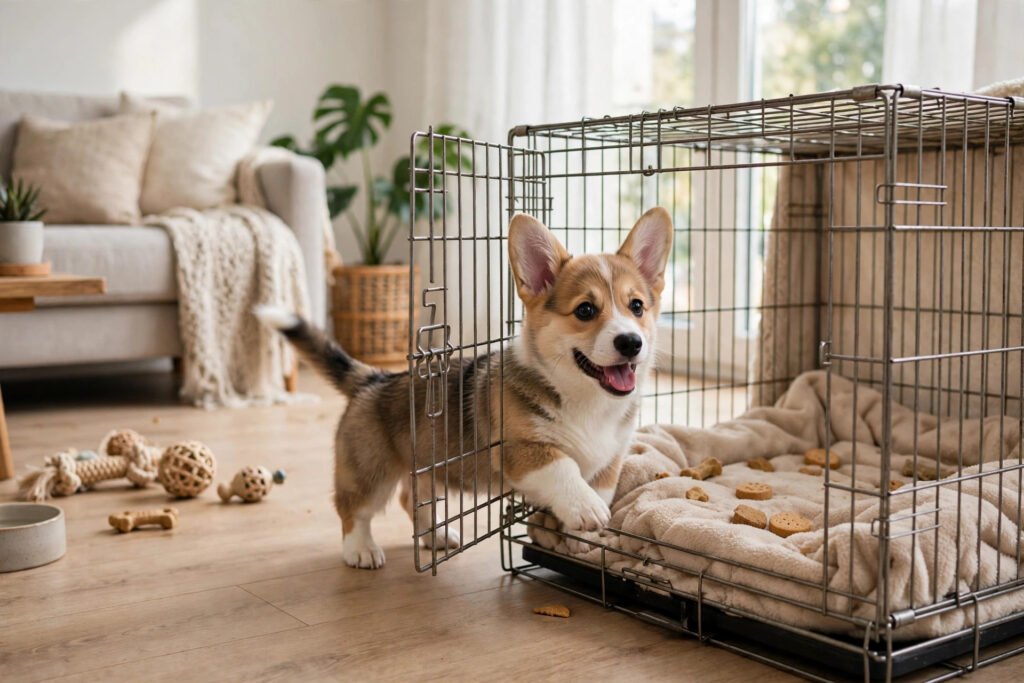
You bring the puppy home Friday, and by Sunday night you’re questioning everything — the whining, the accidents, the 2 a.m. wake-ups. Every experienced owner will tell you the same thing: crate training changes everything. A properly crate-trained puppy housetrains faster, sleeps through the night sooner, travels safely, and recovers from vet procedures calmly. But “properly” is doing a lot of work in that sentence — crate training done wrong creates a puppy that panics in confinement and screams for hours. Here’s the fast-track protocol that builds genuine love for the crate, usually within one to two weeks.
Why the Crate Works (When Done Right)
The crate leverages two powerful instincts: dogs are den animals that find security in enclosed spaces, and they instinctively avoid soiling their sleeping area. A correctly introduced crate becomes the puppy’s bedroom — a safe, cozy den she chooses voluntarily. It also gives you the management tool that makes everything else possible: unsupervised moments without accidents or destruction, safe car travel, and a calm recovery space after spay/neuter surgery.
The critical distinction: the crate must never be punishment. A crate used for “time-outs” after misbehavior becomes a place of anxiety, and an anxious puppy doesn’t housetrain — she panics. The crate is the bedroom, always positive, always voluntary.
Setting Up the Crate Correctly
Size: just big enough to stand, turn around, and lie down. Too big and the puppy potties in one corner and sleeps in the other — use the divider panel that comes with wire crates to size it to the puppy, expanding as she grows. For a Golden puppy, that means starting surprisingly small.
Type: wire crates offer ventilation and visibility and fold flat; plastic airline crates feel more den-like and suit anxious puppies. Either works — match it to your puppy’s temperament.
Location: where the family spends time, not isolated in the laundry room. Puppies are social sleepers; a crate in a lonely corner teaches the puppy that the crate means abandonment. At night, the crate belongs in your bedroom — you’ll hear the whine that means “I need to potty” versus the whine that means “I’m testing boundaries.”
Comfort: soft bedding, a safe chew toy, and a worn t-shirt that smells like you. Cover wire crates partially with a blanket to increase the den feel — leaving the front ventilated. A Snuggle Puppy (the plush with heartbeat and heat pack) genuinely helps many young puppies settle; it’s one of the few puppy products with near-universal owner endorsement.
The Fast-Track Protocol: Days 1–14
Days 1–3: The crate is a treat dispenser
Leave the door open (or removed). Toss high-value treats into the crate all day — the puppy discovers wonderful things happen in there without any pressure. Feed all meals in the crate, door open. Play crate games: toss a treat in, let her walk in and out freely. Goal: the puppy chooses to enter voluntarily, tail wagging. Never push or lure-and-shut on day one.
Days 3–5: Door closed for seconds
Once she’s entering happily, close the door for 5–10 seconds while she eats, then open before she fusses. Gradually extend: 30 seconds, a minute, five minutes — always opening before distress, always paired with good things (a frozen Kong works beautifully here). Practice while you’re visible, then briefly out of sight.
Days 5–10: Building duration
Start crating for naps — puppies need 18–20 hours of sleep, and the crate becomes the nap cue. Crate for 30 minutes while you’re home, then an hour, then through a TV episode. Always potty first, always exercise first — a tired puppy with an empty bladder settles; a wired puppy with a full bladder screams. That’s not a training failure; it’s physics.
Days 10–14: Nights and departures
Nighttime crating in your bedroom: last potty break as late as possible, crate, lights out. Young puppies (8–10 weeks) need a middle-of-the-night potty break — set an alarm rather than waiting for desperate screaming. Practice short alone departures: crate, leave for 5 minutes, return calmly. Build to 30 minutes, an hour. Keep arrivals and departures boring — no emotional fanfares.
The American Kennel Club crate training resources follow this same graduated structure — the speed comes from the puppy’s comfort, not from rushing the steps. The ASPCA’s crate training basics add helpful detail on sizing and bedding choices.
Troubleshooting the Common Problems
Whining and barking
Distinguish needs from protests. A puppy that was just pottied, exercised, and fed, whining 10 minutes into crating, is protesting — wait for a pause (even two seconds of quiet), then reward the quiet with calm release or a treat through the bars. Never release during active screaming; that teaches screaming opens doors. But a puppy whining urgently after two hours probably needs the bathroom — answer it, potty quickly and boringly, right back in.
Soiling the crate
Almost always means the crate is too big, the puppy was left too long, or she’s too young to hold it. Shrink the space, shorten the duration, and increase potty frequency. Clean with enzymatic cleaner — lingering odor invites repeats. Medical rule-out if it’s sudden in a previously clean puppy.
Escaping or injuring herself
A puppy that frantically claws, bends wire, or injures herself isn’t “untrained” — she’s panicking, possibly true separation anxiety. Back up to much shorter durations, consider whether the crate is right for this puppy (some dogs do better in a puppy-proofed pen), and consult a professional if panic is severe. A crate should never be a site of genuine distress.
And remember the household context — puppy-proofing your home follows the same safety logic as childproofing: the crate handles confinement, but the rest of the house needs to be safe for supervised exploration too. A well-managed environment plus crate training equals a clean house with pets even during the chaotic puppy months.
How Long Until She’s Reliable?
Most puppies love the crate within 1–2 weeks of this protocol and are reliably housetrained by 4–6 months. But “crate trained” isn’t a finish line — keep the crate available as her den indefinitely (door open once trustworthy), maintain the positive association with occasional crate treats, and never use it as punishment, ever. The payoff compounds: a dog that loves her crate is a dog that travels calmly, vets easily, and recovers from surgery without drama for the rest of her life.
Conclusion
Fast crate training isn’t about speed — it’s about building the right association quickly through hundreds of positive repetitions: treats rain in the crate, meals happen there, naps happen there, and the door only closes when the puppy is already happy inside. Follow the graduated protocol, never use the crate as punishment, and size it right. In two weeks you’ll have a puppy that runs to her crate voluntarily — and you’ll wonder how anyone raises a puppy without one.
Frequently Asked Questions
How long does crate training take?
Most puppies accept the crate happily within 1-2 weeks using a graduated protocol. Full housetraining reliability typically follows by 4-6 months of age.
Should the puppy sleep in the crate at night?
Yes — in your bedroom. Nighttime crating accelerates housetraining and lets you distinguish potty whines from protest whines. Young puppies need a middle-of-the-night potty break.
Is it cruel to crate a puppy?
No, when done correctly — the crate becomes a beloved den, not a cage. It becomes cruel only when used as punishment, oversized, or for excessive durations without breaks.
How long can a puppy stay in the crate?
General guideline: one hour per month of age, up to about 4 hours for young puppies during the day (longer at night when sleeping). An 8-week-old puppy needs out every 2 hours.
My puppy screams in the crate — what do I do?
First rule out needs (potty, hunger, overtiredness). For protest crying, wait for a pause before releasing, build duration more gradually, and ensure the crate association is positive. Panic-level distress needs a protocol reset or professional help.