Dog Destroys Everything When Alone? Causes and Proven Fixes
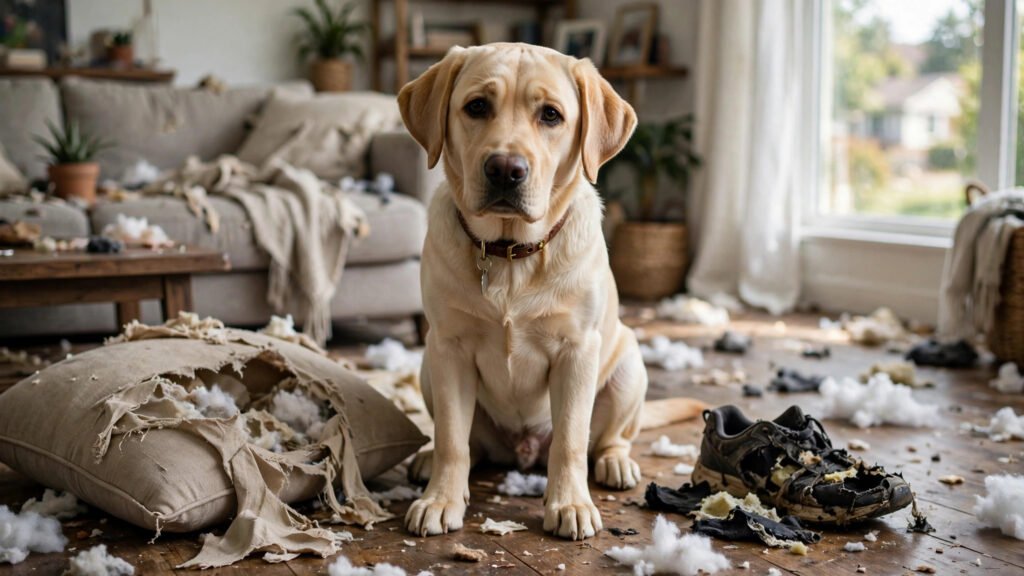
You come home to a crime scene: the couch cushion disemboweled, a shoe collection reduced to modern art, the drywall sporting new ventilation. Your dog is the sweetest creature alive when you’re home — but alone, she’s a demolition crew. Destructive chewing when left alone is one of the most common and most misunderstood dog behavior problems in America. Owners tend to read it as spite (“she’s punishing me for leaving”) or stupidity. It’s neither. It’s communication — and once you decode what kind, the fix becomes clear.
The Three Causes (and How to Tell Them Apart)
Cause 1: Boredom and under-stimulation
The most common cause by far. The dog isn’t anxious — she’s understimulated and entertaining herself with your belongings. The ASPCA’s guide to destructive chewing and the AKC’s enrichment recommendations both identify under-exercise as the leading driver. Clues: destruction is casual and exploratory (chewing various items, not frantic), the dog is otherwise confident, it happens after long alone periods, and high-energy breeds or young dogs are overrepresented. The “crime scene” looks like play, not panic — items carried around, chewed recreationally.
The fix is straightforward: this dog needs a life, not a lecture. Morning exercise before departure (a tired dog sleeps; a fresh dog destroys), food puzzles and frozen Kongs that take 30+ minutes, rotated novel toys, and possibly doggy daycare for the highest-energy cases. A dog with a fulfilled day doesn’t remodel your kitchen.
Cause 2: Separation anxiety
Less common but more serious. The destruction is frantic and focused on escape: doorframes scratched, window sills chewed, crates bent or broken — all near exit points. It starts within minutes of departure (a pet camera reveals the timeline), and comes with drooling, house soiling in a housetrained dog, self-injury, and distress vocalization. The dog isn’t having fun; she’s panicking.
This needs a different protocol entirely: systematic desensitization to departures (practicing tiny absences and building up), never punishment (punishing panic is cruelty that worsens it), and often veterinary-prescribed anti-anxiety medication to lower the panic enough for learning. True separation anxiety cases benefit from a veterinary behaviorist — it’s a disorder, not a training gap.
Cause 3: Puppy teething and exploration
Puppies chew because they’re puppies — teething discomfort plus a developmental need to explore with the mouth. The fix is management (puppy-proofing, confinement to a safe area) plus abundant appropriate chews, not discipline. This resolves with maturity and training.
Immediate Management: Stop the Bleeding
While you address the root cause, prevent rehearsal — every successful destruction is practice:
Confinement done right. A dog-proofed room or exercise pen with water, bedding, and safe chews. Not the crate all day (excessive crating creates its own problems), but a managed space where the wrong choices aren’t available. Puppy-proof thoroughly — home safety proofing principles apply directly: if the dog can reach it, the dog will chew it.
Bitter deterrent sprays on furniture legs and baseboards — modest effectiveness, worth trying as one layer.
Exercise before departure — worth repeating because it’s the highest-leverage intervention for boredom chewing. Twenty to thirty minutes of real exercise transforms the alone period from “eight hours of opportunity” to “a long nap.” Owners who work from home even part-time often find the chewing problem evaporates — the dog’s needs are met through the day’s natural rhythm.
The Enrichment Arsenal
A dog alone for hours needs a job. Build a rotation:
Food puzzles: frozen stuffed Kongs (peanut butter + kibble + banana, frozen overnight — 30–45 minutes of work), snuffle mats, lick mats with yogurt, treat-dispensing balls. Prepare a week’s worth on Sunday.
Appropriate chews: bully sticks, yak cheese chews, rubber toys — matched to the dog’s chew strength and always safety-checked (no cooked bones, no toys that splinter). Rotate to maintain novelty — the same Kong every day becomes furniture.
Environmental enrichment: a window perch for watching the world, calming music or talk radio, a recently worn t-shirt for comfort scent. For social dogs, midday dog-walker visits break the day into manageable halves.
Puppy-Proofing Room by Room
For chewing puppies and determined adults, management means a genuinely proofed environment. Living room: shoes in closets (the number one casualty), remote controls and chargers out of reach, throw pillows stored during the training phase, bitter spray on furniture legs. Kitchen: trash in a locking can (chicken bones are an emergency vet visit), food never left on low counters, cabinet child-locks for the determined. Bedroom: laundry hampers with lids (socks are the most commonly swallowed foreign object), nightstand items cleared. Bathroom: door kept closed — medications, razors, and cleaning products live here.
The principle: every successful chew is practice, so the environment must make the right choice (approved chews, scattered around like easter eggs) easy and the wrong choice impossible. This isn’t permanent — most dogs earn full house freedom gradually between 1 and 2 years old as training solidifies. But rushing freedom is how the couch dies. Proof thoroughly, supervise actively, confine kindly when you can’t supervise, and expand territory as reliability grows. The dogs with the most freedom as adults are the ones whose owners were strictest about management as juveniles.
What NOT to Do
Never punish after the fact — the dog cannot connect your anger at 6 p.m. with the cushion destroyed at 11 a.m. Rubbing her nose in it, scolding, or “showing her what she did” only teaches her to fear your arrivals, which worsens anxiety-driven destruction. Don’t get a second dog to “keep her company” — you may just get two destructive dogs. And don’t assume she’ll outgrow it without intervention: rehearsed behavior strengthens with repetition, and the adult dog that learned to self-entertain on furniture keeps doing it.
The aftermath matters too — living with a chewer means keeping a clean, pet-managed house through the training period: valuables out of reach, trash secured, and the environment set up so the right choices are easy and the wrong ones impossible.
Conclusion
Destructive chewing when left alone is a symptom with a specific cause — usually boredom, sometimes genuine separation anxiety, sometimes just puppyhood. Diagnose correctly (a pet camera is the best $50 you’ll spend), then treat the cause: exercise and enrichment for the bored dog, desensitization and professional help for the anxious one, management and patience for the puppy. Punishing the aftermath fixes nothing. Meet the need behind the chewing, and the demolition crew retires — usually within weeks.
Frequently Asked Questions
Why does my dog only destroy things when I’m gone?
Because the alone period is when unmet needs surface — boredom, anxiety, or puppy energy with no outlet. The behavior is specific to the context, which actually makes diagnosis easier.
Is my dog chewing out of spite?
No — dogs don’t do spite. Destruction when alone is boredom, anxiety, or exploration. Interpreting it as revenge leads to punishment, which never fixes the actual cause.
How do I know if it’s separation anxiety or boredom?
Separation anxiety destruction is frantic, focused on exits, starts within minutes of departure, and comes with drooling, vocalization, or self-injury. Boredom destruction is casual, exploratory, and scattered. A pet camera settles it.
Will getting another dog stop the chewing?
Probably not — and it often doubles the problem. A second dog doesn’t fix boredom or anxiety; it adds another animal with its own needs. Fix the first dog’s issue directly.
What are the best toys for a destructive chewer?
Frozen stuffed Kongs, puzzle feeders, and durable rubber toys matched to chew strength, rotated for novelty. Avoid anything that splinters or can be ingested in chunks — supervise new toys first.