
How Does Hair Laser Treatment Work? The Science Explained
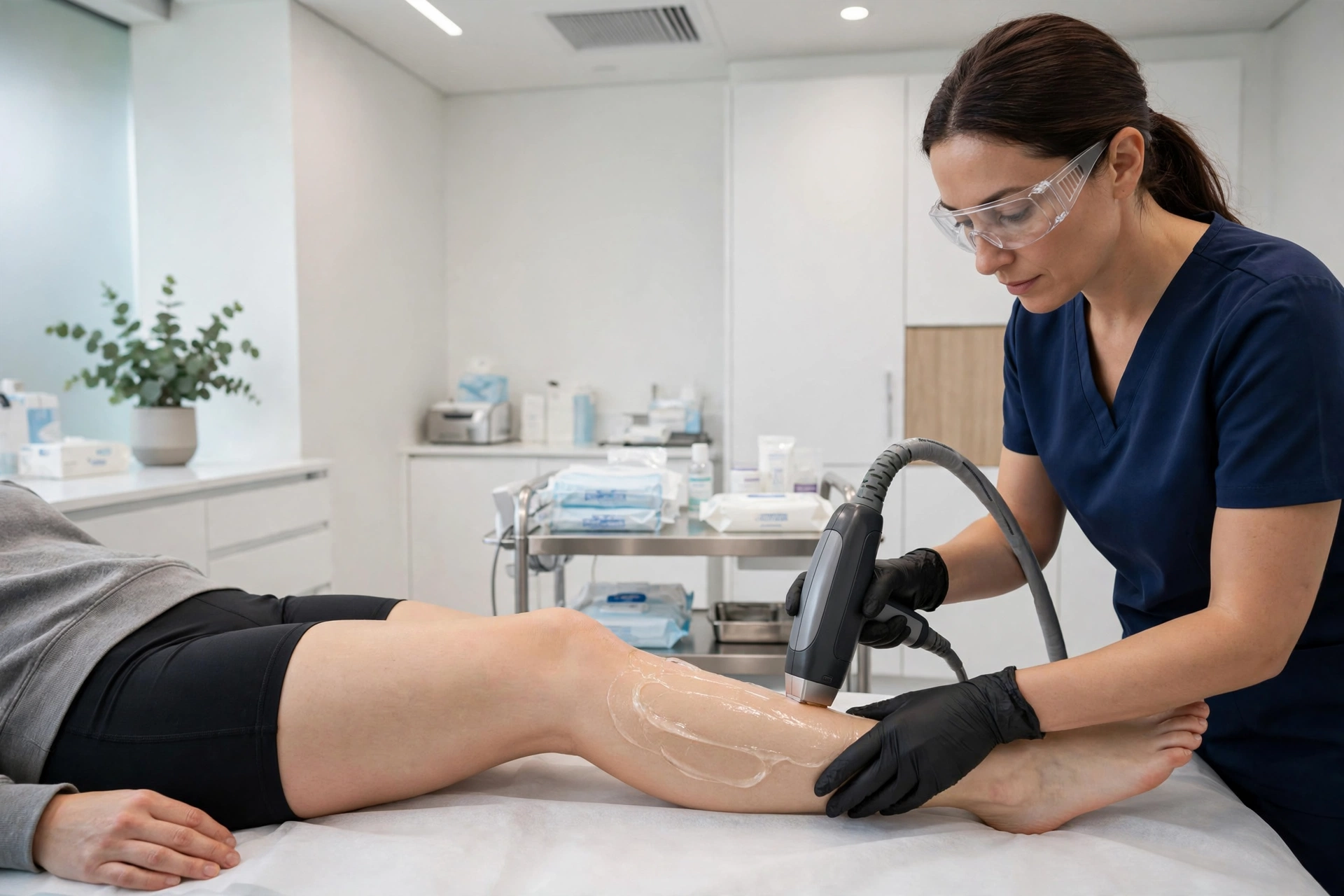
Laser hair removal has become one of the most popular cosmetic treatments in the US, promising long-term freedom from shaving, waxing, and plucking. But how does it actually work — and what is happening under your skin when that laser fires? Understanding the science helps you set realistic expectations, choose a qualified provider, and get the best results safely.
The Science: Selective Photothermolysis
Laser hair removal works on a principle called selective photothermolysis — a precise way of saying the laser targets one specific thing (the hair) while leaving everything around it alone.
Here is what happens step by step:
- The laser emits a concentrated beam of light at a specific wavelength. Different lasers (alexandrite, diode, Nd:YAG) use different wavelengths tuned for different skin and hair types.
- The pigment in your hair absorbs the light. The melanin (dark pigment) in the hair shaft and follicle soaks up the laser energy like a dark t-shirt absorbs sunlight.
- Light converts to heat. The absorbed energy transforms into intense heat — around 70°C (158°F) — concentrated in the follicle.
- The heat damages the follicle. This thermal damage injures the stem cells in the hair bulge and bulb that produce new hair, impairing or destroying the follicle’s ability to regrow hair.
- Surrounding skin is spared. Because the pulse is extremely brief (milliseconds) and the wavelength is chosen to target melanin, the heat dissipates before it can damage nearby skin tissue.
The American Academy of Dermatology explains the laser hair removal process and emphasizes that the treatment works best when there is strong contrast between hair color and skin tone — though newer lasers have expanded who can be treated safely.
Why It Only Works on Growing Hair
Your hair grows in cycles, and the laser can only disable follicles that are in the anagen (active growth) phase. At any given moment, only about 20–30% of your hair is in this phase. The rest is in catagen (transition) or telogen (resting) phases, where the follicle is disconnected from the hair shaft and the laser energy cannot reach the growth cells effectively.
This is the entire reason you need multiple sessions — typically 6 to 8, spaced 4 to 8 weeks apart. Each session catches a new batch of follicles as they enter the growth phase. Anyone promising permanent results in one or two sessions is not being honest with you.
What the Treatment Feels Like
Most people describe the sensation as a rubber band snap against the skin, followed by brief warmth. Modern devices include cooling mechanisms — chilled tips, cold air, or cryogen spray — that fire just before each pulse to protect the skin and reduce discomfort.
Pain levels vary by area: the upper lip and bikini line tend to be more sensitive, while legs and arms are usually well tolerated. Topical numbing cream can be applied beforehand if you are concerned. Sessions are quick — underarms take about 15 minutes, while full legs might take an hour.
Who Is a Good Candidate?
The ideal candidate has dark hair and light skin, because the laser needs pigment contrast to target the follicle precisely. But technology has improved significantly:
- Light skin + dark hair: Excellent results with alexandrite or diode lasers.
- Medium/olive skin: Diode lasers work well with adjusted settings.
- Dark skin: Nd:YAG lasers (1064nm wavelength) bypass surface melanin and target the follicle deeper down, making treatment safe for darker skin tones when performed by an experienced provider.
- Light blonde, red, gray, or white hair: Poor candidates — there is too little melanin for the laser to target. Electrolysis is usually the better option here.
Hormonal conditions like PCOS can cause new hair growth even after successful treatment, so results may require occasional maintenance sessions. Be upfront with your provider about medications too — some antibiotics and acne treatments increase photosensitivity.
What to Expect: Before, During, and After
Before your appointment
- Shave the treatment area 24 hours before (the laser targets the follicle below the skin, not surface hair).
- Do not wax, pluck, or use depilatory creams for 4–6 weeks before — the follicle needs to be intact.
- Avoid sun exposure and tanning for at least 2 weeks before and after. Tanned skin increases burn risk. If you love a bronzed look, consider safer tanning methods and schedule laser sessions when your skin is at its natural tone.
- Skip retinoids, AHAs, and other photosensitizing skincare on the area for several days before.
After your session
- Expect mild redness and swelling (like a light sunburn) for a few hours to a day.
- Apply cool compresses and aloe vera; avoid hot showers, saunas, and intense exercise for 24–48 hours.
- Hair will appear to “grow” for 1–3 weeks as damaged follicles shed — this is normal and a sign it is working.
- Wear sunscreen (SPF 30+) on treated areas religiously between sessions.
How Long Do Results Last?
The FDA clears lasers for “permanent hair reduction,” not “permanent hair removal” — an important distinction. Most people see 70–90% reduction after a full course of treatments. Remaining hair is usually finer and lighter. Results can last years, though hormonal changes, pregnancy, or menopause can trigger some regrowth, which is why many people do a touch-up session once a year or so.
Compared to a lifetime of waxing appointments, the long-term math often favors laser. If you are weighing it against other methods, our guide on how long a leg wax lasts can help you compare costs and convenience.
Risks and How to Minimize Them
When performed by a qualified provider, laser hair removal is very safe. Potential side effects include temporary redness, swelling, and pigment changes (lightening or darkening), which are more common with incorrect settings or sun-exposed skin. Rare risks include blistering, scarring, or paradoxical hair growth (where treatment stimulates rather than reduces hair — uncommon but documented).
Minimize risk by choosing a board-certified dermatologist or a licensed practitioner working under dermatologist supervision. Ask what laser they use, how many treatments they have performed on your skin type, and to see before-and-after photos. The FDA’s overview of laser hair removal devices is worth reading before you book.
Frequently Asked Questions
Does laser hair removal hurt?
Most people find it tolerable — like a rubber band snap. Cooling technology and numbing cream make it manageable, even in sensitive areas.
Can I do it at home with a home device?
At-home IPL devices are weaker than professional lasers and work best for maintenance on ideal candidates (light skin, dark hair). They are not a substitute for professional treatment if you want significant, lasting reduction.
How much does it cost?
In the US, expect $200–$500 per session for small areas and $500–$900 for large areas like full legs. A full course of 6–8 sessions is a real investment, but many clinics offer package pricing.
The Bottom Line
Laser hair removal uses concentrated light to heat and disable hair follicles during their growth phase — which is why multiple sessions are essential. It works best on dark hair, requires an experienced provider (especially for darker skin tones), and delivers long-lasting reduction rather than absolute permanence. Choose your provider carefully, follow pre- and post-care instructions, and you can expect dramatically less hair for years to come.



