Xbox vs. PlayStation in 2026: How to Choose the Right One
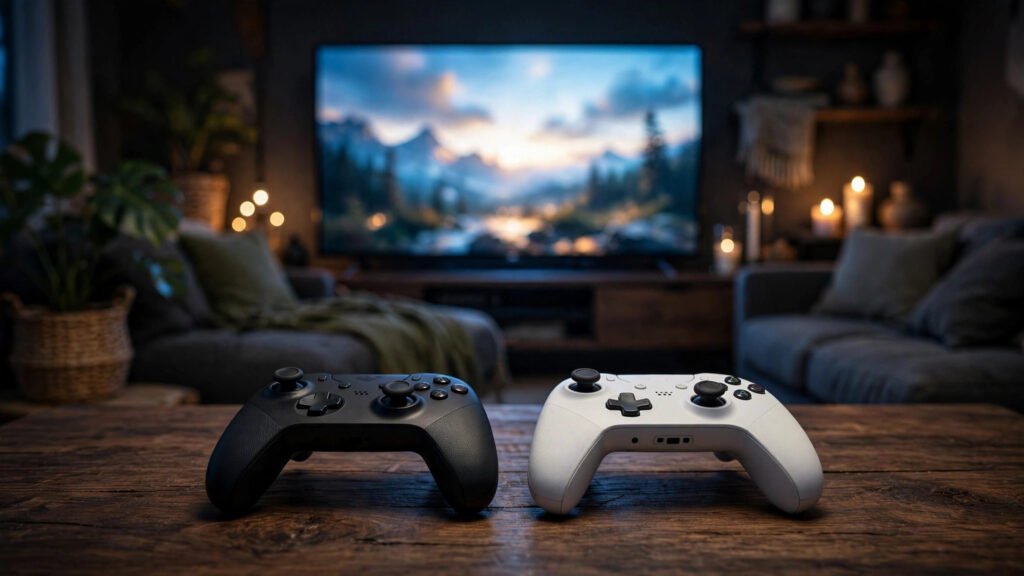
Every few years, the console war flares up again, and 2026 is no exception. But the Xbox vs. PlayStation question has quietly changed: it’s no longer just about which plastic box has better specs. With subscription libraries, cloud streaming, PC crossovers, and exclusive games shifting like tectonic plates, choosing a console in 2026 is really about choosing an ecosystem — and the right answer depends on how you actually play.
This guide compares Xbox and PlayStation where it matters in 2026: games, value, hardware, services, and the specific player profiles each one serves best. No fanboyism — just a decision framework.
The Philosophical Difference (This Matters More Than Specs)
Microsoft and Sony now pursue fundamentally different strategies. Xbox has become a service: Game Pass puts hundreds of games — including Microsoft’s own releases on day one — in a Netflix-style subscription playable across console, PC, and cloud. The console is one door into the ecosystem, not the whole house.
PlayStation remains a platform built around prestige exclusives: cinematic single-player epics you can only play on Sony hardware (at least at launch). Sony sells you the box by selling you games you can’t get elsewhere. Understanding this split — subscription breadth versus exclusive depth — answers half the decision immediately.
Games: The Only Spec That Really Counts
PlayStation’s exclusives
Sony’s first-party studios produce the industry’s most acclaimed single-player experiences — the sprawling adventures and narrative showcases that win Game of the Year awards. If your idea of gaming heaven is a 40-hour cinematic journey, PlayStation’s library is unmatched. The trade-off: you’ll pay full price per game, and Sony’s biggest titles take years between releases.
Xbox’s Game Pass advantage
Game Pass remains the best value proposition in gaming: one monthly fee for a rotating library of hundreds of titles, including day-one Microsoft releases. For players who bounce between games, try new genres, or game with kids who devour content, the math is overwhelming — a year of Game Pass costs less than two full-price games. Casual players who sample widely get extraordinary value here.
Third-party games: effectively tied
The multi-platform blockbusters — the sports titles, shooters, and RPGs most people actually play most — run comparably on both systems. Anyone telling you one console “wins” third-party performance in 2026 is relitigating a 2020 argument.
Hardware and Performance in 2026
Both console families offer a premium and budget tier. The premium models deliver 4K gaming with high frame rates and fast SSD loading that has genuinely changed how games feel — near-instant fast travel is the quiet revolution of this generation. The budget digital-only models cut the disc drive (and some GPU power) for a much lower entry price.
Honest assessment: on raw performance, the premium models are close enough that only side-by-side analysis reveals differences. Buy based on ecosystem, not teraflops. One practical note: if you have a large physical game collection or buy used discs, the disc-drive model matters — digital-only consoles lock you into digital storefront pricing forever.
The Money Question: Total Cost of Ownership
This is where the ecosystems diverge sharply. A PlayStation player’s annual cost is typically the console plus a few $70 games — expensive per game, but you own them. An Xbox player’s cost centers on the Game Pass subscription — cheaper if you play many games, but the library rotates and you own nothing.
Do your own math based on your habits: if you play 3–4 big games a year to completion, PlayStation’s model may cost less. If you sample dozens of games, play with family members who each want different titles, or love indie discoveries, Game Pass wins by a landslide. Also factor in online multiplayer fees — both charge for online play, so that’s a wash.
Backward Compatibility and Your Existing Library
An often-overlooked factor: what you already own. Xbox’s backward compatibility program is the industry’s most generous — a huge catalog of older Xbox games runs on current hardware, often with automatic resolution and frame-rate enhancements, and your digital purchases carry forward. If you’ve been in the Xbox ecosystem for years, your library is an asset that makes switching expensive.
PlayStation’s backward compatibility covers the previous generation well but is thinner for older classics, many of which are gated behind the premium subscription tier’s streaming catalog rather than running natively. Neither approach is objectively superior — but before you switch ecosystems, inventory what you’d leave behind. Gamers consistently underestimate how much their existing library, friends list, achievements, and saved progress anchor them. The “best” console you won’t fully enjoy because your squad is elsewhere is the wrong console.
Which One Fits You? Four Player Profiles
The prestige single-player gamer: You finish every cinematic epic and discuss story twists with friends. → PlayStation, no contest.
The variety sampler: You try everything, rarely finish games, and love discovering indies. → Xbox with Game Pass.
The multiplayer regular: You mainly play the same few online games with friends. → Buy whatever your friends have. Cross-play has improved, but the social factor still dominates — gaming alone on the “better” console is worse than gaming together on either.
The budget-conscious family: Kids burn through games fast and you want maximum entertainment per dollar. → Xbox’s budget console plus Game Pass is the value king. Check age ratings on the ESRB’s rating site when choosing titles for younger players.
Whatever you choose, secure your gaming accounts with two-factor authentication — game libraries worth hundreds of dollars are prime targets for thieves.
For age-appropriate choices, the ESRB ratings guide explains exactly what each rating means and why it was assigned.
Conclusion
Choosing between Xbox and PlayStation in 2026 isn’t about picking the “better” console — it’s about matching an ecosystem to your playing style. Want the most acclaimed exclusives and don’t mind paying per game? PlayStation. Want the best subscription value and play across devices? Xbox. Play mostly with friends? Follow your friends. The console war’s real winner is the player who ignores the tribalism and buys for their own habits — because the best console is the one that’s turned on.
Frequently Asked Questions
Is Xbox Game Pass worth it in 2026?
For most players, yes — if you play more than a few games per year, the subscription costs less than buying those games individually. It’s weakest for players who only play one or two titles annually, where buying outright is cheaper.
Can Xbox and PlayStation players play together?
Many popular multiplayer games now support cross-play between consoles, but not all — and some features remain platform-restricted. Check your specific games; the trend is toward more cross-play, not less.
Should I get the disc or digital-only version?
Get the disc version if you buy used games, share discs with friends, or want a 4K Blu-ray player. Go digital-only if you buy everything from digital stores anyway and want the lower price — just know you’re locked into digital pricing.
Which console is better for kids?
Xbox with Game Pass offers the best value for kids who cycle through games quickly, plus robust parental controls. PlayStation has excellent family-friendly exclusives too. Either way, set up parental controls and check ESRB ratings.
Will there be a new console generation soon?
Mid-generation refreshes aside, both companies are deep into long console cycles with cloud and subscription growth as the focus. Buying now doesn’t mean obsolescence is around the corner — current consoles will be supported for years.