The Best Free Apps for Learning Piano in 2026
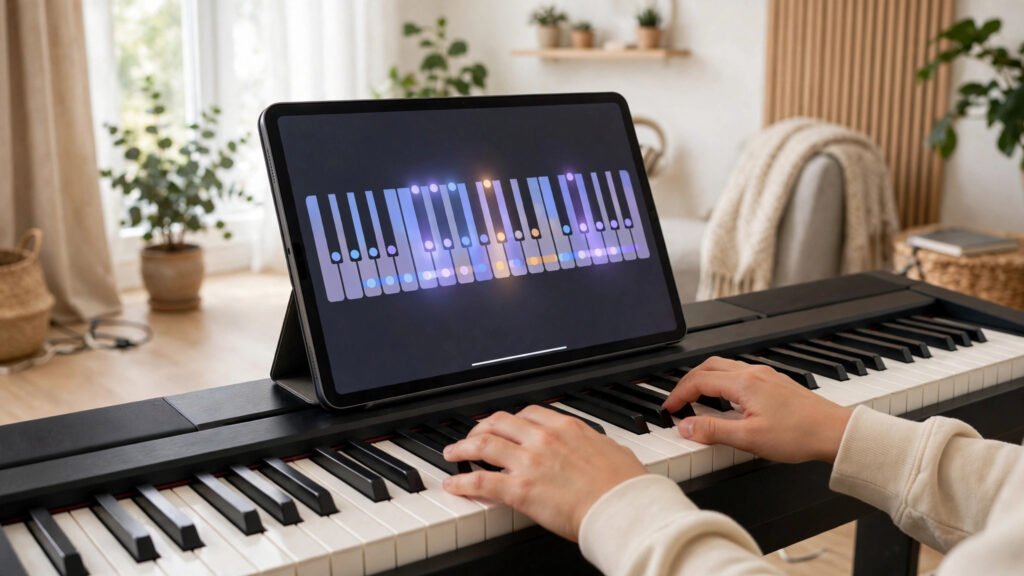
The piano sits in the corner of millions of American homes as both aspiration and guilt — the instrument everyone meant to learn. In 2026, the excuse of expensive lessons and rigid schedules has officially expired. Free piano apps have matured from gimmicky games into genuinely effective learning tools, and the best ones can take a complete beginner to confidently playing real songs. The trick is knowing which apps actually teach versus which ones just entertain.
This guide reviews what the best free piano apps in 2026 offer, how to tell a real learning tool from a toy, the practice method that makes apps work, and when it’s time to graduate beyond the screen.
What Makes a Piano App Actually Teach
Before the recommendations, the evaluation criteria — because the app store is full of five-star apps that teach nothing. A real learning app has: structured progression (skills build in a deliberate sequence, not random songs), instant feedback on timing and accuracy (via your device’s microphone or MIDI connection), music theory woven into practice (not segregated into boring separate lessons), and a song library that motivates (real songs you recognize, not just exercises).
Red flags: apps that are mostly games with piano branding, apps where the “free” tier is a three-day trial in disguise, and apps with no feedback mechanism — if nothing tells you that you played the wrong note, you’re practicing mistakes. Learning any instrument as a beginner shares the same principle: feedback loops beat passive content every time.
The Best Free Piano Apps in 2026
Simply Piano (freemium, generous free tier)
The category leader for good reason: genuinely structured courses from absolute zero, microphone-based note detection that works surprisingly well, and a huge recognizable song library. The free tier covers the fundamentals thoroughly — enough to know whether piano is for you before spending anything. Its weakness is the classic freemium squeeze: the deeper courses sit behind the paywall.
Flowkey (freemium, strong free content)
Flowkey’s standout feature is its wait-mode learning: the song pauses until you play the right notes, which builds accuracy naturally. The free tier includes a solid selection of songs across difficulty levels, and the interface is the cleanest in the category. Particularly good for learners motivated by playing real pieces quickly.
Piano Academy (free with ads)
A strong fully-free option that gamifies fundamentals — note reading, rhythm, and basic theory — without demanding payment for core progression. The gamification genuinely works for building daily habits, though serious students will eventually want the deeper repertoire of the freemium leaders.
Perfect Piano (free, keyboard simulator)
Not a course but a surprisingly capable virtual keyboard — useful for practice away from a real piano, testing whether you enjoy the instrument before buying one, and drilling note recognition. Pair it with free YouTube lessons and you have a zero-cost learning stack.
MuseScore (free sheet music)
Not a piano app per se, but the essential companion: the world’s largest free sheet music library. Once apps take you past the basics, MuseScore provides unlimited real repertoire at every difficulty level — the bridge from app learning to genuine musicianship.
The Practice Method That Makes Apps Work
Here’s what separates people who learn from apps from people who just tap along: deliberate practice structure. Fifteen focused minutes daily beats two hours on Sunday — consistency builds the neural pathways that sporadic marathons can’t. Within each session, follow the app’s progression rather than skipping to fun songs (the fundamentals compound), and practice hands separately before together when pieces get challenging.
Two techniques multiply app learning: slow practice (play difficult passages at half speed until they’re clean, then gradually accelerate — the app’s tempo controls exist for this) and active listening (record yourself via your phone and compare against the app’s demonstration; the gap you hear is your curriculum). Hobby learning in any domain rewards the same boring consistency over exciting intensity.
App Limitations: What They Can’t Teach
Honesty requires the caveats. Apps can’t correct your posture, hand position, or wrist tension — the physical foundations that prevent injury and enable advanced technique. They grade notes and rhythm but not tone quality or musical expression. And microphone-based detection occasionally misreads notes in noisy rooms, which can teach you to distrust correct playing.
The practical fix isn’t abandoning apps — it’s supplementing them. A single in-person or video lesson every month or two, focused entirely on technique check, catches the physical habits apps miss. Many teachers offer affordable periodic “checkup” lessons precisely for self-directed learners. Think of the app as your daily coach and the human as your physical therapist: different roles, both valuable.
When to Graduate Beyond Free
You’ll know it’s time when: you’ve completed the free curriculum and still want more, you’re playing pieces the apps don’t offer, or you’ve developed questions about interpretation that no app answers. At that point, options include the apps’ paid tiers (reasonable for continued structured learning), method books (the classic Alfred’s or Faber series cost less than one month of lessons), or regular lessons with a teacher.
There’s no shame in staying free forever, either — plenty of hobbyists play happily for years on free resources. Expanding your musical world with new genres to play keeps the motivation alive regardless of how you learn.
Do You Need a Real Piano?
You need something with weighted or semi-weighted keys eventually — a phone screen teaches note positions but not the physical instrument. The good news: decent 61-key keyboards start under $150, and the used market is full of barely-touched instruments from abandoned resolutions. Start on whatever you have (even an app keyboard) to confirm the interest, then invest modestly once practice is a habit. Buying a $1,000 piano before your first month of practice is how instruments become furniture.
The Music Teachers National Association offers guidance on finding qualified teachers for the technique checkups apps can’t provide, and NAMM publishes research on the benefits of music learning at every age.
Conclusion
The best free piano apps in 2026 — led by Simply Piano, Flowkey, and Piano Academy — are legitimate learning tools that can take you from zero to playing real songs, provided you practice consistently and supplement with occasional technique checkups. The technology has removed every excuse except the one that matters: showing up daily. Download one tonight, practice fifteen minutes tomorrow, and repeat. In six months, you’ll either play piano or you’ll know definitively it’s not for you — and either answer beats another year of the instrument gathering dust.
Frequently Asked Questions
Can adults really learn piano from an app?
Yes — adults are often better app learners than kids because they practice deliberately and understand delayed gratification. The apps’ structured progression suits adult learning styles well. The main adult obstacle is unrealistic expectations about speed, not ability.
How long until I can play a real song?
Most beginners play simple recognizable songs within 2–4 weeks of daily 15-minute practice. Playing them well — with dynamics and fluency — takes a few months. Patience with the gap between “can play” and “plays beautifully” is the whole game.
Are free piano apps as good as paid ones?
The free tiers of the leading apps cover fundamentals genuinely well — often enough for the first 3–6 months. Paid tiers add deeper courses and bigger song libraries. Start free; pay only when you’ve exhausted what’s free and still want more.
Do I need to learn to read sheet music?
Eventually, yes, if you want full independence — but apps wisely delay it, teaching through visual cues first and introducing notation gradually. Reading music is a skill that unlocks unlimited repertoire; it’s worth the effort when you’re ready.
What’s the best age to start learning piano?
The best age is the age you are now. Children benefit from early starts for neural development, but adult beginners progress faster per hour of practice due to better focus and practice discipline. There is no “too late.”