How to Keep Nails Strong Without Salon Visits
Weak, peeling, splitting nails that break if you look at them wrong — and salon visits every two weeks aren’t in the budget (or the schedule). Here’s what the salon won’t tell you: strong nails are built at home, not in the salon. In fact, frequent acrylics and gels are among the top causes of nail weakness, and the healthiest nails often belong to people who’ve never had a professional manicure. Nail strength comes from biology (nutrition, hydration, protection) plus a simple home routine. Here’s the complete system.
Why Nails Break: The Real Causes
Nails are layered keratin — and like hair, the visible nail is dead tissue. Weakness comes from three sources. Dehydration: the top cause. Nails that constantly cycle between wet and dry (dishwashing, handwashing without gloves, sanitizer overuse) become brittle — water swells the nail plate, drying contracts it, and the repeated stress causes peeling and splitting. Mechanical trauma: using nails as tools (opening cans, scraping stickers, typing with nail tips), aggressive filing, and cutting cuticles. Nutritional gaps: inadequate protein, iron deficiency (a leading cause of brittle, spoon-shaped nails), and low biotin — though true biotin deficiency is rare, supplementation helps some people with brittle nail syndrome.
Then there are the salon factors: acrylic and gel removals that strip nail layers, over-filing of the natural nail, and cuticle cutting that invites infection. If your nails got weaker after years of salon enhancements, the enhancements are the likely culprit — and growing them out naturally is the cure. Understanding the cause tells you which fixes matter most for your nails.
The Daily Home Routine for Strong Nails
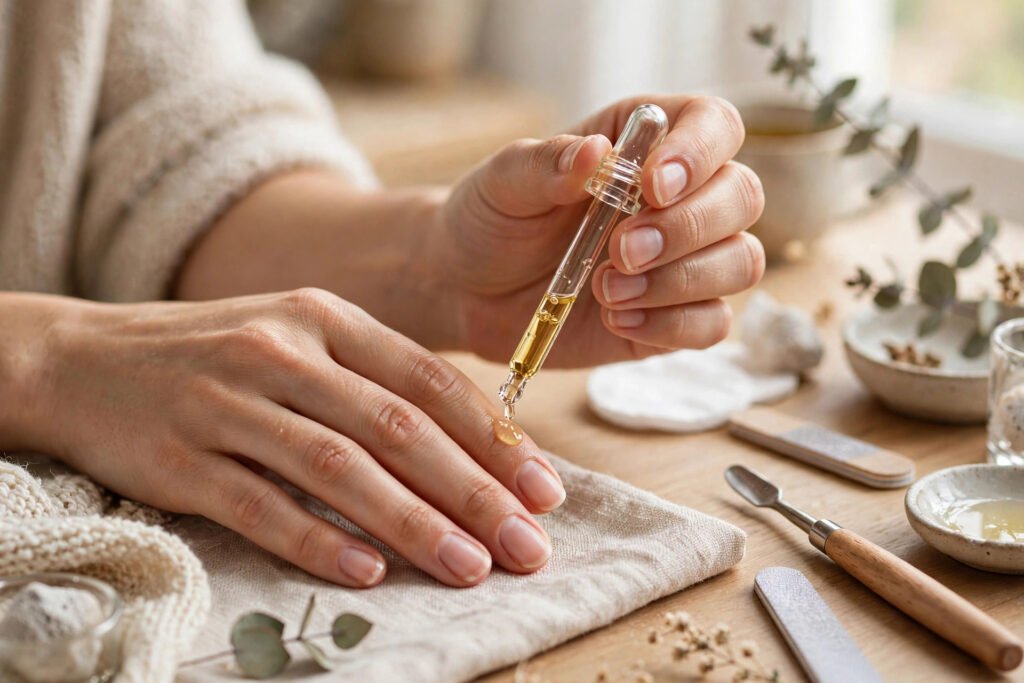
Moisturize the nails, not just the hands. This is the single highest-impact habit. Apply oil or cream to nails and cuticles at least twice daily — jojoba oil penetrates the nail plate best, but any hand cream massaged into nails works. The critical moment: after every handwash. Keep oil by every sink. It takes ten seconds and prevents the wet-dry cycling that causes most peeling.
Wear gloves for wet work. Dishes, cleaning, gardening — water and chemicals are nail kryptonite. Cotton-lined rubber gloves for dishes, disposable nitrile for cleaning products. This one habit transforms chronic peelers within weeks; it’s the closest thing to a miracle cure in nail care.
File, don’t saw — and file correctly. Use a fine-grit glass or crystal file (far gentler than emery boards), file in one direction from edge to center, and keep nails at a practical length — every millimeter of extra length multiplies breakage leverage. Shape matters: squoval (square with rounded edges) resists breaking better than sharp stilettos or square corners that catch. Replace files when they feel smooth; a worn file drags and creates micro-tears.
Stop cutting cuticles. Cuticles are the nail’s seal against infection — cutting them invites bacteria and damages the matrix where new nail forms. Gently push back softened cuticles (after showering) with an orangewood stick instead. This dermatologist-backed advice (American Academy of Dermatology) prevents both infection and the ridges that damaged matrices produce.
Nutrition and Supplements That Actually Help
Nails grow from the matrix under the cuticle, fed by your bloodstream — so nutrition genuinely matters, with a 3–6 month lag (that’s how long it takes new nail to grow out). Protein: nails are keratin, a protein — inadequate protein intake shows up as weak, slow-growing nails. Iron: deficiency causes koilonychia (spoon-shaped nails) and brittleness; if your nails are persistently weak despite good care, ask your doctor about ferritin levels — this is an underdiagnosed cause. Biotin: 2.5mg daily has modest evidence for brittle nail syndrome, though it takes months; note it can interfere with certain lab tests, so tell your doctor you’re taking it.
Hydration and healthy fats support the nail bed’s moisture from within. And the broader picture counts: nutrient-dense foods that support skin feed nails through the same pathways — the vitamins and minerals that build strong skin build strong nails. No supplement overcomes chronic dehydration and mechanical abuse, though — get the daily habits right first, then optimize nutrition.
Polish Smart: Protection Without Damage
Nail polish itself isn’t the enemy — it’s actually protective, shielding nails from water and minor trauma. The damage comes from harsh removers and picking off gel. Use a strengthening base coat (with nylon fibers or keratin), keep polish on for a week max, and remove with acetone-free remover when possible — though occasional acetone use is fine if you moisturize immediately after.
Give nails periodic bare breaks — a week polish-free monthly lets you assess true nail health and rehydrate fully. And if you love the salon look at home, neutral everyday polish colors are the most forgiving choice: chips show less, regrowth is invisible, and you can maintain a polished look with minimal filing and fuss — which itself protects nail strength.
When Weak Nails Signal Something Medical
See a doctor or dermatologist if: nails are persistently spoon-shaped, pitted, or ridged (possible iron deficiency, psoriasis, or thyroid issues), discoloration appears (yellowing can indicate fungal infection; dark streaks need prompt evaluation), nails separate from the bed, or weakness arrived suddenly alongside hair loss or fatigue (systemic causes). The Mayo Clinic notes that nail changes can reflect thyroid disease, anemia, and other conditions — nails are a legitimate diagnostic window, not just a cosmetic concern. Don’t spend a year on oils when a blood test could reveal the real cause.
Conclusion
Keeping nails strong without salon visits comes down to unglamorous consistency: moisturize nails after every wash, wear gloves for wet work, file gently in one direction, never cut cuticles, eat enough protein and iron, and use polish as protection rather than picking at it. Most people see meaningful improvement in 6–8 weeks — one full nail-growth cycle of good habits. The salon sells you the appearance of strong nails; this routine builds the actual thing, for the price of a bottle of jojoba oil and a pair of dish gloves.
Frequently Asked Questions
How long does it take to strengthen weak nails?
Expect visible improvement in 6–8 weeks and full transformation in 3–6 months — that’s how long it takes to grow out a complete new nail. Consistency with moisturizing and gloves matters more than any product; most people quit right before results appear, so commit to the full two months before judging.
Does biotin really help nails?
Modestly, for brittle nail syndrome specifically — studies show some thickening with 2.5mg daily over several months. It’s not a miracle, and it can interfere with lab tests (thyroid, cardiac markers), so inform your doctor. Fix hydration and mechanical damage first; they’re bigger factors.
Are gel nails bad for natural nails?
The gel itself isn’t the main problem — it’s the removal. Aggressive filing, picking off gel, and acetone soaking strip nail layers, leaving nails thin and weak. If you wear gels, have them removed professionally (soaked off, never pried), and take breaks between sets.
Why do my nails peel in layers?
Onychoschizia (layered peeling) is almost always the wet-dry cycle: repeated swelling and contracting from water exposure delaminates the keratin layers. The fix is gloves for wet work plus moisturizing after every wash — most peelers see dramatic improvement within a month of consistent protection.