
How Long Does Sunscreen Last on Skin? The Real Timeline
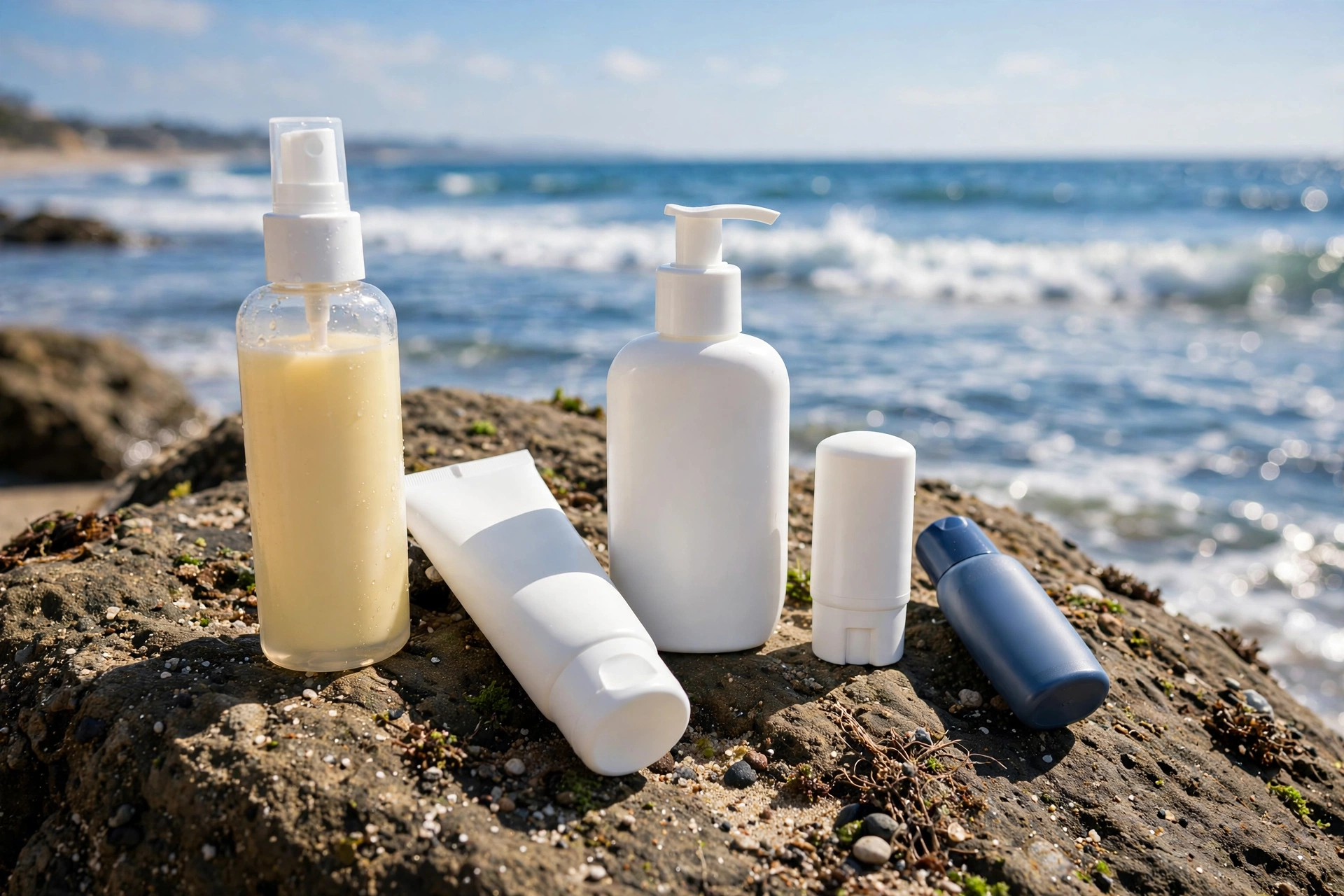
Knowing how long does sunscreen last on skin is one of the most misunderstood parts of sun protection. Most people apply it once in the morning and assume they are covered all day — but sunscreen breaks down, rubs off, and washes away far faster than you think. Understanding the real timeline, and what shortens it, is the difference between actual protection and a false sense of security.
The Short Answer: About 2 Hours
As a general rule, sunscreen lasts approximately 2 hours on skin under normal outdoor conditions. After that, its protective power drops significantly and you need to reapply. But “2 hours” comes with important caveats — several common activities shorten that window considerably:
- Swimming or sweating: even “water-resistant” sunscreen (note: no sunscreen is truly waterproof) needs reapplication after 40 to 80 minutes in water, and immediately after towel-drying.
- Touching your face: rubbing, wiping sweat, or resting your chin on your hand physically removes sunscreen.
- Clothing friction: straps, collars, and waistbands rub sunscreen off the skin underneath.
- Makeup application: layering makeup over sunscreen can disturb the protective film.
Chemical vs. Mineral: Does Type Affect Duration?
Both types last roughly the same 2 hours, but they work differently:
- Chemical (organic) sunscreens absorb UV radiation and convert it to heat. Ingredients include avobenzone, octinoxate, and oxybenzone. They need about 15 to 20 minutes after application to become fully effective, and they degrade as they absorb UV — which is why reapplication timing matters.
- Mineral (physical) sunscreens use zinc oxide and/or titanium dioxide to sit on top of skin and reflect UV. They work immediately upon application and are less prone to breaking down from UV itself, but they rub and wash off just as easily.
Neither type lasts all day from a single application. The 2-hour reapplication rule applies to both.
SPF Numbers: What They Actually Mean
SPF measures protection against UVB rays (the burning rays), not how long sunscreen lasts:
- SPF 15 blocks about 93% of UVB
- SPF 30 blocks about 97% of UVB
- SPF 50 blocks about 98% of UVB
- SPF 100 blocks about 99% of UVB
The jump from 30 to 100 is much smaller than the numbers suggest. More importantly, higher SPF does not mean longer-lasting — SPF 100 still needs reapplying every 2 hours. What higher SPF does give you is a margin of error, since most people apply only a quarter to half the tested amount. Dermatologists generally recommend SPF 30+ for daily use and SPF 50+ for extended outdoor time.
Also check for “broad spectrum” on the label — this means it protects against UVA rays too (the aging rays that penetrate deeper and pass through glass). SPF alone does not cover UVA.
How Much Sunscreen to Apply
Under-application is the number one reason sunscreen underperforms. The tested amount that SPF ratings are based on is generous:
- Face and neck: about a full teaspoon (two finger-lengths of product squeezed along your index and middle fingers).
- Full body: about one ounce — a full shot glass — for an adult in a swimsuit.
- Commonly missed spots: ears, back of neck, tops of feet, back of hands, lips (use SPF lip balm), scalp part line, and around the eyes.
If you use less than this, you are getting less than the labeled SPF. A thin layer of SPF 50 applied sparingly may protect like SPF 15.
The Reapplication Playbook
Everyday routine (mostly indoors)
Apply SPF 30+ in the morning as the last step of your skincare routine. If you spend most of the day indoors away from windows, one morning application is reasonable. If you sit near windows, take a lunch walk, or drive a lot, reapply at midday — UV penetrates glass (UVA does; UVB mostly does not, but car side windows let significant UVA through).
Outdoor days
Reapply every 2 hours without exception. Set a phone timer — “I will remember” does not work. Reapply immediately after swimming, heavy sweating, or toweling off, regardless of timing.
Over makeup
Reapplying over makeup is the eternal struggle. Options: SPF setting sprays, powder sunscreens with SPF, or a cushion compact with SPF. They are less reliable than a proper lotion layer, so on high-exposure days, consider reapplying lotion and touching up makeup after.
Kids
Children need the same 2-hour rule, and they are worse at sitting still for reapplication. Mineral sunscreens are often preferred for kids’ sensitive skin. Make reapplication part of the routine — every swim break, every snack break.
Does Sunscreen Expire?
Yes. Most sunscreens are formulated to last about 3 years unopened. Check the expiration date — expired sunscreen has degraded active ingredients and unreliable protection. Additional signs it is done: separation, changed color or smell, or a grainy texture. Storing sunscreen in a hot car all summer accelerates degradation; keep it in a cool place when possible.
Sunscreen and Tanning: Can You Tan Through It?
Yes — sunscreen reduces UV exposure but does not block 100% of it, so some tanning still occurs. That is actually the ideal scenario if you want color with less damage: slow, gradual color without burning. If you are working on your glow, our guide on how to get tanner safely covers sunless options that skip UV entirely. And to understand the full lifecycle of a tan, see how long it takes for a tan to fade.
Common Myths, Corrected
- “I have dark skin, I don’t need sunscreen.” False. Darker skin has more natural protection but still burns, still gets skin cancer (often diagnosed later and more dangerously), and still photoages.
- “It’s cloudy, I can skip it.” False. Up to 80% of UV rays penetrate clouds.
- “My moisturizer has SPF 15, that’s enough.” Partly true — it is better than nothing, but most people apply far too little moisturizer to get the labeled SPF. Layer a dedicated sunscreen underneath.
- “I applied once, I’m good all day.” The myth this whole article exists to kill. Two hours, then reapply.
- “Sunscreen causes vitamin D deficiency.” Studies show sunscreen users maintain healthy vitamin D levels — real-world application is never as complete as lab conditions, and incidental exposure plus diet covers most people.
Frequently Asked Questions
Does sunscreen last longer on some skin types?
Not meaningfully. Oily skin may break down sunscreen slightly faster, and very dry skin may absorb it unevenly, but the 2-hour guideline holds for everyone.
Can I mix two sunscreens to get longer protection?
No — layering does not extend duration or add SPFs together. Use one good sunscreen, applied generously, and reapply on schedule.
What about SPF clothing?
UPF-rated clothing is excellent and does not “wear off” like sunscreen — but it only covers what it covers. Use it for torso and limbs, sunscreen for exposed skin. Note that regular clothing has low UPF (a white cotton t-shirt is roughly UPF 5).
The Bottom Line
Sunscreen lasts about 2 hours on skin — less if you swim, sweat, or rub your face. Apply generously (more than you think), choose broad-spectrum SPF 30+, reapply on schedule, and do not trust a single morning application to carry you through an outdoor day. It is the simplest, cheapest, most proven anti-aging and anti-cancer step in all of skincare. For authoritative sun-protection guidance, the Skin Cancer Foundation and the American Academy of Dermatology both publish excellent, evidence-based recommendations.



